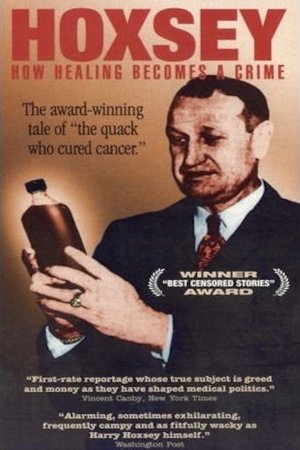
In the 1920s, former coal miner Harry Hoxsey claimed to have an herbal cure for cancer. Although scoffed at and ultimately banned by the medical establishment, by the 1950s, Hoxsey's formula had been used to treat thousands of patients, who testified to its efficacy. Was Hoxsey's recipe the work of a snake-oil charlatan or a legitimate treatment? Ken Ausubel directs this keen look into the forces that shape the policies of organized medicine.
Hiver 54 : L'Abbé Pierre et l'insurrection de la bonté
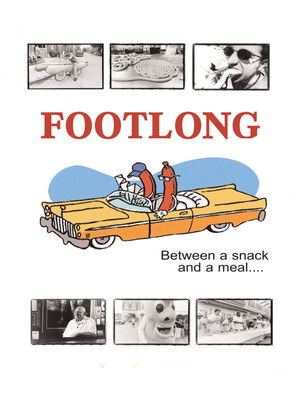
A documentary about the social impact of the hot dog on American Culture. Follow the crew as they travel across the country to explore the many facets of hot dog culture. 'To understand a bike, you look at the wheels. To understand a wall, you look at each brick. And to understand America, you must look at the hot dog."
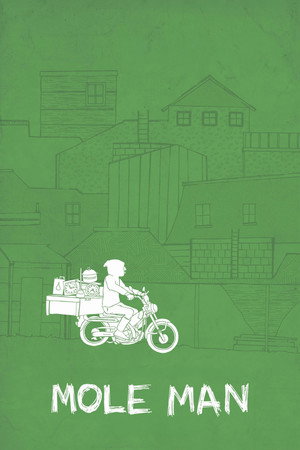
MOLE MAN follows RON, a 66-year-old autistic man who has spent the last five decades building a 50-room structure in his parents' backyard. Using no nails or mortar, Ron instead creates perfectly balanced structures from scavenged materials he finds in the woods outside his Western Pennsylvania home. When Ron's father passes away, leaving him living alone with his 90-year-old mother, Ron's siblings are left to figure out what's best for Ron - who has never been officially diagnosed with autism - when his mother can no longer care for him. In an effort to find the money to keep Ron in his home, his friends team up in search of a mythical mansion Ron insists lays abandoned in the forest. But will they be able to find it? And, more importantly, does it even exist? This is the story of an extraordinary life, a family, and the beauty of thinking differently.
La Historia Enterrada
Throughout Hong Kong’s history, Hongkongers have fought for freedom and democracy but have yet to succeed. In 2019, a controversial extradition bill was introduced that would allow Hongkongers to be tried in mainland China. This decision spurred massive protests, riots, and resistance against heavy-handed Chinese rule over the City-State. Award-winning director Kiwi Chow documents the events to tell the story of the movement, with both a macro view of its historical context and footage and interviews from protestors on the front lines.
Isto Não É Um Curta
Wet’suwet’en leaders unite in a battle against the Canadian government, corporations, and militarized law enforcement to safeguard their territory from gas and oil pipelines.
The follow-up film to “Barstow, California” takes us to the mountains of Miyama, a remote forest and tourist area north of Kyoto. Uwe Walter, a shakuhachi player from Germany, lives there with his wife Mitsuyo for 30 years. Together with the villagers he prepares the annual Gion Festival. On the eve of the festival, the village representatives tell him that his self-built studio is to be demolished. This brings back memories for him of earlier times and his first steps as a Nō actor. In the manner of a fresco, the film interweaves rural depictions of everyday life with the story of its German protagonist. In the village community with its togetherness of generations, Uwe shares life with his neighbours, with farmers, hunters, woodsmen, poultry farmers and anglers, tills his kitchen garden, and like other tradition-conscious villagers, he also grows his rice. The film shows them in a harsh mountain landscape between the rainy season and the first snow.
More and more bacteria are becoming insensitive to antibiotics, not least due to excessive drug consumption. According to the EU, this problem could soon become as explosive as the environmental issue - and antibiotic resistance threatens to become one of the main causes of death worldwide. Research must therefore find alternatives - not miracle cures, but permanently effective drugs. There has already been one in the past: One hundred years ago, the French biologist Félix d'Hérelle discovered mysterious "bacteria-eating" viruses, known as bacteriophages or phages for short. He used these to successfully treat bacterial infections before the development of antibiotics, but his method was forgotten again. Is bacteriophage therapy the miracle medicine of the future?
One of society’s last taboos is elderly desire, which remains strong for many: half of older adults remain sexual. Advances in medicine and lifestyle mean people in their 70s, 80s, or 90s can still explore and enjoy intimacy. Yet society often ignores this—aged bodies are deemed unattractive, and sexual desire beyond tenderness is stigmatized, sometimes leading to mistreatment in care homes where couples are separated. The documentary Vieillir et jouir sans entraves confronts this taboo. Featuring celebrities and real-life couples—including Francine and Marc (60 years together) and gay couple Jean-Marc and Alain (34 years together)—it explores aging bodies, love, sexuality, and the challenges of libido and illness. The film highlights initiatives supporting sexual expression for older adults, including LGBT-friendly housing and sex-positive care, urging society to rethink its view of aging intimacy.
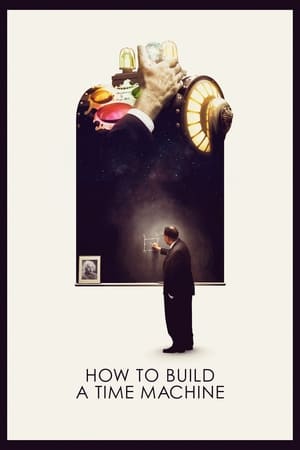
Focuses on two subjects in particular: Rob Niosi, who has spent many years building a full-scale replica of the prop from the 1960 film The Time Machine, and physicist Ronald L. Mallett, who has dedicated his life to researching the scientific possibility of time travel.
L'Odyssée des Jeux olympiques
This movie is about an Iranian filmmaker called Davood Roostayi, whose all movies ( more than 100 movies ) have been banned both before and after the Islamic revolution of Iran and none of his movies have been screened.
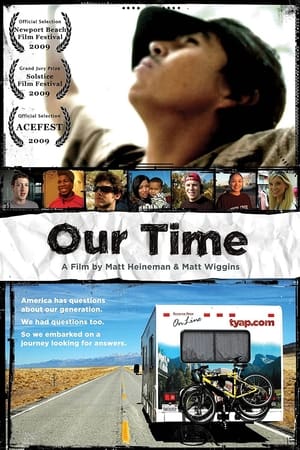
America has questions about today's youth, what we care about, and where we're headed. We had those questions too. So, after graduating college, four of us loaded an RV and embarked on a journey looking for answers. We traveled to all of the lower 48 states, talking to our peers about growing up, 9/11, race, the Internet, careers, sex, love, and the American Dream. Along the way, we met a wide cross-section of young Americans, ranging from a cancer researcher in Boston to a drug dealer in New Mexico, from an Iraq veteran in Florida to the founder of Facebook in Silicon Valley. The film ultimately leads to the recent historic election, where our generation finally stands up to make its voice heard. OUR TIME is a passionate portrayal of a generation, a meditation on coming of age in 21st-century America, and a rallying cry against apathy.
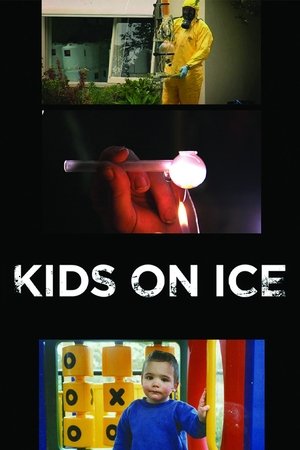
Quiet towns across rural Australia are in the grip of an Ice epidemic. Major international drug cartels are working with local outlawed motorcycle gangs to push crystal meth to a captive market of children.
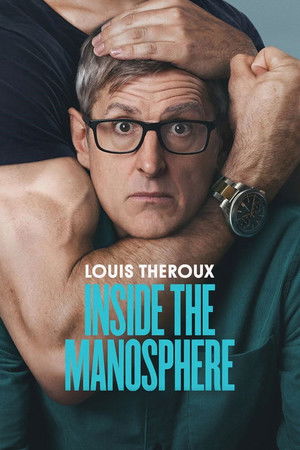
With rare access and no holds barred, the acclaimed documentarian investigates a growing ultra-masculine network and its controversial influencers.
This third opus will take us into the homes of some of the Adamant and Averroes & Rosa Parks’ protagonists, during the visits led by their caregivers.
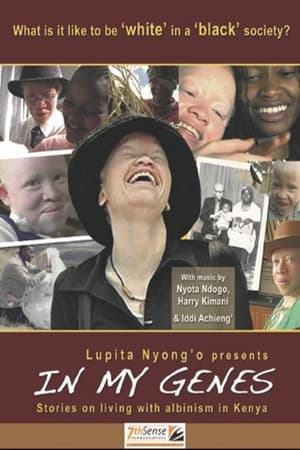
Agnes may not seem like someone with much to laugh about. For one thing, she has albinism - a lack of pigment in the skin, hair and eyes - and her appearance has provoked prejudice from family, friends and strangers since she was born. But despite all odds, Agnes refuses to lead a life of sorrow. This fascinating and inspiring documentary also shares the stories of seven other people's individual experiences of living their lives with albinism in Kenya, a predominantly black society. While each person's story is unique, they all have one thing in common: they know what it is like to stand out uncomfortably from the crowd.
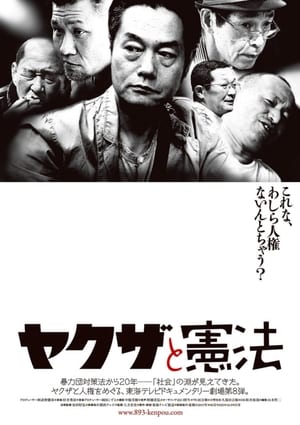
Since the enactment of the Anti-Boryokudan Act and Yakuza exclusion ordinances, the number of Yakuza members reduced to less than 60,000. In the past 3 years, about 20,000 members have left from Yakuza organizations. However, just numbers can’t tell you the reality. What are they thinking, how are they living now? The camera zooms in on the Yakuza world. Are there basic human rights for them?