A gripping tale of two young people from contrasting worlds who are thrust together by a twist of fate. A man from Nepal's Terai plains accidentally abducts a woman from the northern hills, bringing her to his rural village in Janakpur. What begins as a clash of personalities slowly transforms into a journey of shared understanding, bridging deep-seated social and cultural divides.
A biplane pilot is saddled with a spoiled industrialist's daughter on a search for her missing father through Asia that eventually involves them in a struggle against a Chinese warlord.
Professor of language and philosophy Dominic Matei is struck by lightning and ages backwards from 70 to 40 in a week, attracting the world and the Nazis. While on the run, the professor meets a young woman who has her own experience with a lightning storm. Not only does Dominic find love again, but her new abilities hold the key to his research.
Bhutan: The World’s Happiest Man tells the story of Mr. Bishnu, an aging Bhutanese-American in Ohio, who dreams of returning to his homeland. After his unexpected death, his family faces a conflict over his final resting place, torn between past memories and present realities. This emotional drama explores themes of love, loss, and the search for belonging.
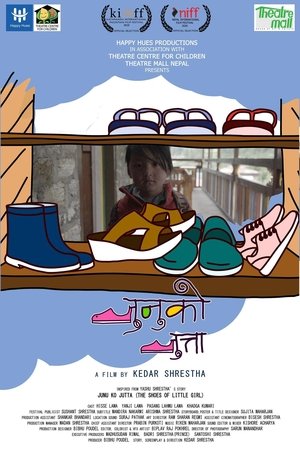
Junu, a 5 year old girl who has trouble learning left from right, is constantly asked by elders around her to wear her shoes correctly. Yet she cannot solve the problem. After being tricked to wear shoes the wrong way, she invents a new way of learning.
At 13 years old, Sona was sold from Nepal into forced-prostitution in India. She’s not the only one—an estimated 12,000 children are trafficked out of Nepal every year. The Twelve Thousand is a dramatic short film depicting the true story of one trafficked survivor.
Kathmandu, Nepal, early 1990s. Laia, a young teacher from Catalonia, Spain, works at a local school in the slums of the city where poverty reigns. Her personal path, besieged by a harsh sum of indescribable social conditions, will be a struggle against a nefarious educational system, but a journey of self-discovery as well.
Muna and Ved make a bet which changes their lives forever.
As the denizens of a Tibetan village prepare for their arduous annual trek to exchange salt for grain, the community's allegiances are split between aging chieftain Tinle and rebellious young Karma. Tinle tries to maintain his clout and preserve obedience to ancient customs when Karma challenges the old man's power.
Dhun comes from a wealthy and talented family and desires to see the world on his own. He sets upon this travel and on his journey comes upon an inn called Five Daughters, run by Pahar. Deciding to stay there for a while, he meets Pahar's daughters and falls in love with Pooja. Pooja reciprocates his love and both hope to get married. Just when their marriage is being planned, Pooja's family comes to learn that Dhun and Pooja are related.
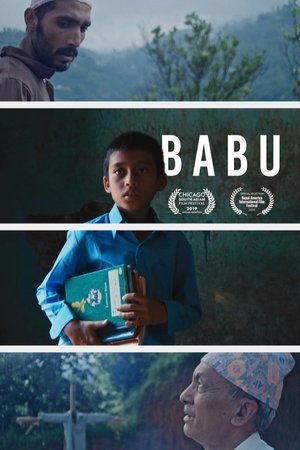
A story of a boy struggling to fulfill his father's dream of winning a scholarship from the government.
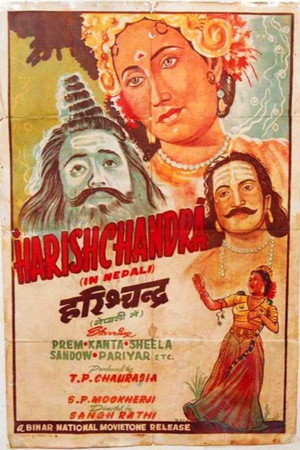
Harishchandra is a 1951 Indian Nepali-language film based on the story of the legendary King Harischandra from Hindu mythology. This is credited as the first Nepali language film however, many don't acknowledge as so, since all of the production and filming was in India.
Child bride Gauthali overcomes abuse, loss, and discrimination through the power of education. Her determination to reclaim her future challenges deep-rooted traditions inspiring to stand against gender inequality.
The headmaster's daughter returns to her rural village to reform a corrupt, mismanaged government school, facing fierce resistance from local politicians and her own in-laws in the process.
The great successes and tragedies in the life and work of Hans Kammerlander, the renowned mountaineer.
In this film, two immature drug dealers go to the house of their boss, but the boss takes violent action towards them after knowing that they have been stealing from him all this time.
The tragic drama of a 10-year-old Nepalese girl forced into early marriage and child-bearing, despite medical warnings.
An aloof and a distant man learns the true meaning of' home' and also learns to see the women in his life in a new light before leaving his earthquake shattered country.
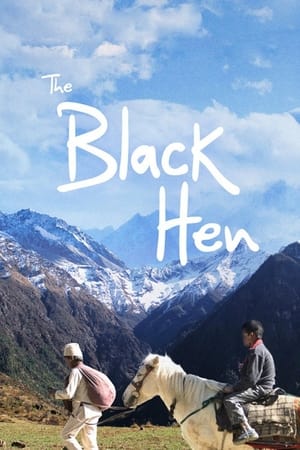
We are in the year 2001, a temporary ceasefire brings a much-needed break to a small war-torn village in Northern Nepal, bringing much joy among the residents. Prakash and Kiran, two young close friends, are also starting to feel the change in the air. Though they are divided by caste and social creed, they remain inseparable, and start raising a hen given to Prakash by his sister, with hopes to save money by selling her eggs. However, the hen goes missing. To find it, they embark on a journey, innocently unaware of the tyranny brought by the fragile ceasefire.
In October 2001, five Basque mountaineers, Beñat Arrue (22), Iñaki Aiertza (27), Aritz Artieda (23), Javi Arkauz (22), and César Nieto (23)—lost their lives while climbing Mount Pumori (7,161 m) in Nepal. After the fatal avalanche, the five other members of the expedition alerted rescue services and organized an unsuccessful rescue attempt. A year later, Arantxa Gurrutxaga and Peio Arrue, Beñat Arrue's parents, returned to Nepal to pay their respects at the site of the tragedy and try to find the young Nepalese girl who appeared with their son in the last photograph of him before the accident. A growing bond developed between Suku Maya, the mountain girl, and Beñat Arrue's family, who would support and accompany him over the years. Catharsis, from tragedy to love, the death of the five young mountaineers allows Suku to have a new chance in life.