In a studio setting, Stephen Hawking, Arthur C. Clarke and Carl Sagan (who joins them via satellite) discuss the Big Bang theory, God, our existence as well as the possibility of extraterrestrial life.
fifteen zero three nineteenth of january two thousand sixteen explores how everyday routines and gestures are transformed when a mother loses her child in the violence impacting Swedish outskirts since the early 2000s. The film resists simplistic media depictions of the suburbs and shows how a home can hold both mourning and the mobilization of women to fight for their own and others' children.
Pouvoir Oublier is a political documentary first constructed from the words of the speakers whose lives changed on the tragic day of May 10, 1972 in Sept-Îles. Their word will be juxtaposed with archival material from the events, some of which are unpublished, which will reflect the collective euphoria in which Sept-Îles and all of Quebec were then bathed.
À la hauteur
A futuristic love story set in a world where emotions have been eradicated.
The Philippines remains the only nation without legalized divorce. Through the perspectives of a controversial priest, a women's rights advocate, and a child of a separated couple, this documentary explores whether the legalization of divorce in the country would be for better or worse.
Teorías de una Máquina
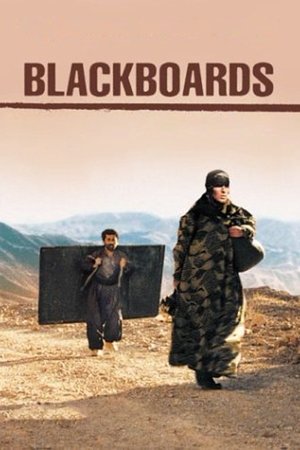
Itinerant Kurdish teachers, carrying blackboards on their backs, look for students in the hills and villages of Iran, near the Iraqi border during the Iran-Iraq war. Said falls in with a group of old men looking for their bombed-out village; he offers to guide them, and takes as his wife Halaleh, the clan's lone woman, a widow with a young son. Reeboir attaches himself to a dozen pre-teen boys weighed down by contraband they carry across the border; they're mules, always on the move. Said and Reeboir try to teach as their potential students keep walking. Danger is close; armed soldiers patrol the skies, the roads, and the border. Is there a role for a teacher? Is there hope?
notice sur la métamorphose
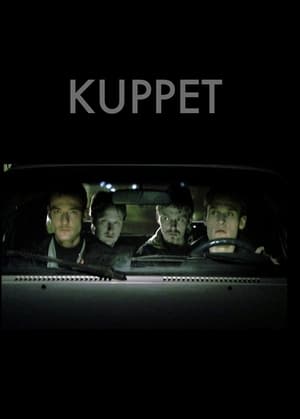
Four young men are sitting in a car at a train crossing and waiting for the train to pass.
Set against nostalgic analog noise, this is an ultra-processed film which pays homage to lost media and the dead art of videotaped home movies. Taking place primarily in the United States, two strippers look into getting hired at a club in Colorado, a young musician reunites with her family in Missouri, and a German woman flies from Berlin to the U.S. to help her friend finish a film in Texas.
"Africa Light" - as white local citizens call Namibia. The name suggests romance, the beauty of nature and promises a life without any problems in a country where the difference between rich and poor could hardly be greater. Namibia does not give that impression of it. If you look at its surface it seems like Africa in its most innocent and civilized form. It is a country that is so inviting to dream by its spectacular landscape, stunning scenery and fascinating wildlife. It has a very strong tourism structure and the government gets a lot of money with its magical attraction. But despite its grandiose splendor it is an endless gray zone as well. It oscillates between tradition and modernity, between the cattle in the country and the slums in the city. It shuttles from colonial times, land property reform to minimum wage for everyone. It fluctuates between socialism and cold calculated market economy.
In 2011 the young married Swiss couple Daniela Widmer and David Och got kidnapped while being on a long trip along the old Silk Road in Pakistan. They were hand over to the Taliban and were held as hostages for 8 months under the most precarious conditions.
Coin is not about chasing wealth. It is about what happens when people are pushed so far down that they stop reaching altogether and only fight to keep what little remains. In a system where value circulates freely but dignity does not, innocence becomes the last uncontaminated force capable of interrupting the cycle.
Fifty years after Martin Luther King delivered his “I Have a Dream” speech, a collective of African American filmmakers, artists, and intellectuals reflect on the goals and ambitions of the civil rights movement and where things stand today.
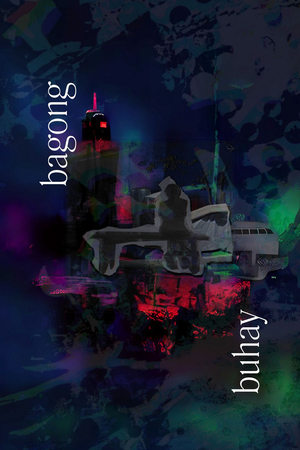
"Bagong Buhay" is a short experimental film that dispels the common belief that packing up and moving to a new place will magically improve one's quality of life. The film challenges this presumption by portraying two contrasting ways of life through objects and locations, encouraging viewers to think critically about the complexities of what makes a better life. In the Philippines, it's believed that relocating to a new area will bring about positive changes in one's existence. True satisfaction is a complex and multifaceted notion, and "Bagong Buhay" encourages us to ponder that relocating to a new place is not a surefire way to attain it.
When an outrageously absurd event results in the world having only 2 hours left before nuclear annihilation, a group of amateur student filmmakers decide to make one last film to consecrate human existence.
Two buddy farmers are visited by aliens who like their domestic cabbage soup.
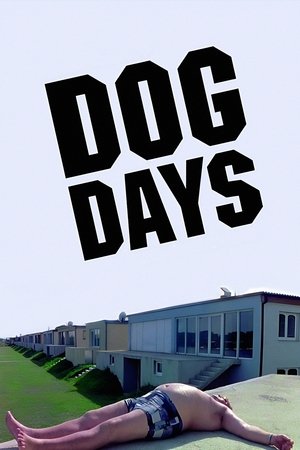
Vignettes of the lives of several residents of a Vienna suburb during a heat wave.