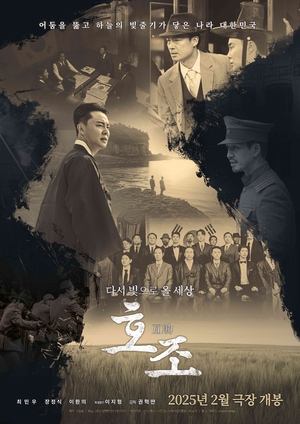
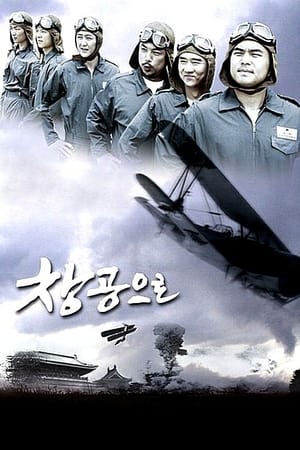
Young Kim Chang-soo is placed behind bars, charged with murdering a Japanese person who took part in Empress Myeongseong's assassination. In prison, Kim Chang-soo sees how Koreans are persecuted and grows into a fighter for Korean independence.
In 1896, Norimatsu hears from a man from Joseon that the Empress of Korea has been assassinated by the Japanese. Stricken with guilt as a Japanese, he defies all warnings and sets out for the land of Joseon, a nation engulfed in darkness. Years later, another Japanese man, inspired by Norimatsu’s spirit, follows the same path—to bring the gospel to a land still in desperate need of Jesus. This is the story of unnamed missionaries who left behind not fame, but the love of Christ.
Why did she die? The Supreme Court first sentenced her to death, but then commuted her sentence to life imprisonment and sent her to Tochigi Women's Prison. What happened before she took her own life there? Based on her tanka poems, which convey her raw voice, the film explores her lone fight during the 121 days between her death sentence and suicide, a period that has remained obscure to date.
In 1909, the Korean Empire is on the verge of losing its sovereignty to Japan. Patriot Ahn Jung-geun and his comrades pledge their lives to the movement for Korea's liberation. Seol-hee, a court lady of the late Empress, also expresses her intent to join the independence movement. Ito Hirobumi, the first Japanese resident-general on the Korean Peninsula, heads to Harbin to pursue his dream of advancing into Asia. On Oct. 26, 1909, a shot rang out at Harbin Station. Beloved son, father of two children, and husband, Ahn Jung-geun, assassinated Ito Hirobumi. In court, Ahn claims not to be a terrorist, but a prisoner of war desperate to protect his beloved homeland, Korea. Who is the one guilty of a crime?
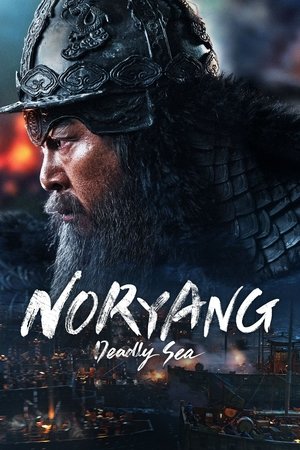
Admiral Yi Sun-sin faces a tough challenge when he is forced to defend his nation with just 13 battleships against 300 Japanese enemy ships in the Battle of Myeongryang.
The Imjin War reaches its seventh year in December of 1598. Admiral Yi Sun-shin learns that the Wa invaders in Joseon are preparing for a swift withdrawal following the deathbed orders of their leader Toyotomi Hideyoshi. Determined to destroy the enemy once and for all, Admiral Yi leads an allied fleet of Joseon and Ming ships to mount a blockade and annihilate the Wa army. However, once Ming commander Chen Lin is bribed into lifting the blockade, Wa lord Shimazu Yoshihiro and his Satsuma army sail to the Wa army's rescue at Noryang Strait.
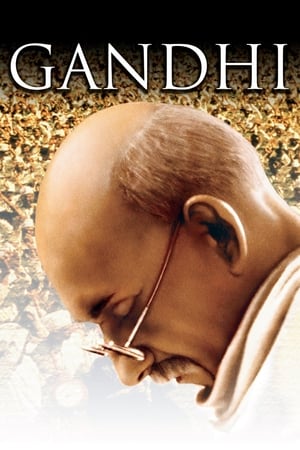
In the early years of the 20th century, Mohandas K. Gandhi, a British-trained lawyer, forsakes all worldly possessions to take up the cause of Indian independence. Faced with armed resistance from the British government, Gandhi adopts a policy of 'passive resistance', endeavouring to win freedom for his people without resorting to bloodshed.
In the Joseon Dynasty, two friends who grew up together — one the master and one the servant — reunite post-war as enemies on opposing sides.
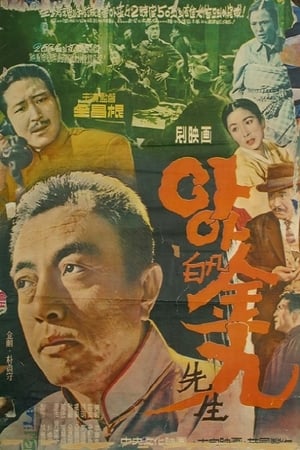
The son of a freedom fighter, Sang-hun is a member of an anti-Japanese resistance group called "Seongjinhoe," composed of students who share a dedication to the cause of liberation. Their spiritual guide is a teacher named Song Un-in. One day, Yeong-ae, whose brother is a detective in the Japanese police force charged with monitoring independence movements, joins their group. Following a series of sporadic incidents, the students gather one night to resolve on an uprising, but are discovered by the police. Young-ae is wrongfully accused of betraying their plans, but she risks her life in order to allow the group members to escape. The morning after, the students of Gwangju rise up against the Japanese government.
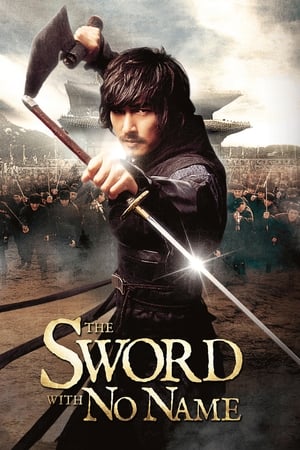
Mu Myeong is a Joseon dynasty headhunter who meets and falls in love with lady Ja Yeong who will become the future Empress Myseongseong. A few years later, Ja Yeong enters the royal palace to marry King Gojong. Mu Myeong still having feelings for Ja Yeong and in an attempt to get closer to her becomes her personal body guard.
KIM Soonak is a survivor of sex slavery by the Japanese military. The war may have ended, but her life was still at a war. She lived in the prostitute quarters to survive, did sex business in the US military camp town, and peddled goods from the US military. She raised two kids on her own as she worked as a maid. We’ll listen to her story in her absence. The film reconstructs the life story of the deceased KIM Soonak with interviews with activists, archive videos, animation, and read-aloud testimony.
East Asia Anti-Japan Armed Front
A punk documentary which is, at the same time, a history of Catalonia, an analysis of its political situation in 2017, a comic lamentation on the milestones of the Procés —the broken, unsuccessful path started October 1st which eventually should've ended with a true declaration of independence from Spain—, and a chaotic festival of references to pop culture, from Dumbo to Salvador Dalí.
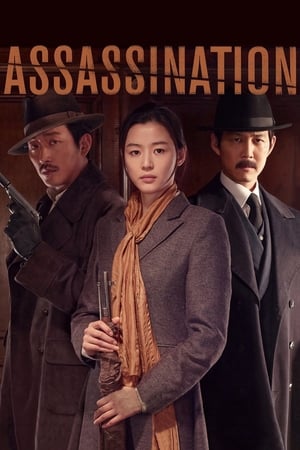
At the end of the Joseon Dynasty, shortly after the Eulsa Treaty has been forced to be concluded by Ito Hirobumi and the pro-Japanese courtiers, Japan pressures King Gojong to step down from the throne. Meanwhile, An Jung-geun, who is cultivating men of ability at Samheung school, is deeply impressed by a speech made by An Chang-ho, and heads for Russia to volunteer the army fighting for independence of the country. As both a lieutenant general of the Korean militia and a commander of the Korean expeditionary force in Manchuria, he carries on the independence movement in defiance of Japanese coercion.
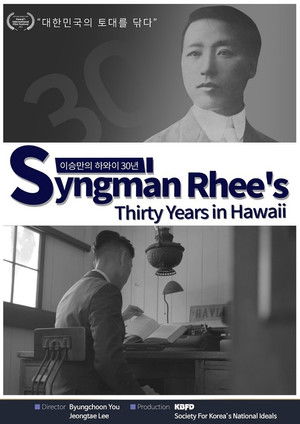
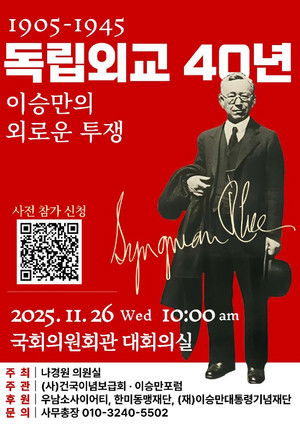
The life of Lee Seung-man, a freedom fighter who struggled to liberate Korea from Japanese rule.
The Birth of New Right
Things That Do Us Part is a documentary that reframes the stories of three women fighters who dove into a tragic war in modern Korean history, using witness statements and reenactments.
The Warrior Queen of Jhansi tells the true story of Lakshmibai, the historic Queen of Jhansi who fiercely led her army against the British East India Company in the mutiny of 1857. From Queen Elizabeth to Queen Victoria, two-and- a half-centuries of East India Company rule will be reversed by its attempt to crush India’s Warrior Queen. Lakshmibai is known as one of the most prominent figures within the independence movement of India. The passion to free her province from colonial rule led this young woman to become one of the greatest generals of the Indian army, and to go down in history for her bravery, strategic acumen, and as a force to reckon with by the East India Company and the British Raj. The Warrior Queen of Jhansi is the story of the woman who lived and fought for the freedom of her people.
A collective effort about the recent history of Spain. A distorting mirror, a radiography, a rotten but exquisite corpse: the blood, the sweat, the dandruff of a country in the shape of a large and extended bull skin. A parade of freaks. The ridiculous independence of the upstairs neighbor, the sovereignty demanded by an insane parrot prisoner in its open cage. Football, potato omelette, kings and safaris. Things not to do again. Guerrilla cinema. Hysteria of Spain.
A young Japanese actress remembers her war childhood in Korea. Her father goes to fight, her baby sister Miko dies of typhoid, her beloved Korean maid Ohana is fired due to a mistake which could cost Chiko her life... By and by Chiko realizes that the country is being ruled by the Japanese and the Koreans are persecuted. When the war ends, the Koreans chase the Japanese rule and the roles change. Now Chiko's family is unwanted. But then the Russians come and this is the end. They have to burn all the pictures to avoid all suspicions... even Miko's picture. But when the Russians come to their house, they decide to flee over the 38th Parallel towards freedom. A group of men, women, children struggles along the mountains, led by the light of the Northern Star. Along the way they meet a Korean man, who is willing to help them to escape the Russian soldiers although his family was killed by the Japanese.