Amanda is a divorced woman who makes a living as a photographer. During the Fall of the year Amanda begins to see the world in new and different ways when she begins to question her role in life, her relationships with her career and men and what it all means. As the layers to her everyday experiences fall away insertions in the story with scientists, and philosophers and religious leaders impart information directly to an off-screen interviewer about academic issues, and Amanda begins to understand the basis to the quantum world beneath. During her epiphany as she considers the Great Questions raised by the host of inserted thinkers, she slowly comprehends the various inspirations and begins to see the world in a new way.
A documentary on the life of the youth in post-Independence India.
Hermanovce, Slovak Republic. A Romani village located deep down in the valley, with old shacks and newer concrete ones. Four Romani women tell us about their day-to-day life through ancient habits, along with words that travel near borders with different worlds...
A documentary that brings together interviews with 20 activists who address the issue of intersectional feminism and patriarchy in Portugal.
In the summer of 1975, the young director Steven Spielberg set new standards for cinema worldwide with an oversized shark bite, a plastic shark fin and an unmistakable two-note main theme composed by John Williams. With the horror from the deep, a man-eating, gigantic great white shark, the film of the same name became a similarly traumatic reference as Alfred Hitchcock's "Psycho": it triggered lasting primal fears across generations. On the beaches of the world, there was clearly a "before" and an "after". Steven Spielberg, who was only 28 at the time, not only set new standards for the thriller genre, but also hid his biting criticism of US capitalism in the 1970s behind it.
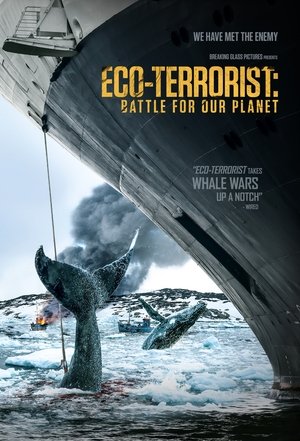
Eco-Terrorist: The Battle for Our Planet follows the most wanted environmentalist today, Captain Paul Watson. In this unique and groundbreaking film, Brown takes a deeper look into what really goes on behind the scenes in the deep waters of our world. More pranks, the glory of successful missions, and fiercer encounters with some of the most infamous and illegal marine hunters, while stopping at nothing to protect wildlife on a global scale. The film takes the audience right to the frontlines of the modern day environmental movement via those who started it.
On September 11, 2001, the unimaginable transpired when devastating attacks on the World Trade Center forced the shutdown of the entire U.S. airspace. Thousands of kilometres away in Gander, Newfoundland, a group of Nav Canada air traffic controllers suddenly had the lives of 33,000 people in their hands and had to think fast to find a place for them to go. Discovery uncovers how these unsung heroes managed to safely land 224 planes in four hours, without incident.
Santiago wants to reveal his HIV diagnosis to his best friends, but discovers they are full of myths and discrimination against HIV-positive people. This short film directly confronts social stigmas while exploring themes of acceptance, fear, and unconditional love.
In 2007 Livi, a photography student, moves into an empty building in downtown Haifa. Just before her loneliness urges her to leave, Shahar, Zvi, Iddo and Talia move into that very building - young artists themselves. The friendship ignites in an instant and when Zvi can't pay his rent, they decide to rent a space together, half of which will be Zvi's dwelling and half - an art gallery and bar. The joint work thrives and their voice is heard across the distance, but cracks begin to show, the gallery closes and they disperse. For 12 years, Livi follows their journey to fulfill their dreams as they face the reality of livelihood difficulties, manic depression and alcoholism, unfolding both intimately and lovingly, revealing the story of five friends and their maturing process.
Green Valley was a housing commission estate in western Sydney, much maligned by the media of the day. The residents were hurt by the criticism but lacked access to the media to respond. Supplied with equipment by Film Australia, they used this film to present a different image of themselves and their daily lives. In so doing, they answered the question of "Whatever happened to Green Valley?" The core of this film is the work of half a dozen residents, co-ordinated by acclaimed filmmaker Peter Weir in one of his earliest film projects. Weir also acts as the moderator at a public forum that is included in the film.
Agnes may not seem like someone with much to laugh about. For one thing, she has albinism - a lack of pigment in the skin, hair and eyes - and her appearance has provoked prejudice from family, friends and strangers since she was born. But despite all odds, Agnes refuses to lead a life of sorrow. This fascinating and inspiring documentary also shares the stories of seven other people's individual experiences of living their lives with albinism in Kenya, a predominantly black society. While each person's story is unique, they all have one thing in common: they know what it is like to stand out uncomfortably from the crowd.
It was one of the great crimes of the Second World War: from 1941 to 1944, a total of 872 days, the siege and starvation of Leningrad by the German Wehrmacht on Hitler's orders lasted. Over a million people fell victim to the blockade, most of them dying of hunger. Countless of these starving people wrote diaries with the last of their strength, and cameramen filmed in the paralyzed city. Evidence from the hell of the siege, many of the film recordings, but above all the written memories on which this documentary on the occasion of the 80th anniversary of the liberation is based, remained under lock and key after the war. The voices of those who had suffered through this terrible time should not be heard by anyone, because they did not fit the pathos of the Leningrad heroic song that was officially sung. Most of the recordings come from women. The writers feared neither the enemy nor the Communist Party or Stalin, who often proved incompetent in providing for the population.
In 1899, Lord Kang must decide which of his three sons will take over his family's Chinese banking empire. When circumstances dictate that he appoint his unreliable youngest son, family bonds are pushed to the limit as father and son clash in a climate of political turmoil. Winner of the Special Jury Award at the 2009 Shanghai International Film Festival.
A verité legal drama about Judge Kholoud Al-Faqih, the first woman appointed to a Shari'a court in the Middle East, whose career provides rare insights into both Islamic law and gendered justice.
A road trip through the hills, valleys and villages of Palestine, following Murad, the cinema-lover who has made it his mission to bring Palestinian cinema to Palestinians in forgotten and marginal communities in the West Bank.
A Holocaust survivor moves to Israel and experiences difficulty adjusting to life.
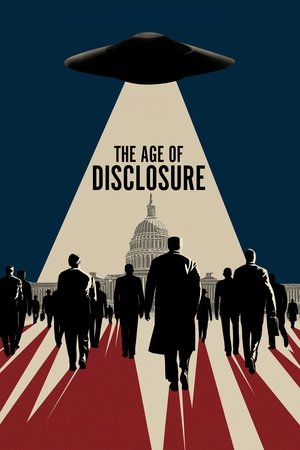
Director Dan Farah got 34 senior members of the U.S. Government, military, and intelligence community to come on camera. He says they reveal an 80 year cover-up of the existence of non-human intelligent life and a secret war amongst major nations to reverse engineer technology of non-human origin. The film explores the profound impact the situation has on the future of humanity, while providing a look behind-the-scenes with those at the forefront of the bi-partisan disclosure effort.
The follow-up film to “Barstow, California” takes us to the mountains of Miyama, a remote forest and tourist area north of Kyoto. Uwe Walter, a shakuhachi player from Germany, lives there with his wife Mitsuyo for 30 years. Together with the villagers he prepares the annual Gion Festival. On the eve of the festival, the village representatives tell him that his self-built studio is to be demolished. This brings back memories for him of earlier times and his first steps as a Nō actor. In the manner of a fresco, the film interweaves rural depictions of everyday life with the story of its German protagonist. In the village community with its togetherness of generations, Uwe shares life with his neighbours, with farmers, hunters, woodsmen, poultry farmers and anglers, tills his kitchen garden, and like other tradition-conscious villagers, he also grows his rice. The film shows them in a harsh mountain landscape between the rainy season and the first snow.
Atypiques
The greatest secret of the Second World War has remained a mystery for the last 80 years: a Jewish Communist, Sandor Rado, led a spy network that proved essential to the victory of Allied Forces. Rado received details of strictly confidential strategies from the highest echelons of the Nazi State through Rudolf Roessler, a dedicated anti-Nazi he'd only known as code name "Lucy." Aided by key German industry leaders, Roessler transmitted timely information from high-ranking collaborators within the German army headquarters. Despite their achievement, Rado, Roessler and their sources remained unacknowledged heroes until today. Thanks to the recent declassification of secret archives, we are now able to step behind the scenes of this incredible story.