Ekodomy aneb Život v rovnováze
Ils étaient tirailleurs, voix oubliées de la Grande Guerre
1911. Lenin organizes the first Bolshevik party school near Paris, in the small town of Longjumeau. Through a chain of historical parallels and associations, this time is intertwined with the events of the Paris Commune, the October Revolution and the political struggles of the post-revolutionary years.
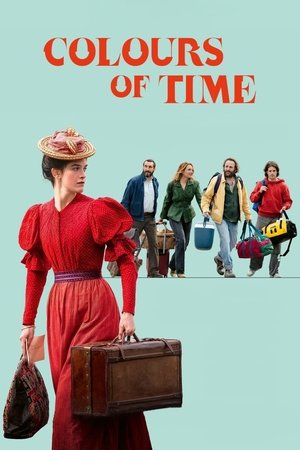
In the spring of 1913, Parisian businessman Gabriel Astruc opens a new theater on the Champs Elysées. The first performance is the premiere of Igor Stravinsky's 'The Rite of Spring', danced by the Ballet Russes. The rehearsal process is extremely fraught: the orchestra dislike Stravinsky's harsh, atonal music; the dancers dislike the 'ugly' choreography of Vaslav Nijinsky. The volatile, bisexual Nijinsky is in a strained relationship with the much older Sergei Diaghilev, the Ballet Russes' charismatic but manipulative impresario. Public expectation is extremely high after Nijinsky's success in 'L'apres-midi d'un faune'. Finally, 'The Rite of Spring' premieres to a gossip-loving, febrile, fashion-conscious Parisian audience sharply divided as to its merits.
The heatwave of 2003 remains etched in our memories. We remember an angry emergency doctor, crowded hospital corridors, and a health minister in a polo shirt who seemed completely out of touch with reality. Between August 1 and 20, 2003, the heatwave claimed 15,000 lives. One in three victims lived in the Ile-de-France region, which was hardest hit by this deadly heatwave. This tragedy revealed many shortcomings. First, the lack of preparedness of the public authorities to deal with such a health crisis. Second, the way in which the elderly are treated. Climatologists estimate that from 2050 onwards, the summer of 2003 will be the norm. Hyper-urbanization, poor insulation in homes, and a lack of green spaces are all factors that exacerbate the effects of high temperatures.
This darkly satirical musical reframes American history through the eyes of those who attempted – successfully or not – to kill US presidents. Structured as a surreal carnival sideshow, the piece weaponises American musical traditions – vaudeville, folk ballads, barbershop quartets, patriotic Sousa-style marches and Bacharach pop – to undercut the myth of the “American Dream,” exposing how frustration, alienation and entitlement can curdle into violence.
Poème Électronique is an 8-minute piece of electronic music by composer Edgard Varèse, written for the Philips Pavilion at the 1958 Brussels World’s Fair. The Philips corporation commissioned Le Corbusier to design the pavilion, which was intended as a showcase of their engineering progress. The pavilion was shaped like a stomach, with a narrow entrance and exit on either side of a large central space. As the audience entered and exited the pavilion, the electronic composition Concret PH by Iannis Xenakis (who also acted as Le Corbusier's architectural assistant for the pavilion's design) was heard. Poème électronique was synchronized to a film of black and white photographs selected by Le Corbusier which touched on vague themes of human existence.
Entre aulas e barricadas: dez anos das ocupações das escolas na cidade de São Paulo
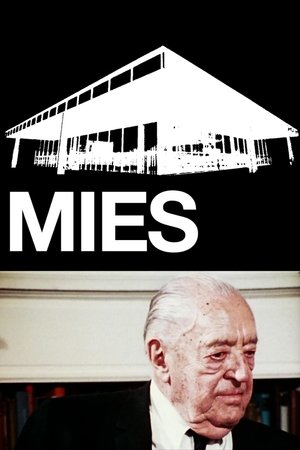
After filming the construction site of the Berlitz Palace (2nd), Pierre Chenal shows us in contrast other contemporary architectural achievements which, using the same technical processes, do not sacrifice the structure of iron and concrete for decoration. A documentary to the glory of the modern designs of Mallet-Stevens and Le Corbusier.
When asked to make a documentary about her friend’s mother—a Parisian astrologer named Juliane—the filmmaker sets off for Montmartre with a Bolex to craft a portrait of an infectiously exuberant personality and the pre-war apartment she’s called home for 50 years.
Located in former West Berlin, Tempelhof Airport reflects the dramatic history of the 20th century. Once a Nazi showpiece, it later became a symbol of freedom during the Berlin Airlift and the Cold War. In 1978, East German citizen Constanze Glien unexpectedly arrived here after her flight was hijacked, changing the course of her life.
On November 13, 2015, the attacks in Paris and Saint-Denis, carried out by three Islamist commandos and claimed by ISIS, were the deadliest in France since the end of World War II. In the months that followed, the November 13 Program was launched by the CNRS and Inserm to study the construction of individual and collective memory around an event that profoundly marked French society. Today, the testimonies of 27 volunteers—among some 1,000 people—who participated in the study form a mosaic of experiences that shows how trauma extends beyond the immediate circle to permeate the national collective memory.
L'échec du rideau de fer ?
The Opium Wars, a 19th-century armed conflict between the Qing Dynasty and the British Empire, is narrated by a history professor who has a hypnotic effect on his students.
Based on the true story of the 40-year friendship of Audrey Hepburn and designer Count Hubert de Givenchy, over the course of one magical, fashion-filled night in Paris.
Los Rastros del Corregidor
Born into a family of farmers in the mid-19th century, Karoline Augusta Antonsen moves to a nearby industrial city in her late teens, driven by the dream of building a large family and owning a big house. This short film follows her journey of hope, and her struggle to survive in a tough economy. Will she achieve her lifelong ambition or will her story end in tragedy?
Why did the series "In Therapy" on ARTE break audience records? Does it reflect the truth of psychoanalysis? From personal quests to collective traumas, this sensitive documentary explores the reciprocal influences between fiction and reality.
Haitian history is presented through an explosion of colour, dance and music, as the country prepares for its legendary carnival.
Transumanza