The life and legacy of Marlon Brando and how he changed acting.
A documentary on the creation of Lars von Trier's fascinating drama Dogville starring amongst others Nicole Kidman, Paul Bettany, Stellan Skarsgård, Ben Gazzara, Lauren Bacall and James Caan. Showcasing behind-the-scenes footage and providing a much deeper look inside the world of filmmaking including some moments of insight that are hard to believe.
Since the early 1990s, Quentin Tarantino has been on a cinematic rollercoaster ride, that's never looked like slowing down, that has cemented himself as one of the worlds most influential filmmakers. Through his unique style, Tarantino carved out a place in Hollywood just for him, and even when others have tried to emulate him, his films stand-out amongst the crowd. And with one movie left before he supposedly retires, we take a look back at the ups and downs of his incredible life on film.
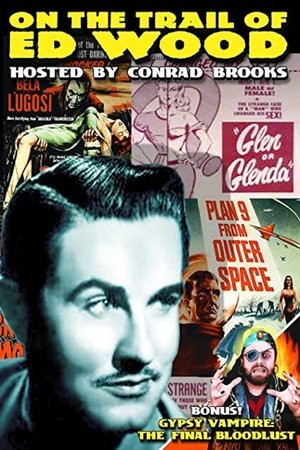
Honing his craft as an indie filmmaker in Germany in the early 90s, Uwe Boll never could have imagined the life that lay before him. From working with Oscar-winning actors and making films with US$60million budgets to having actors publicly disparage him and online petitions demanding he stop making films, Boll continued to work; he has a filmography of 32 features, a career that has led to his new life as a successful high-end restauranteur. Already a cult legend, he will be remembered forever in the film world; for some, as a modern-day Ed Wood, who made films so bad, they're good, while for others, a prolific filmmaker who came from a small town in Germany and never compromised his integrity while forging his own unique Hollywood trajectory.
In this documentary about low-budget filmmaking in upstate New York, you'll learn how affordable digital-video technology has changed the lives of the artists behind action flicks, monster movies, nonfiction stories, and comedies. "Every Pixel Tells a Story" introduces viewers to a wide range of independent filmmakers, all of whom prove that with a little ingenuity, access to the right technology, and plenty of tenacity, filmmakers can still practice their craft 3,000 miles from Hollywood. In fact, "Every Pixel Tells a Story" is an example of what can be accomplished on digital video. Producer-director Peter Hanson shot and edited the movie in a matter of weeks using a camcorder, a computer editing system, and a $30 microphone from Radio Shack, all while spending a fraction of what the documentary would have cost had it been shot on film.
Since the invention of cinema, the standard format for recording moving images has been film. Over the past two decades, a new form of digital filmmaking has emerged, creating a groundbreaking evolution in the medium. Keanu Reeves explores the development of cinema and the impact of digital filmmaking via in-depth interviews with Hollywood masters, such as James Cameron, David Fincher, David Lynch, Christopher Nolan, Martin Scorsese, George Lucas, Steven Soderbergh, and many more.
Working largely uncredited in the Hollywood system, storyboard artist Harold and film researcher Lillian left an indelible mark on classics by Alfred Hitchcock, Steven Spielberg, Mel Brooks, Stanley Kubrick, Roman Polanski and many more.
A documentary about the making of the first Star Wars film (and to a lesser extent Empire and Jedi) including a look at some of the deleted scenes, behind the scenes footage, and notes on subtle things that you might have never seen or noticed before.
After three decades, Jaws continues to intrigue, thrill and frighten viewers. This documentary focuses on the many ways in which Jaws has helped to shape popular culture.
Despite the anti-Semitic campaign launched by the Polish People's Government in the late 1960s, director Jerzy Hoffman finishes working on the film Pan Wołodyjowski. It becomes the ticket to the production of Potop, the most expensive film in the history of Polish cinematography. During his work, the director not only has to deal with mounting production problems, the distrust of the People's Government, but also with the expectations of millions of Poles.
A French documentary on Superman actor Christopher Reeve as told by his French voice dubbing actor, Pierre Arditi.
A film pioneer, Binka Zhelyazkova was at the forefront of political cinema under Bulgaria's Communist dictatorship. Though she remained faithful to the communist ideals she became an avid critic of the regime and brought upon herself the wrath of its censorship. As a result four of her nine films were shelved and released to the public only after the fall of the regime in 1989, and Binka Zhelyazkova became known as the bad girl of Bulgarian cinema. A provocative portrait that reveals the pressures and complexities that arise when art is made under totalitarianism.
Against a collage of excerpts that span thirty-four films, a filmmaker reflects on the community he has built over more then a decade of low-budget movie making in Oklahoma City.
Behind the scenes of Darby O'Gill and the Little People.
The epic story of how the film The African Queen (1951), directed by John Huston and starring Humphrey Bogart and Katharine Hepburn, was shot on real African locations, barely overcoming all kinds of hardships and disasters.
The story of three men with a shared dream: James Bond franchise producers Albert R. Broccoli and Harry Saltzman, and Bond creator and author Ian Fleming. It’s the thrilling and inspiring narrative behind the longest running film franchise in cinema history, which began in 1962.
A film about the career and methods of the master silent comedy filmmaker.
Absolute pleasure as an identity. Alfonso de Sierra, Luis Escribano, Ramón Massa, Ces Martí and Enric Bents were “Els 5 QKs”, a group of amateur filmmakers who, in 1975, decided to get together and create a transgressive and courageous filmography breaking social, religious, and political boundaries; placing the faggot as leading role hero: proud of himself, shameless, beyond good and evil. In this documentary film, Luis Escribano and Ces Martí, only living members of the group, review, alongside some actors, their creative process and what those films, forgotten till now, meant to Barcelona during La Trancisión.
A documentary about the comedy director and producer Judd Apatow.
Dreaming the Quiet Man’ includes interviews with aficionados of Ford like, Martin, Scorsese, Peter Bogdanovicz, Jim Sheridan, William Dowling, and Joe McBride. There is mesmeric archive and rare photographs of the making of the film. The main location of the documentary is Ford’s ancestral homeland of Connemara, on the west coat of Ireland, where his parents were born. We meet Ford’s cousins, the Feeney’s who tell the story of Ford’s parent’s departure from Ireland after the Great Famine and the young Ford’s return to Ireland in 1922 to visit his cousins the Thornton’s and saw their house being burned down by the infamous Black and Tans. Ford, under the pretense of scouting locations for a movie, gave money to the IRA. We travel to Portland Maine where Ford grew up and went on to become a director in the first bloom of Hollywood. The boy made it good but Ireland was always on his mind.