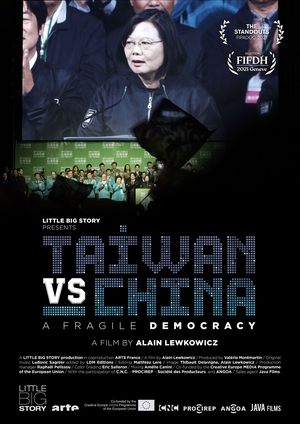
One Country, Two Systems? No Way! say the youth of Taiwan. But China under President Xi Jinping wants more than ever to bring the island of Taiwan back into the fold, just like Hong Kong. Can the burgeoning democracy on China’s doorstep, driven by digital technology, resist the Middle Kingdom’s advances? To China Taiwan is a breakaway province that must return to the fold. To its 24 million inhabitants it is a sovereign state with its own constitution and democratically elected leaders. Now that Hong Kong has been brought into line, Taiwan remains determined to stand up as a vibrant, young democracy. But it won't be easy. Since the Sunflower Movement in 2014 when the young came out to prevent an economic agreement with China, citizen groups have been fighting for the transparency of institutions.
With Taiwan remaining in the grip of martial law in 1982, a group of filmmakers from that country set out to establish a cultural identity through cinema and to share it with the world. This engaging documentary looks at the movement's legacy.
Upon learning of his father's terminal illness diagnosis, a young, autistic, hearing-impaired artist travels back to Taiwan with a filmmaker to make a film in his honour.
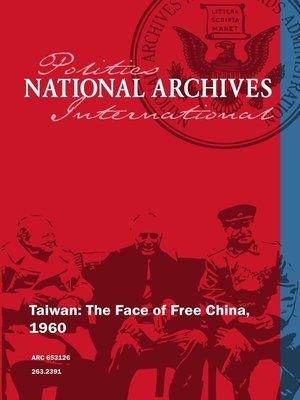
A documentary produced by the United States Central Intelligence Agency (CIA) that covers the history, land reform, industry, religion, educational system, and urban activities of Taiwan.
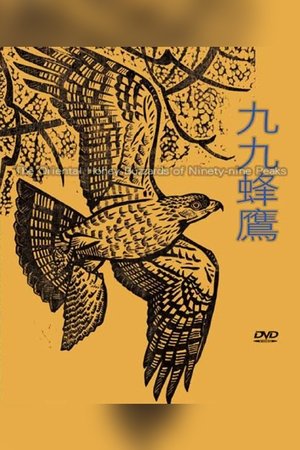
Oriental Honey Buzzard (Pernis ptilorhynchus) is one of the raptors in Taiwan that specifically builds their nests in “ferns”. While other buzzards migrate between cold northern continent and warm southern islands, they prefer to propagate in Taiwan. Ninety-nine Peaks is their major habitat. With different feather colors, this species can only be distinguished from other birds by their long narrow beak and sharp claws. However, it is certain that all oriental honey buzzards love to eat pupa of bees. The Oriental Honey Buzzard of Ninety-nine Peaks is a documentary produced by Raptor Research Group of Taiwan and published by Forestry Bureau, Council of Agriculture Executive Yuan in 2011. This film not only was nominated in the 34th Montana International Wildlife Film Festival but also won the first –run film in the National Ecological Film Festival and the Best Animal Behavior Award at the 2011 Japanese Wildlife Film Festival.
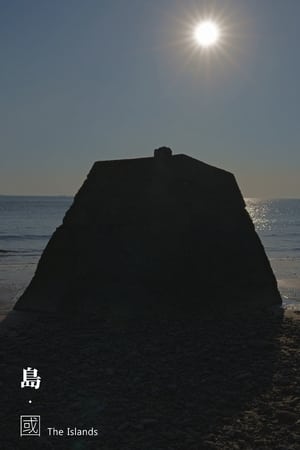
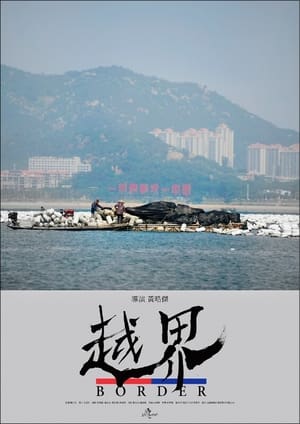
The rural Taiwanese outer islands of Kinmen sit merely 2 miles off the coast of China. Kinmen attracts tourists for its remains from the 1949 Chinese Civil War. It also marks the frontline for Taiwan in its escalating tension with China.
In Taiwan, there is a group of people participating in this race against time. They are hidden inside the film archive of New Taipei City’s “Singapore Industrial Park”, where the 17,000-plus film reels and over a million film artifacts have become their spiritual nourishment. Day after day, they shuttle back and forth inside, carrying their doubts, their learnings, and their faith. What they are doing is awakening these long-neglected film reels, then piecing together the no-longer-existent social atmospheres and lives of distant pasts recorded on them. And spending time in this archive has become everyday life for these film archivists and restorers.
Is Taiwan the scene of the next bloody war? A Chinese attack could trigger a conflict between the superpowers. How great is the danger of a Chinese invasion?
Richly illustrated with film clips and interviews, OUR TIME, OUR STORY tells the still-evolving story of the Taiwanese "new wave," from its rise in the early 1980s, as the island was democratizing after decades under martial law, through growing international recognition and domestic debate in the 1990s. Spearheaded in its early years by such filmmakers as Edward Yang, Ko I-cheng, Hou Hsiao-hsien and Wan Jen, the movement revitalized Taiwan cinema through low-budget experiments that emphasized personal stories, political reflection and stylistic invention. Said filmmakers, writers and actors like Wu Nien-jen and Sylvia Chang, even "second wave" directors Tsai Ming-liang and Lin Cheng-sheng provide fond reminiscences and retrospective insights in this compelling account of one of the most distinctive national cinemas of the last quarter-century.
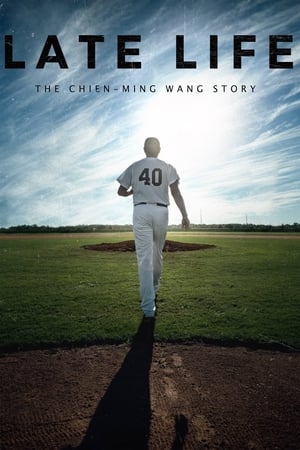
The first and only Taiwanese player for the New York Yankees, Chien-Ming Wang held many titles: American League Wins Leader, World Series Champion, Olympian, Time 100 Most Influential, and The Pride of Taiwan. He had it all - until a 2008 injury forever altered the course of his career. Late Life: The Chien-Ming Wang Story - named after the late sinking action on his signature pitch - follows the rise and fall of the international icon as he fights his way back into the Major Leagues through endless rehab programs and lengthy stints away from home, carrying the weight of the world on his battered shoulder. A poignant and intimate account of Wang’s steadfast quest, Late Life tells the story of a man who is unwilling to give up and unable to let go.
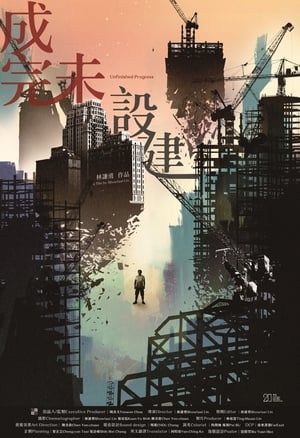
The essence of progress in civilization has always been handiwork. In traditional Chinese civilization, the emperor was supreme. Vested with the authority to enjoy the best of handiwork, all crafts used for residence, clothing, food, and travel were the most refined and splendid.
Hong Kong ne répond plus
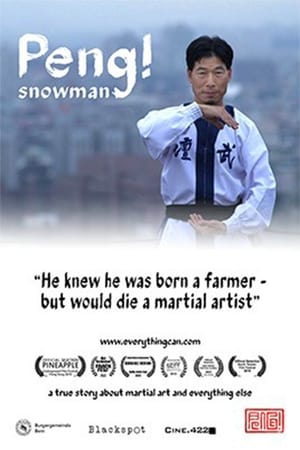
'Peng! Snowman' is a feature length documentary about a farmer's son who became one of the worldwide best martial artists. Just forget what you know about martial arts master. Peng will redefine the term: He's a funny, crazy genius! At the age of 60, Peng Wu-Chi was willing to share his incredible story for the first and last time - before he disappeared.
In 2013, the Golden Horse Film Festival celebrated its 50th anniversary. The ministry of Culture commissioned director Yang Li-chou to make a documentary about the history of Golden Horse. What is unique to this film is that it's not an ode to celebrities but about the role cinema plays in ordinary people's lives. It's a love letter to cinema, filmmakers and audiences.
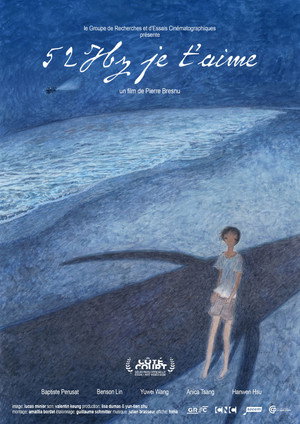
You hear the gentle lapping of the water, the shimmer of the waves. The room is all blue. Right in front of you, a fragile signal is picked up on the screen. Step closer, and press A to mimic it. Hold the frequency : This is your first contact with the loneliest whale in the world. Note where it is, we’ll come back to it later.
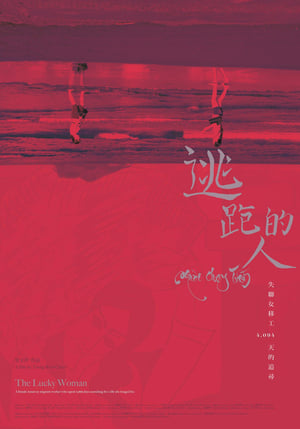
This film follows the lives of undocumented Vietnamese workers in Taiwan doing odd jobs to survive, after having been forced to flee their employers due to harsh working conditions and lack of medical care. How will living this way for more than a decade shape their lives?
Big Fairy
I enjoy religion, I appreciate belief systems and how they offer structure to people's lives. I also appreciate how spirituality manifests itself in Asian cultures as this almost earthbound presence guiding people through every day life and when they need an extra bit of help they need only ask whichever deity holds dominion over their desire. Here is an experimental film I made with videos from my iPhone. Shot across Taiwan and South Korea. An experimental film I made with videos from my iPhone. Shot across Taiwan and Korea. My aim was to explore success in how it pertains to every day life, the satisfaction of small moments, spirituality, superstition, and daily rituals.
Taiwan is an island country. Although it is surrounded by the sea, its people fear the sea since the politics, the history and the religious beliefs held on this island make people turn their backs to the sea. Oceanic literature author Liao Hung-chi and underwater photographer Ray Chin lead the audience out to the sea and into the water. They prompt us to understand the sea and to think about the possibility that the ocean might become our lives and the future of our country.
Taipeilove* is a documentary on the perception of homosexuality in the Taiwanese society. As Taiwan is the first country in Asia that is in the process of legalizing same-sex marriage, the documentary follows activists, politicians and experts in the Taiwanese society who have been fighting for marriage equality and navigating their lives through the hardship of coming-out, reaction of families, abandonment and finding love.