At a time when French flags are being burned and French embassies targeted, this documentary delves into the growing disaffection between French-speaking Africa and the former colonial power. Through the voices of African leaders, pan-African activists, and committed young people, the film questions the persistence of a relationship marked by the aftermath of colonization, the opaque agreements of "Françafrique," and a military presence deemed paternalistic.
Archival film maestro Göran Hugo Olsson has assembled—from a vast catalogue of footage in the vaults of Sweden’s national television service SVT—accounts of the Israeli-Palestinian conflict as witnessed and represented by Swedish journalists. Stories of the beginning of the Israeli state interwoven with the Palestinian struggle for independence. News coverage with Yasser Arafat and interviews with Israeli foreign minister Abba Eban during a visit to Sweden unseen since first broadcast. From the tenth anniversary of Israel’s founding to the First Intifada, perspectives and encounters with statesmen, civilians, revolutionaries, and intellectuals tell the story from myriad angles of an evolving media landscape, revivifying a history of the ongoing conflict.
For decades, the countries of the African Sahel region have been targets of colonialism and exploitation by France and other Western powers. This documentary addresses the popular resistance and new paths of development forged by Burkina Faso, Niger, and Mali after experiencing civil and military uprisings in recent years. The film explores the popular resistance that sustains the revolution in the three Sahel countries and was made after extensive coverage of the ongoing social dynamics and geopolitical disputes.
Skip Liberty enlisted in the Army in 1968. During his tour in Vietnam he shot 3,100 feet of Super 8 film, over 3 hours worth. Upon returning to the states the film was placed in storage, Skip had never seen the footage he shot. Until now.
Asil is a young Syrian refugee awaiting documents in Turkey while processing the trauma of losing her home and family. Her story gives voice to a charming gigantic puppet named Amal, who represents millions of migrant and displaced children in a walk from the Syrian border in Turkey all the way across Europe. Escorted and animated by a group of puppeteers who are themselves refugees, Amal’s epic journey is one of compassion and discovery.
2010 documentary film on the Armenian Genocide by the Young Turk government of the Ottoman Empire during World War I. It is based on eyewitness reports by European and American personnel stationed in the Near East at the time, Armenian survivors and other contemporary witnesses which are recited by modern German actors.
Dmytro Komarov's documentary project The Year. Kharkiv Region. Dmytro Komarov will show Kharkiv in the first months of the full-scale invasion of Ukraine by Russian troops. Viewers will hear the stories of people who found themselves in the epicentre of the brutal attacks: at the air defence base destroyed by a Russian missile, in the residential area of the city - Northern Saltivka - which was ravaged by shelling. The journalist will talk to those who played a key role in the liberation of the Kharkiv region. One of these people is Roman Hryshchuk, the commander of the 127th separate territorial defence brigade of Ukraine. He told us how the military practice of the past - using decoys in the form of dummies - helped to identify and destroy the occupiers. How did the full-scale war begin for Kharkiv? What plans did the enemy have for Kharkiv? What united people and gave them hope in the most difficult times? Find out in the documentary project "Year. Kharkiv Region".
Paul Pawlikowski's award-winning documentary on life behind Serbian lines in Bosnia. The film observes the roots of the extreme nationalism which has torn apart a country and provides a chilling examination of the dangerous power of ancient nationalist myths.
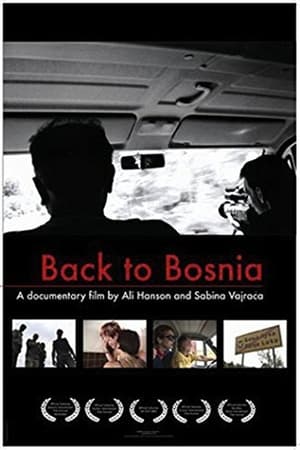
A film about a generation of four friends who grew up together in Sarajevo. They are the friends of filmmaker Lidija Zelovic-Goekjian, now living scattered across the world. What has happened to them over the past 13 years: how did they survive the war, how do they live now, how do they look back on their former lives, on Sarajevo, and on their old friends?
Voices in Wartime is a 2004 documentary that explores the human experience of war through poetry. Combining interviews with soldiers, journalists, and historians, it reveals how war affects individuals and societies across time and place. The film features poets from around the world – from Homer and Wilfred Owen to Shoda Shinoe and modern writers in Iraq and Nigeria – showing how poetry expresses the pain, trauma, and truth of conflict. By linking verse with real-life accounts, Voices in Wartime highlights how poetry helps us understand the emotional and moral impact of war.
Personal stories from civilians, children, soldiers, doctors, the country’s elderly, journalists, religious leaders, and international volunteers - a handful of the millions of people whose lives have been turned upside-down by nine years (and counting) of Russian aggression against Ukraine.
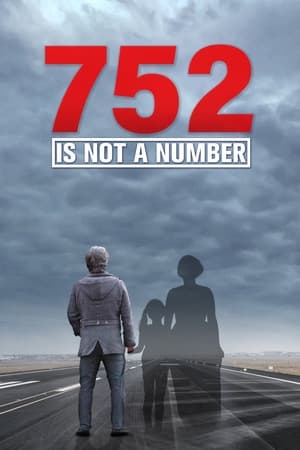
On January 8, 2020, Ukraine International Airlines Flight 752 went down as it was leaving Iranian air space. All 176 people on board were killed, many of them Iranian Canadians. For weeks Iranian authorities vociferously denied responsibility, but foreign governments and agencies were certain the plane was shot down by Iranian military, a fact Iran’s government eventually admitted. There were no answers as to why the plane was fired on or even why it was allowed to take off, since hostilities had broken out in the region in preceding days.
A short portrait of the United States, conceived from historical footage of Native Americans to police bodycam recordings and strip club scenes. This short film reflects on the tensions, contradictions, and realities that shape the nation. It is presented as a segment from the larger work Naughty America.
INVASION is a documentary about the collective memory of a country. The invasion of Panama by the U.S in 1989 serves as an excuse to explore how a people remember, transform, and often forget their past in order to re-define their identity and become who they are today.
As filmmaker Maria Carolina Telles comes to terms with the death of her father, a man who regretted never making it to the frontlines of World War II, she focuses her lens on the life of another man who had his own unique experience as a civilian in the midst of combat: award-winning war photographer André Liohn.
When on February 24, 2022, Russian troops attacked Ukraine, the world stopped. The first shock, however, quickly turned into action. It was a natural impulse of the heart, Poles could not leave their neighbors, their friends from Ukraine completely alone. Almost everyone, residents of small and large cities, young and old, rich and poor, became involved in helping Ukrainians, opened their homes for those fleeing the war, and began to organize humanitarian aid. Did they pass the humanity test?
Free Fish is a short documentary filmed over the course of a year in Gaza, following two brothers — Abu Nagham and Ahmad — separated by war yet connected by the sea. Displaced from their home, Abu Nagham now lives in a tent in the south, fishing with his young nephew Rami, who lost his twin brother. Ahmad remains in the north, fishing amid ruins and occupation. Once a source of livelihood and freedom, the sea has become a battleground — heavily restricted, constantly watched, and always dangerous. Through intimate footage and poetic observation, the film captures the everyday courage required to cast a net, mend a line, or share a meal. Fishing becomes an act of survival, resistance, and hope. Co-directed by Bisan Owda (Peabody Award 2024) and Carolina Pereira, Free Fish offers a deeply personal and universal story of resilience in the face of erasure — a quiet tribute to a people who refuse to be forgotten.
Amid the failing counteroffensive, a journalist follows a Ukrainian platoon on their mission to traverse one mile of heavily fortified forest and liberate a strategic village from Russian occupation. But the farther they advance through their destroyed homeland, the more they realize that this war may never end.
Triggered by Russia's invasion of Ukraine in early spring of 2022, Ukrainian journalist and writer Ivan Avramov struggles to navigate his fluid identity and the shifting reality around him.
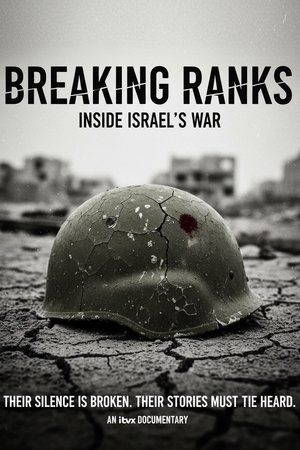
Breaking Ranks: Inside Israel’s War presents the first-hand recollections of IDF soldiers who have broken official silence to share their experiences of the war in Gaza - accounts that may raise serious questions about conduct on the ground and potential breaches of international law. Directed by award-winning filmmaker Ben Zand, the film features exclusive interviews with Israel Defense Forces (IDF), reservists and veterans - many speaking for the first time - who served during the war in Gaza. Their testimonies describe what they recall as indiscriminate bombardment, instances where Palestinian civilians were used as human shields, and an operational culture that some soldiers characterised as “no innocents in Gaza.”