An exploration —manipulated and staged— of life in Las Hurdes, in the province of Cáceres, in Extremadura, Spain, as it was in 1932. Insalubrity, misery and lack of opportunities provoke the emigration of young people and the solitude of those who remain in the desolation of one of the poorest and least developed Spanish regions at that time.
Orson Welles acted in Brazilian culture and music by deeply researching Brazil's historical geology, consciously completing a legendary cultural mission. Although being turned down by Hollywood producers, he developed a triumphantly accomplished mission in the language domain - three friends of Welles' testified his love for cinema, his passion for Brazilian music and people and his obstinate endurance against formidable pressures coming from inside and outside Hollywood regarding his unfinished "It's All True".
Quiet 10-year-old Zsofi has just changed schools. Feeling out of place at first, she is quickly admitted to the school’s famous choir and befriends her popular classmate Liza. Soon, they have to stand up united against their choir master, who isn’t quite the friendly and inspirational teacher they first thought she was.
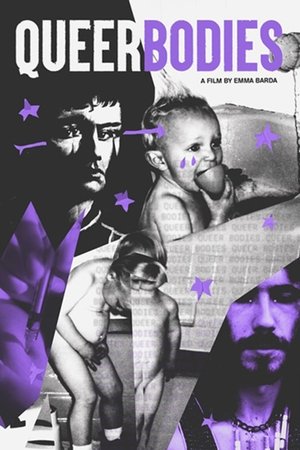
For 18-year-old Finnish–Kosovan Fatu, a simple visit to the grocery store feels as nerve-racking as a lunar expedition: for the first time in his life, he’s wearing makeup in public. Luckily his best friend Rai, a young woman on the spectrum of autism, is there to ferociously support him through the voyage.
A nude woman relaxing on a bed to Minnie Riperton's song Les Fleurs is exited by its chorus. Director Saam Farahmand heats up the body hair debate.
Exploring the art of Armenian portraitist Hakob Hovnatanyan, Parajanov revives the culture of Tbilisi of the 19th century.
Chris Marker and François Reichenbach document the massive anti–Vietnam War protest held in Washington, D.C., on October 21, 1967, where more than 100,000 demonstrators gathered at the Lincoln Memorial before marching on the Pentagon. Filmed amid the crowd, the short captures the tension, idealism, and growing radicalism of the American peace movement.
The making of the hoax film Miracles of Evolution.
Actor/cult icon Bruce Campbell examines the world of fan conventions and what makes a fan into a fanatic.
Go head-to-head with an icebreaker. Plunge down a twisting mountain gorge. Soar through the clouds in the nosecone of a jet, then speed along with a dog team as it races across a frozen Arctic lake. A sweeping, moving tribute to Canada's stunning geography and rich cultural heritage, Momentum leaps off your screen--and touches your heart. Momentum wowed audiences from around the world when it premiered at Seville, the greatest world's fair of the last quarter century.
A film documenting the landscapes of northern Iceland.
Everyone has heard about bee declines, but with so much attention focused on domesticated honeybees, someone has to speak up for the 4,000 species of native bees in North America. Natural history photographer Clay Bolt is on a multi-year quest to tell the stories of our native bees, and one elusive species – the Rusty-patched Bumble Bee – has become his white whale. Traveling from state to state in search of the Rusty-patched, he meets the scientists and conservationists working tirelessly to preserve it. Clay’s journey finally brings him to Wisconsin, where he comes face to face with his quarry and discovers an answer to the question that has been nagging him: why save a species?
In 1967, de Andrade was invited by the Italian company Olivetti to produce a documentary on the new Brazilian capital city of Brasília. Constructed during the latter half of the 1950s and founded in 1960, the city was part of an effort to populate Brazil’s vast interior region and was to be the embodiment of democratic urban planning, free from the class divisions and inequalities that characterize so many metropolises. Unsurprisingly, Brasília, Contradições de uma Cidade Nova (Brasília, Contradictions of a New City, 1968) revealed Brasília to be utopic only for the wealthy, replicating the same social problems present in every Brazilian city. (Senses of Cinema)
"Lionpower from MGM" (1967) is an exciting 60's promotional short subject, which showcases MGM's releases for the 1967-68 film season under a "five seasons" theme--fall, winter, spring, summer--plus a "fabulous fifth season". The main music is set to the rousing theme from "The Magnificent Yankee" composed by David Raksin in 1950. The promo is narrated by some of the best voice-over actors of the time, and is an excellent time capsule of a by-gone era.
Debauchery, over-indulgence and an unapologetic disregard for safety; welcome to the world of the British hard rock sensation ASKING ALEXANDRIA. With their critically acclaimed sophomore album "Reckless & Relentless" debuting at #9 on The Billboard Top 10, they have dominated the landscape of heavy music with their unforgettable live show and iconic personas. The new, shocking short film "Through Sin and Self-Destruction" is a controversial, uncensored look into the real lives of a new era of rockstars for today’s generation as they take over the Sunset Strip.
An animated film about the history and use of hot water.
João Pedro Rodrigues answers the question from the title with an autobiographical short-film.
This FitzPatrick Traveltalk short visits Guatemala City, touching upon its sights, customs, and history.
An isolated village in the Lithuanian countryside. Seated in her house, an elderly woman recites an old folk story. Then she climbs up the tall ladder that takes her to the rooftop of the church.
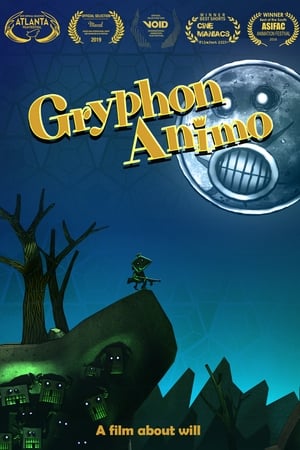
A man must express his true passion of music and rhythm in a world where it is repressed and outlawed.