Three families struggle to find their true selves and their soulmates in a world full of expectations, pressure and obstacles. Inspired by real events, this film shows how they pursue their dreams and potential without losing themselves.
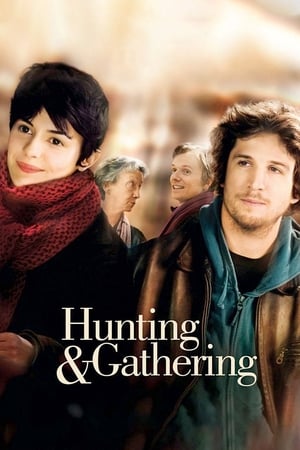
When Camille falls ill, she is forced to live with Philibert and Franck.
A film about Maija Isola, the designer of Finland’s most beloved fabrics. Her bold designs, which include classics like Unikko, Kivet, Kaivo and Melooni, were essential in creating Marimekko’s lifestyle universe. The film shows the secrets to the success of Maija Isola’s fabrics, the values at the heart of Isola’s globetrotter lifestyle, and the legacy she left us. The film is narrated by Maija Isola, as well as her daughter Kristina Isola. It takes us close to Maija as a person, artist, thinker and visionary through her letters. We also hear Armi Ratia’s thoughts on Isola both as an employee and as a friend.
In a world where farming is mechanized and farm animals are fed with products coming from across the globe, a young shepherd is trying to keep his practice sustainable by using ancestral ways to raise his flock.
A short documentary about Chun, who lives in Vienna.
Helvetica is a feature-length independent film about typography, graphic design and global visual culture. It looks at the proliferation of one typeface (which will celebrate its 50th birthday in 2007) as part of a larger conversation about the way type affects our lives. The film is an exploration of urban spaces in major cities and the type that inhabits them, and a fluid discussion with renowned designers about their work, the creative process, and the choices and aesthetics behind their use of type.
The re-enactment of the long dress (ao dai) era in 1960s, Saogon, thought to be the heyday of traditional Vietnamese costumes. Interwoven into that transformation in fashion and style of the ao dai in modern times told through the story of the character of Ba. Audiences will also see somewhere the image of the 60s, 70s full of honest women. An image of Saigon in the past, gentle and steeped in contrast to the rush of a dynamic city will be described by fashion, namely long dress - traditional costumes in Vietnam. All of them are cleverly nested in the story between two families, between mothers and their children, between a tailor and a fabric shop filled with dramatic rage.
Evie Lake introduces The Magic Hat Cafe, an anti-food waste cafe in Newcastle. In today’s climate, it’s hard not to worry about waste. Not just our own, but that of supermarkets and suppliers. Is every carrot, potato and piece of meat going to be used? What happens if they’re not? Magic Hat acts on these worries and turns would-be-wasted produce into meals and experiences for people to enjoy. Magic Hat is an innovative and progressive organisation in the way that it puts people first. Instead of purchasing your coffee and food, there’s an option to pay it back by working for them for a few hours. They also let people volunteer to learn new skills, to make themselves more employable and, in addition to being an environmentally conscious operation which eradicates waste in their supply chain, their sustainability also feeds directly into the community through food bank donations, education and delicious food.
Dr. Adams cultivates pig-human hybrids for organ transplants. One of the products, "Eve", was created to substitute for his lost love. His bodiless AI entity, Sahra, foils his plan in this nostalgic nod to B movie "creature features".
Seven people with seven love stories. They ignite the love and hate hidden under the table. In this battle of love, who will survive and who will lose? When the boundary between lies and truth has blurred, who can tell if the others are sincere or not? When one says, ' I love you', does one mean it or it's just another 'design'?
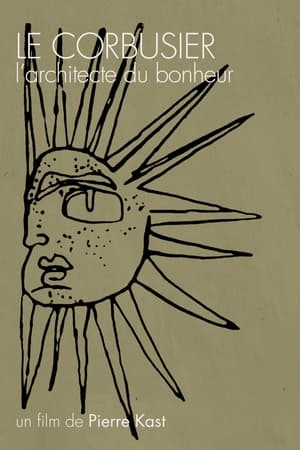
Documentary devoted to the architectural and urban planning designs of Le Corbusier. The architect supports his in-depth reflection on the city and its necessary adaptation to modern life with plans, drawings and images, particularly Paris, whose revolutionary development dreamed of by Le Corbusier is exhibited here. Its first projects will remain at the stage of a model: the modernization plan for the city of Algiers. Some will be created by other architects: Ministry of Education in Rio de Janeiro, UN Palace in New York. From the post-war period in less than 10 years, Le Corbusier created large housing units in Marseille, Nantes, a chapel in Ronchamps, a factory in Saint-Dié, a town in Chandigarh in India. Through diagrams, the architect presents his theory of the "radiant city", the mathematical key modulor of his work as well as his project for reorganizing the countryside, industrial and urban cities into a grouping around a cooperative system.
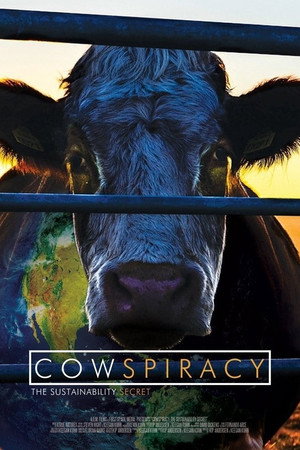
Follow the shocking, yet humorous, journey of an aspiring environmentalist, as he daringly seeks to find the real solution to the most pressing environmental issues and true path to sustainability.
Camille, an assistant at an art gallery, hosts Masato Kimura, a Japanese video game designer who has come to France to promote his latest creation. Indifferent to his world, Camille finds the man inscrutable until Masato asks to use her face in his next game.
Making a documentary on Le Corbusier is not easy, because he is undoubtedly the architect most familiar to the general public but also the most unknown. If most people know his great achievements, such as the Cité radieuse of Marseille, the pavilions of the Cité universitaire de Paris or the Tourettes convent, many are unaware of his works in Moscow, Rio de Janeiro or Chandigarh. Roy Oppenheim pays a vibrant tribute to Corbusier, dismissing the criticisms and darker facets of the character. It presents the career of this pioneering architect, as well as his thinking, the essential principle of which was aimed at the development of human beings and the balance of society. Light, space and greenery are integrated into his large futuristic cities, because according to him the eyes of the inhabitants should be drawn into the distance and not into their neighbor's bathroom.
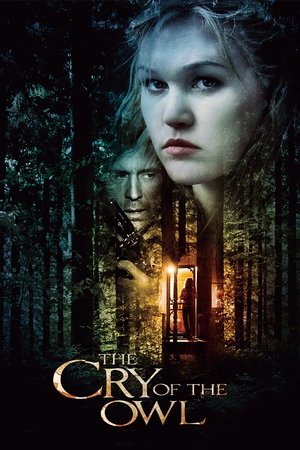
Fleeing New York City, a failed marriage and a fragile mental history, artist Robert Forrester moves to small-town Pennsylvania. There he becomes fascinated with the simple domesticity of a beautiful neighbor, watching her through the windows of her home --- until she invites him in for coffee. He is drawn into a relationship with the young woman whose boyfriend goes missing; Robert becomes a murder suspect, gradually sensing he is the target of a larger plot.
Documentary filmmaker Robert Kenner examines how mammoth corporations have taken over all aspects of the food chain in the United States, from the farms where our food is grown to the chain restaurants and supermarkets where it's sold. Narrated by author and activist Eric Schlosser, the film features interviews with average Americans about their dietary habits, commentary from food experts like Michael Pollan and unsettling footage shot inside large-scale animal processing plants.
Punto De No Retorno
When the leader of an artist residency kills the possum that’s been eating their cauliflower, the residents come to a shocking consensus.
It's Dutch Design is a 60-minute documentary about the worldwide success of Dutch Design. Top Designers and international keyplayers reveal their personal vision and explain why a small country could become so big in the field of Design. The history is told with iconic Dutch Design examples, spanning more than 100 years.
The film tells the story of two young people who chose different paths in life.