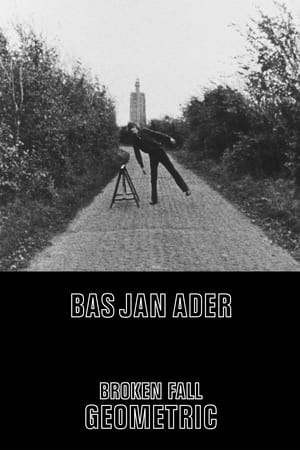
One of a series of ‘falls’ by Bas Jan Ader that he recorded on film, this work was filmed in West Kapelle, Holland in 1970.
Set in Kamakura and Busan. The Shibuyas who live in Kamakura lost their grandmother and parents in an accident. On the 23rd anniversary of the death, Tsuko suddenly reveals her plan of moving to Busan to Yoko and Ushio, so the three siblings find themselves at the crossroads of their lives.
A TV adaptation of the story “Twins” by Prezihov Voranc.
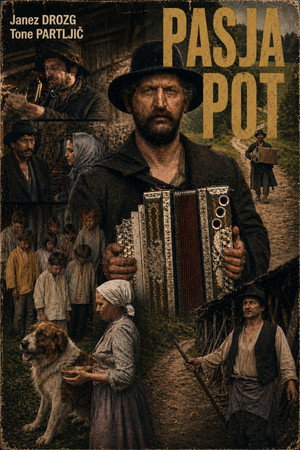
Reclaiming what was once stolen from him, a man journeys back to the place of his childhood nearly 80 years after his world came crashing down.
During a robbery with his brothers, Jules questions his aspirations and his future. He doesn't recognize himself in his brothers' lives. He concludes that he must break free from their influence to regain his freedom.
The fate of women against the backdrop of Transcarpathian history. The author's grandmother, Maria Fedorivna, recounts her life: how, as a 15-year-old girl, she had to marry into a second village because "the Russians were evicting the kulaks," how "the Russians" destroyed their family's house, the largest in the village, which had been built with money earned by migrant workers, took all their livestock and supplies, and sentenced her brother to seven years in prison. The wealthiest family was forced into poverty. The film also tells about the consequences of the 2015 earthquake in Okruha. When the tremors shook the village, Maria Fedorivna was in the hospital. Before she returned home, her relatives repaired the cracks in the house to protect Grandma Maria from anxiety.
The film is set in old Yuzovka on the eve of 1905. After searching the Kolchugins' apartment, where money from the strike fund was hidden, the police arrest Anna Kolchugina and her lodger, the miner and revolutionary Kuzma. Anna's teenage son, Stepan, is forced to go to work in the mine. There he learns about the existence of the revolutionary underground and joins its struggle.
In the winter of 1918, a provincial Russian town is faced with a shortage of food, firewood, and medicine. Discontent is brewing in the Red Army regiment stationed in the town, as former Tsarist officers sow seeds of discord in an attempt to organize a counter-revolutionary rebellion.
Born into poverty in Panama, Cirilo McSween’s journey is one of defiance, resilience, and triumph over systemic barriers. Against the backdrop of Jim Crow America, he confronts racism while pursuing the American Dream. From his arrival in the U.S. as an ambitious immigrant to his rise as a trailblazing entrepreneur and civil rights activist, McSween’s life stands as a testament to determination and community. Through tireless advocacy for equality and opportunity, he helped shape both Panama’s identity and Chicago’s civil rights movement. A confidant of Dr. Martin Luther King Jr., a pioneering insurance executive, and a philanthropist empowering underserved communities, McSween’s story bridges nations and generations. CIRILO, A Legacy Untold illuminates a transformative figure whose legacy continues to inspire across the Americas.
Mary is an ambitious Jamaican woman determined to live a grand life; her adventures take her across oceans and eras, from a battlefield of the Crimean War to a contemporary nursing home, and many times and places in between.
A biopic about the life of Mikhail Vasilyevich Lomonosov - Russian polymath, scientist and writer.
Based on the novel Francisco by Anselmo Suárez y Romero, "The Other Francisco" is a socio-economic analysis of slavery and class struggle through the retelling of the original novel. The film contrasts the romantic conceptions of plantation life found in Suárez Romero's novel with a realistic expose of the actual historical conditions of slavery throughout the Americas. It offers a critical analysis of the novel, showing how the author's social background led to his use of particular dramatic structures to convey his liberal, humanitarian viewpoint.
A testament to NASA's Apollo program of the 1960s and '70s. Composed of actual NASA footage of the missions and astronaut interviews, the documentary offers the viewpoint of the individuals who braved the remarkable journey to the moon and back.
Kiyoha rises from the lowly courtesan ranks to the high class position of Oiran in the steamy red-light district of Yoshiwara. She is determined to stand on her own two feet and live life as she pleased.
After over 50 years of wandering up and down Japan, finally in the 1970s, the rough-hewn blind shamisen player and folk-song collector named Takahashi Chikuzan became a musical sensation. This biographical drama chronicles his wanderings and his life, with a particular focus on his humble beginnings as a peasant on a remote and arid island.
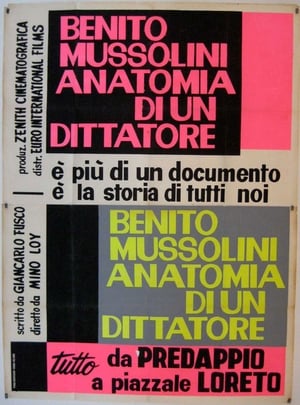
The armies of Fascist Italy conquered Addis Ababa, capital of Abyssinia, in May 1936, thus culminating the African colonial adventure of the ruthless dictator Benito Mussolini, by then lord of Libya, Eritrea and Somalia; a bloody and tragic story told through the naive drawings of Pietro Dall'Igna, an Italian schoolboy born in 1925.
An overview of the 75-year history of the Moscow Art Theatre containing unique historical footage, including rare excerpts from various stage productions.
The authorities summon many young men for forced labor in the Suez Canal, so Metwally leaves his sister Shafiqa alone with their old grandfather, whereupon Shafiqa is forced to succumb to the temptations of Diab, the district chief's son. As their sinful relationship is revealed, she is forced to leave for Asyut, where she becomes the mistress of Al Tarabishi, the supplier of slaves.
Opera by Harry Somers portraying Metis leader Louis Riel and his Northwest Rebellion. 1969 CBC-TV production based on the original 1967 opera.
When the Soviets impose new ways of collective farming and permanent settlements on a region of nomadic dwellers, young Ilyas is separated from his mother, Mariam. Through decades of war, mother and son persevere in their efforts to be reunited.