An autobiographical essay film structured as a letter to the director’s young daughter, "Où en êtes-vous, Bertrand Bonello?" weaves clips from Bonello’s films, excerpts from his scripts, pop songs, and snippets of original footage into a lyrical, reflexive cinematic self-portrait. "Où en êtes-vous?" is a collection initiated by Centre Pompidou, who asked directors to make retrospective and introspective films.
Rajah Caruth wasn’t supposed to be a NASCAR driver. As a Black kid growing up in Washington D.C., he had no connections and little representation in the industry. Determined to fulfill his childhood dream of becoming a driver, he pursued the only path he saw available: virtual racing. He made a name for himself in the online world of iRacing, leveraging his rapidly growing talents and personal brand into a spot in a real-life race car. In the few short years since Caruth first got into a car, he has risen to NASCAR’s penultimate racing series, with his sights set at the top. This short documentary tells his story and follows him as he prepares for a bold new chapter in his racing career.
The story of Dr. George Washington Carver (1864-1943), black educator and horticulturist. He is perhaps most well known for developing over 140 products from all parts of the peanut plant, including the shells and husks. He also developed products based on sweet potatoes and soybeans, and developed a cotton hybrid that was named after him.
Tanovic himself a refugee from Sarajevo interviews a Bosnian refugee in Brussels their new adoptive country Belgium.
Ra Paulette digs cathedral-like, 'eighth wonder of the world' art caves into the sandstone cliffs of Northern New Mexico. Each creation takes years to complete, and each is a masterwork. But patrons who have commissioned caves have cut off nearly all of his projects due to artistic differences. Fed up, Ra has chosen to forego all commissions to create his own Magnum Opus, a massive 10-year project.
The story of Alice Herz-Sommer, a German-speaking Jewish pianist from Prague who was, at her death, the world's oldest Holocaust survivor. She discusses the importance of music, laughter, and how to have an optimistic outlook on life.
An essay film on the editing of erotic movies.
A short documentary about a female truck driver in the United Kingdom.
Retrospective interview with Gina Gershon and Jennifer Tilly included with the 2014 Blu-ray by Arrow Video.
An obituary for Victor Jara, the Chilean folksinger who was murdered in a football stadium by the military junta during the days of the September 1973 coup.
Twenty-five films from twenty-five European countries by twenty-five European directors.
Jeff Koons is a MOCA commissioned mini-documentary on the career of artist Jeff Koons, directed by Oscar Boyson.
The Letter tells the true story of 11-year-old Andrè and his inspiration to pursue a ballet career.
This short film examines the origins of several superstitions including crossing your fingers, knocking on wood, rabbit's feet, and breaking champagne bottles to christen ships, plus the role of superstitions in the Flying Dutchman tale.
Instructive short on using cylinders to construct all manner of fun objects.
A group of people are standing along the platform of a railway station in La Ciotat, waiting for a train. One is seen coming, at some distance, and eventually stops at the platform. Doors of the railway-cars open and attendants help passengers off and on. Popular legend has it that, when this film was shown, the first-night audience fled the café in terror, fearing being run over by the "approaching" train. This legend has since been identified as promotional embellishment, though there is evidence to suggest that people were astounded at the capabilities of the Lumières' cinématographe.
Behind-the-scenes documentary of one morning on the set of "Gerry" directed by Gus Van Sant.
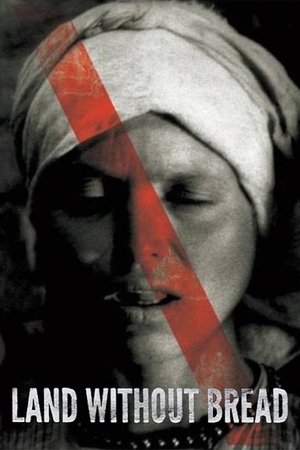
An exploration —manipulated and staged— of life in Las Hurdes, in the province of Cáceres, in Extremadura, Spain, as it was in 1932. Insalubrity, misery and lack of opportunities provoke the emigration of young people and the solitude of those who remain in the desolation of one of the poorest and least developed Spanish regions at that time.
Working men and women leave through the main gate of the Lumière factory in Lyon, France. Filmed on 22 March 1895, it is often referred to as the first real motion picture ever made, although Louis Le Prince's 1888 Roundhay Garden Scene pre-dated it by seven years. Three separate versions of this film exist, which differ from one another in numerous ways. The first version features a carriage drawn by one horse, while in the second version the carriage is drawn by two horses, and there is no carriage at all in the third version. The clothing style is also different between the three versions, demonstrating the different seasons in which each was filmed. This film was made in the 35 mm format with an aspect ratio of 1.33:1, and at a speed of 16 frames per second. At that rate, the 17 meters of film length provided a duration of 46 seconds, holding a total of 800 frames.
Documentary profiling young Roxy Music fans. They talk about the band and the music, are seen out and about in Manchester, they prepare for a concert at the Opera House. Includes footage of a tribute band, who, due to a lack of musical instruments, use household appliances to make music.