A documentary about Peking in the dawn of the new Millenium. Contains interviews with Jia Zhangke and dj Gaohu
Le Baron et l'Empereur : Japon, la voie de la guerre
On June 5, 1989, one day after Chinese troops expelled thousands of demonstrators from Tiananmen Square in Beijing, a solitary, unarmed protester stood his ground before a column of tanks advancing down the Avenue of Eternal Peace. Captured by Western photographers watching nearby, this extraordinary confrontation became an icon of the fight for freedom around the world. FRONTLINE investigates the mystery of the tank man — his identity, his fate, and his significance for the Chinese leadership.
Greek internal migrants in Athens, after the Greek Civil War colonize the tops of the Tourkovounia hills.
Guangzhou, a.k.a. Canton, is southern China’s centuries-old trading port. Today the booming metropolis of 14 million is a mecca of mass consumption, its vast international trading centers crammed with every “Made in China” good imaginable. Every year more than half a million Africans travel to Guangzhou where they buy goods to sell back in Africa. Over time, some have chosen to stay, and for these Africans China looks like the new land of opportunity, a place where anything is possible. But is it? Featuring a dynamic cast of men and women from Cameroon, Kenya, Nigeria and Uganda, GUANGZHOU DREAM FACTORY weaves the stories of Africans chasing alluring, yet elusive, “Made in China” dreams into a compelling critique of 21st century global capitalism. Following a filmmaker’s journey from Ghana to China and back to Africa, GUANGZHOU DREAM FACTORY provides a rare glimpse of African aspirations in an age of endless outsourcing.
It's war. War against an invisible enemy that is not as deadly as we are told. The world is changing rapidly. Disproportionate measures are taken worldwide that disrupt society as a whole. A dichotomy in society forced vaccinations and restrictions on freedom. Have we had the worst? Or is there something more disturbing to awaiting us.
After starting a family of his very own in the United States, a gay filmmaker documents his loving, traditional Chinese family's process of acceptance.
In 2001, China joined the World Trade Organization with the strong support of a Democratic President and Republican Congress. Before the ink was dry on this free trade agreement, China began flooding U.S. markets with illegally subsidized exports while the big multinational companies that had lobbied heavily for the agreement rapidly accelerated the off shoring of American jobs to China. Today, as a result of the biggest shell game in American history, China has stolen millions of our jobs, corporate profits are soaring, and we now owe over $3 trillion to the world's largest totalitarian nation. This film is about how that happened... and why the best jobs program for America is trade reform with China.
Sound progression of two opposite landscapes.
The dysfunctional Chinese justice system allows citizens with grievances against their local governments to petition the court to clear or correct their record. Yet in order to do so, the petitioners must travel to Beijing to file paperwork and wait an indefinite period to plead their case. Following the saga of a group of petitioners over the years of 1996 and 2008, Petition unfolds like a novel by Zola or Dickens. This was filmed surreptitiously from the point of view of the petitioners, and not the justice officials, the police, or those heavies sent by the municipalities.
A sophisticated and beautifully constructed account of landscape change in and around Paris in the early 1960s. The film raises complex issues about the meaning and experience of modern landscapes and the enigmatic characteristics of features such as canals, pylons and deserted factories. Rohmer also explores the role of landscape within different traditions of modern art and design and refers to specific architects, artists and engineers.
A cable system designed by controversial Chinese company Huawei Technologies enables communication between an expert and a machine. Time succumbs to space in a "New Cold War" played out in technological materials.
A look at the man behind the legend, capturing the real Andy Warhol, as an artist and as a person, as he travels through China, from Hong Kong's glitter to the mystique of Peking's Forbidden City. Set in the Far East, the story begins with the opening of the most elegant jet set watering hole in Asia, Hong Kong's “I Club,” whose owner, a young Chinese millionaire, decided to try an experiment: to transplant the most advanced, far-out Western culture to the Far East in a multimillion-dollar club that offers everything from restaurants and bars, to a health club and even an art gallery. Warhol is invited to attend the opening as a guest of honor showing his “Celebrity Portraits.” The result of this cultural experiment was varied. Emotions from the “I Club” and Warhol's work ranged from outrage to indifference to wonder.
Ecumenopolis: City Without Limits" tells the story of Istanbul and other Mega-Cities on a neo-liberal course to destruction. It follows the story of a migrant family from the demolition of their neighborhood to their on-going struggle for housing rights. The film takes a look at the city on a macro level and through the eyes of experts, going from the tops of mushrooming skyscrapers to the depths of the railway tunnel under the Bosphorous strait; from the historic neighborhoods in the south to the forests in the north; from isolated islands of poverty to the villas of the rich. It's an Istanbul going from 15 million to 30 million. It's an Istanbul going from 2 million cars to 8 million. It's the Istanbul of the future that will soon engulf the entire region. It's an Istanbul nobody has ever seen before.
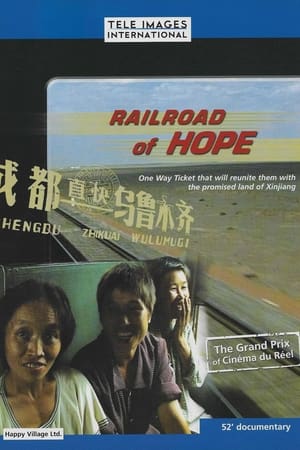
In a mountainous region of Sichuan, best known for pandas and earthquakes, there are no roads, no cars, no buses. But there is … a train. This documentary tells the story of the last working narrow gauge steam railway in China.
Portrait of Mrs. B., a tough charismatic North Korean woman who smuggles between North Korea, China and South Korea. With the money she gets, she plans to reunite with her two North Korean sons after years of separation.
Examines the early 1980s Hong Kong filmmaking community. Tony Rayns interviews some of the new generation of filmmakers and figures from the wider film culture.
This documentary takes an economic perspective, painting a candid picture of how the Dutch chain store HEMA has had to adapt to modern times and globalization to continue as a major player on the highly competitive retail market. It's all about expansion, even as far as China. But do foreign countries really need quintessentially Dutch concepts such as uniform pricing, the classic HEMA smoked sausages and timeless ladies' dresses? Chinese filmmaker Yan Ting Yuen, who came to the Netherlands at the age of six, followed the passionate CEO for a year, trying to find out what makes HEMA so unique. It turns out to be about more than just smoked sausages, as shown by the success of the new stores in France, where customers stuff their baskets with coffee mugs and Dutch syrup waffles.
Livestreaming your life to a devoted audience is big business. What happens when the cameras are off?
The director accompanies the German women's national soccer team.