This film about agricultural advances in the USSR was meant to serve as a teaching aid. Featuring documentary footage and animation.
The people, the scenery and the industrial traditions of the Stroud valley and the growth of the woollen industry.
Is your hedge thin and straggly? Don't worry, help is at hand.
In this short documentary from the Canada Vignettes series, a Saskatchewan grain elevator is moved across the snow-covered prairie to a new home after nearly a half-century of use. The film follows the lifting and transporting of the 9-storey, 200-ton structure, and examines the feelings of the people as they witness the final passing of their town's one and only grain elevator.
Semences : les gardiens de la biodiversité
At a time when French flags are being burned and French embassies targeted, this documentary delves into the growing disaffection between French-speaking Africa and the former colonial power. Through the voices of African leaders, pan-African activists, and committed young people, the film questions the persistence of a relationship marked by the aftermath of colonization, the opaque agreements of "Françafrique," and a military presence deemed paternalistic.
Documentary filmmaker Robert Kenner examines how mammoth corporations have taken over all aspects of the food chain in the United States, from the farms where our food is grown to the chain restaurants and supermarkets where it's sold. Narrated by author and activist Eric Schlosser, the film features interviews with average Americans about their dietary habits, commentary from food experts like Michael Pollan and unsettling footage shot inside large-scale animal processing plants.
Brazil is one of the most dangerous countries for environmentalists. The rural community of Belisário holds the country's second largest bauxite reserve, right below one of the most bio-diverse areas in the world: the Atlantic Forest. The small community was shaken when the beloved Gilberto, a Franciscan Friar, received a death threat followed by the lines: "you've been talking against mining way too much". PT: O Brasil é um dos países mais perigosos do mundo para defensores do meio ambiente. Em Minas Gerais, a comunidade rural de Belisário abriga a segunda maior reserva de bauxita do país, em uma das áreas de maior biodiversidade do mundo: a Mata Atlântica. A tranquilidade do pequeno vilarejo foi abalada quando Frei Gilberto, um franciscano que dedica sua vida à preservação da natureza, recebeu uma ameaça de morte com o seguinte aviso: "você tem falado demais contra a mineração".
The drought in the American West is predicted to be the worst in 1,000 years. Join five Academy Award-winning filmmakers as they explore the environmental crisis of our time and how to fix it before it's too late.
Chvála révy
Les Champs de la colère
This short film serves as a cautionary tale to farmers who recklessly cut down trees on their land. When prairie farmers engaged in this practice to facilitate plowing, they discovered that the trees had served as windbreaks protecting top soil from erosion. The Dominion Department of Agriculture's experimental station at Indian Head, Saskatchewan, cultivated acres of young trees for distribution to farmers.
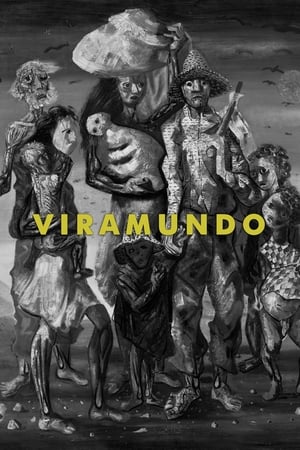
Viramundo shows the saga of the northeastern migrants that arrive in São Paulo, beginning with a train arriving and ending with a train leaving São Paulo in a cycle repeated every day. Viramundo's aim was to question why the military coup d'état in Brazil happened without any popular resistance or revolution or reaction of the society.
Examines the conflicts, politics, economics, and groundwater depletion in the High Plains region, with a focus on the Ogallala Aquifer. Farmers and communities survive on the precious waters of the Aquifer, yet it is being depleted at alarming rates.
In barely a century, French peasants have seen their world profoundly turned upside down. While they once made up the vast majority of the country, today they are only a tiny minority and are faced with an immense challenge: to continue to feed France. From the figure of the simple tenant farmer described by Emile Guillaumin at the beginning of the 20th century to the heavy toll paid by peasants during the Great War, from the beginnings of mechanization in the inter-war period to the ambivalent figure of the peasant under the Occupation, From the unbridled race to industrialization in post-war France to the realization that it is now necessary to rethink the agricultural model and invent the agriculture of tomorrow, the film looks back at the long march of French peasants.
This short documentary illustrates rural French Canadian life in the early 1940s. The film follows Alexis Tremblay and his family through the busy autumn days as they bring in the harvest and help with bread baking and soap making. Winter sees the children revelling in outdoor sports while the women are busy with their weaving, and, with the coming of spring young and old alike repair to the fields once more to plough the earth in preparation for another season of varied crops. One of the first NFB films to be produced, directed, written and shot by women.
Škůdce
Tom Jones, a shepherd who lived in one of the Ystradfechan Cottages at Old Farm, Treorchy, was employed by the Ocean Coal Company who owned the land above ground and coal (the Park and the Dare Collieries) beneath. A farrier who lived in the adjoining cottage tended to all the Park and Dare pit ponies. Tom Jones was known world-wide as the “Wonder Shepherd” for his remarkable skills as an animal trainer which, together with his concern for his flock, are recorded here.
La Ceinture Dorée is an institutional documentary film on the Brittany region in France. The different scenes describe the daily life of the Bretons, starting with a geography lesson on Brittany in a classroom. Then a Breton landscape where a painter paints a house, women in headdresses in a procession, bell towers and forgiveness, prayers at Calvaries. Then follow the plans of the boats at the dock and the work of the oyster farmers. Lobster ponds, algae collectors and fertilizer collection. Daily life of the Leonards, preparation of pancakes in front of the fireplace and pancake meal. etc
When a devastating famine descended on Soviet Russia in 1921, it was the worst natural disaster in Europe since the Black Plague in the Middle Ages. Examine Herbert Hoover’s American Relief Administration—an operation hailed for its efficiency, grit and generosity. By the summer of 1922, American kitchens were feeding nearly 11 million Soviet citizens a day.