« Emmanuelle » was released 50 years ago. Its main character, played by the young Sylvia Kristel, delve freely into her sexuality, without taboo. This bold movie became one of the great success of french cinema in the 70s, and Emmanuelle became the face of sexual liberation. Through the gaze of a woman, the character is back on the screen in 2024. This new Emmanuelle, written by Audrey Diwan, go in quest of a lost pleasure.
Good Copy Bad Copy is a documentary about copyright and culture in the context of Internet, peer-to-peer file sharing and other technological advances.
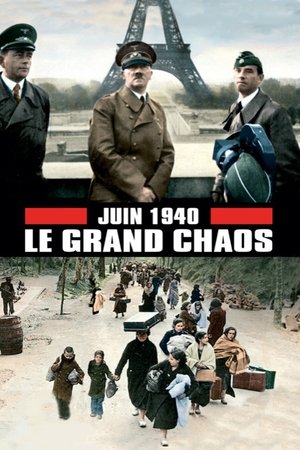
From May 10, 1940, France is living one of the worst tragedies of it history. In a few weeks, the country folds, and then collapsed in facing the attack of the Nazi Germany. On June 1940, each day is a tragedy. For the first time, thanks to historic revelations, and to numerous never seen before images and documents and reenacted situations of the time, this film recounts the incredible stories of those men and women trapped in the torment of this great chaos.
In one of those wonderful coincidences of history, lumière, the French word for “light,” was also the last name of brothers Auguste and Louis, whose brilliant invention, the cinematograph, helped to inaugurate the most beloved art form of the last 130 years. Institute Lumière director Thierry Frémaux uses Lumière, Le Cinema! to guide the viewer through over a hundred shorts—some famous, some forgotten, some never before seen—directed by Lumière and company. In the process, Frémaux illuminates how the brothers employed the camera as a creative instrument as they (and their operators) mastered framing, staging, and subject selection for quotidian and exotic microdocumentaries as well as the first ever fictional motion pictures. The result is not only a glorious re(telling) of the genesis of cinema but a profound meditation on the beautiful world captured—and the mysterious world imagined—by the Lumières.
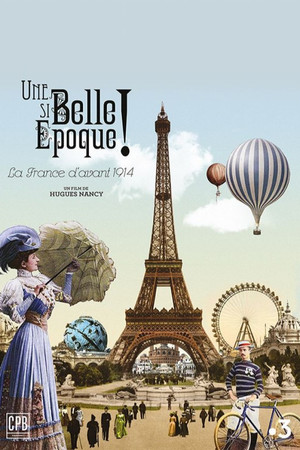
In 1900, the eyes of the whole world are on Paris. The World's Fair welcomed 50 million amazed visitors, and the city celebrated itself in a glamorous era. This period went down in history as the "Belle Époque." Elaborately restored and colorized historical photographs bring to life the exciting life in Paris between the end of the 19th century and the beginning of World War I in 1914. Bicycles, cars, airplanes, moving pictures, newly founded film studios, revolutionary composers and painters, avant-garde ballet performances, fashion houses, summer resorts on the Atlantic coast – life was intoxicating. People celebrate in the variety shows, cabarets, and revue theaters of Paris. Moulin Rouge, Folies Bergères, Bal Tabarin—in Paris, the nights are long and life is too short to sleep through. It is a dance on the volcano, given the political developments in the world.
Professor Alice Roberts follows a decade-long historical quest to reveal a hidden secret of the famous bluestones of Stonehenge. Using cutting-edge research, a dedicated team of archaeologists led by Professor Mike Parker Pearson have painstakingly compiled evidence to fill in a 400-year gap in our knowledge of the bluestones, and to show that the original stones of Britain’s most iconic monument had a previous life. Alice joins Mike as they put together the final pieces of the puzzle, not just revealing where the stones came from, how they were moved from Wales to England or even who dragged them all the way, but also solving one of the toughest challenges that archaeologists face.
The Mandrin Cave in the Rhône Valley is a fascinating excavation site. Archaeologist Ludovic Slimak discovered fossils and flints here, proving that Neanderthals inhabited the cave for over 80,000 years. The first Neanderthal in France for half a century was also unearthed in the cave: He was given the name Thorin.
A fascinating archaeological and scientific investigation on the world's best-selling book. When was the Bible written ? Who wrote it? Under what circumstances ? For what purpose ? These questions have long remained unanswered. With the discovery of the Dead Sea Scrolls in 1947, the thorough study of the texts, the advances in science, and the recent archaeological discoveries, one of the greatest historical mysteries is gradually being unveiled. Meet the most eminent specialists in the Bible who try to unearth brand new information and answer the enigmatic and fundamental question : who wrote the Holy Book ?
Famous French director Tavernier tells us about his fantastic voyage through the cinema of his country.
Apollo 11 : Retour vers la lune
This documentary by Theo Kamecke from 1970 gives an in-depth and profound look at the Apollo 11 mission to the moon. NASA footage is interspersed with reactions to the mission around the world as the film captures the intensity as well of the philosophical significance of the event. Won special award at Cannes.
French documentary on Walt Disney's relationship with France through his personal and professional life.
Director Claude Lanzmann spent 11 years on this sprawling documentary about the Holocaust, conducting his own interviews and refusing to use a single frame of archival footage. Dividing Holocaust witnesses into three categories – survivors, bystanders, and perpetrators – Lanzmann presents testimonies from survivors of the Chelmno concentration camp, an Auschwitz escapee, and witnesses of the Warsaw Ghetto Uprising, as well as a chilling report of gas chambers from an SS officer at Treblinka.
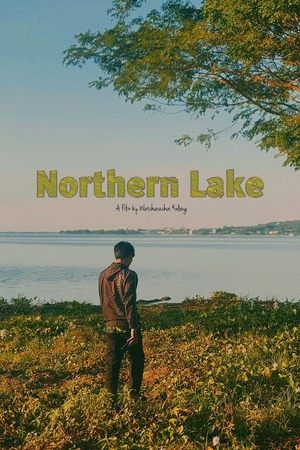
A Country young man wants to film a documentary about the historical remains of Phayao Province, but he faces obstacles because no one supports what he is doing.
It is the epic of the heroes of the first century of aviation, since the flight of the first plane on December 17, 1903 until today. A striking collection of portraits of outstanding men and women like Louis Blériot, the first to cross the Channel, to Lindbergh who crossed the Atlantic and Amelia Earhart and many more...
Shipyard is a landmark documentary covering the creation and life of Bellingham, Washington's wooden boat shipyard, which was built in response to the Axis threat of WWII, it's continued growth through the '50's and '60's, as well as it's innovative role in the development and production of fiberglass boats, including patrol riverboats for the Vietnam war.
De Gaulle, l'homme à abattre
The first American space station Skylab is found in pieces scattered in Western Australia. Putting these pieces back together and re-tracing the Skylab program back to its very conception reveals the cornerstone of human space exploration.
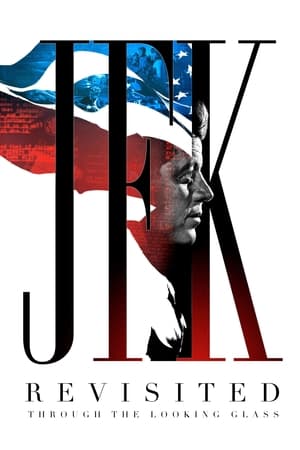
Thirty years after the release of his film JFK (1991), filmmaker Oliver Stone reviews recently declassified evidence related to the assassination of President John F. Kennedy, which took place in Dallas on November 22, 1963.
Cine-Guarany