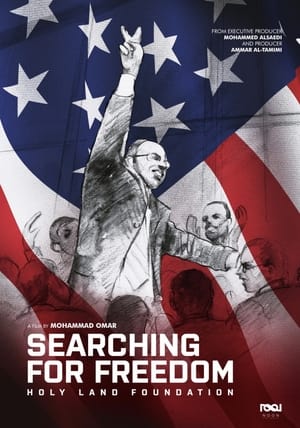
The film "Searching for Freedom: The Holy Land Foundation" is a two part documentary focussing on the story of the Holy Land Foundation, established in the late 80s by three Americans from Palestinian origin, Shukri Abu Baker, Ghassan Elashi and Mohammad El-Mezain. The foundation aimed to supply humanitarian aid to the Palestinians in Palestine and countries hosting Palestinian refugees, it later became the largest charity association in the US to distribute humanitarian aid to Palestinians. After 9/11, the former US President George W. Bush issued a decision to shut down the Holy Land Foundation and freeze its assets. In 2007 the Holy Land Foundation trials began, where five of its members were charged with funding terrorism and sending money to Hamas, a blacklisted political group in the US. A second trial for the Holy Land Foundation members took place in 2008, which issued the convictions of five members of the Foundation and their sentencing of 65 years imprisonment.
This documentary offers a rare look at domestic abuse through the concept of coercive control. With exceptional access to hearings in Poitiers, Colmar, and Paris, Karine Dusfour captures the first French trials to address this form of psychological violence. The film shows how coercive control traps partners through constant monitoring, a hidden terror affecting hundreds of thousands of women and children in France.
Amanda Knox served four years in an Italian prison for the murder of her British flatmate Meredith Kercher in Perugia in 2007, always insisting on her innocence. In 2011, she was acquitted on the basis of DNA evidence but prosecutors successfully appealed and her acquittal was struck down. In 2014 she was again found guilty in absentia after a retrial and sentenced to 28 years and six months in jail. The saga came to and end when Italy's highest court overturned the convictions of Ms Knox and her former boyfriend, Italian student Raffaele Sollecito in March 2015. Known burglar Rudy Guede was arrested a short time later following the discovery of his bloodstained fingerprints on Kercher's possessions. He was later found guilty of murder in a fast-track trial and is currently (as of 2019) serving a 16-year prison sentence.
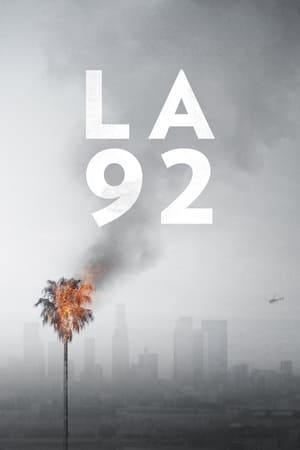
Twenty-five years after the verdict in the Rodney King trial sparked several days of protests, violence and looting in Los Angeles, LA 92 immerses viewers in that tumultuous period through stunning and rarely seen archival footage.
An unorthodox investigation into the wrongful conviction of Randall Dale Adams for the 1976 murder of Dallas police officer Robert Wood. Using stylized reenactments and interviews with key figures, conflicting testimonies and evidence are presented to argue that Adams was framed by a corrupt justice system, ultimately leading to his exoneration.
Part of BBC Arena's Animal Night, this film chronicles a strange era in history when animals were put on trial in human courts.
This documentary recounts the dysfunctional state of the death penalty in the state of California by revisiting the crimes, arrest, trials and appeals of Lawrence Bittaker, a convicted serial killer who has been on death row at San Quentin since 1981.
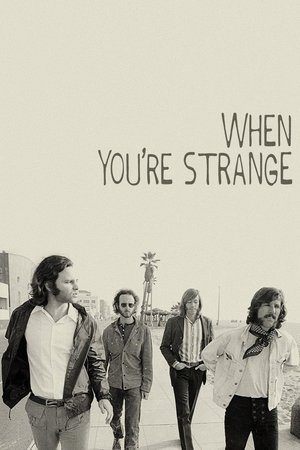
The creative chemistry of four brilliant artists —drummer John Densmore, guitarist Robby Kreiger, keyboardist Ray Manzarek and singer Jim Morrison— made The Doors one of America's most iconic and influential rock bands. Using footage shot between their formation in 1965 and Morrison's death in 1971, it follows the band from the corridors of UCLA's film school, where Manzarek and Morrison met, to the stages of sold-out arenas.
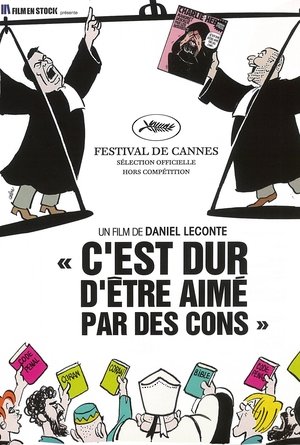
The murder of Dutch filmmaker Theo van Gogh by an Islamic extremist in 2004, followed by the publishing of twelve satirical cartoons depicting the prophet Mohammed that was commissioned for the Danish newspaper Jyllands-Posten, provides the incendiary framework for Daniel Leconte's provocative documentary, It's Hard Being Loved by Jerks.
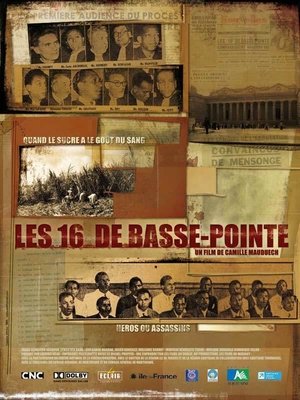
Les 16 de Basse-Pointe
OJ: TRIAL OF THE CENTURY, premiered on June 12, 2014 and it chronicles the twists and turns of the OJ Simpson murder trial and allows viewers to relive every moment of the investigation first-hand.
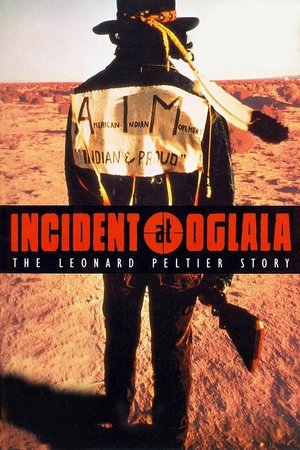
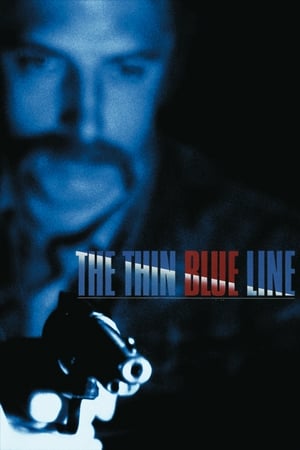
On June 26, 1975, during a period of high tensions on the Pine Ridge reservation in South Dakota, two FBI agents were killed in a shootout with a group of Indians. Although several men were charged with killing the agents, only one, Leonard Peltier, was found guilty. This film describes the events surrounding the shootout and suggests that Peltier was unjustly convicted.
Franco on Trial is the new film by Dietmar Post and Lucía Palacios. After the success of Franco's Settlers, their first encounter with Franco's dictatorship, they are now setting their sights on one of the darkest chapters of European history: the presumed organized extermination that took place during the coup, the war, and the subsequent dictatorship led by Franco, as well as Argentina's current effort, by invoking the principle of universal jurisdiction, to prosecute Francoists accused of committing crimes against humanity. The film is also a sore reminder of an issue that still stands today: the clear-cut accountability held by Germany, Italy, and Portugal. The film accomplishes to give both sides a voice - those against whom the killing has been directed; and the side of the perpetrators.
2001 French documentary about the murder trial of a 15 year old black teen accused of murder in Jacksonville, Florida. Winner of 2002 Academy Award for Best Documentary.
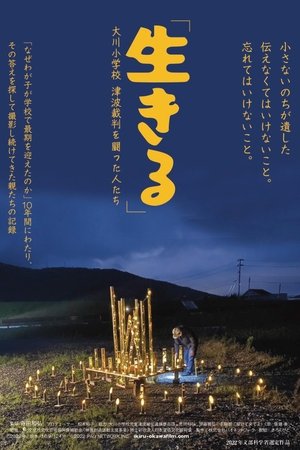
On March 11, 2011, Okawa Elementary School in Ishinomaki City was engulfed by a tsunami, and 74 children, or 70% of the school's children, were killed. 51 minutes elapsed between the earthquake and when the tsunami reached the school. The school was informed of the tsunami and a school bus was on standby, but students did not evacuate. Okawa Elementary was the only school that suffered a large number of casualties in this earthquake. This documentary follows the lawsuit that followed the disaster, where the parents sought the truth behind the tragedy.
An unflinching documentary of those dealing with mental illness in the criminal justice system and a profile of families who tragically fell victims to that system.
This trial of the century was the first nationally televised TRUE LIFE soap opera, a tangle of salacious plotlines. OJ SIMPSON TRIAL: THE REAL STORY reveals the true story behind the trial of O.J. Simpson the most highly publicized American criminal trial, ever. The documentary relies on contemporaneous archival material alone to illustrate the course of events. Without the interruption of modern interviews to provide hindsight, the storytelling triggers the same raw emotion and real-time perspective as when the events transpired all those years ago.
The documentary tells the hitherto unknown story behind an extraordinary and desperate fight to bring the truth to light. Told and made by those who lived it, the filmmakers' unprecedented access to the inner workings of the defense allows the film to show the investigation, research, and appeals process in a way that has never been seen before; revealing shocking and disturbing new information about a case that still haunts the American South.
It is taking decades for Canada to come to terms with its history in the Arctic, and with its relationship to all its indigenous people. “Kikkik” is the story of government mistakes and neglect, of starvation, murder, freezing death, but, in the end, a kind of justice that helps restore our faith in human decency. In 1958, the Inuit woman Kikkik was charged with murder and criminal negligence leading to the death of her child. Her trial and our visit back to the place and to Kikkik’s children confront us with a legacy that’s still a challenge for Canada.
Through the socio-political overview of the problematic structure of fan clubs and football supporters in Serbia, this movie focuses on a particular case of an incident involving a French citizen - football fan in Belgrade, which led to 12 young people being convicted to 240 years of prison. One of them is Stefan Velickovic. This is the story about the man who became a part of a huge political scandal, and his right to defend himself. As someone who has not even been at the spot of the incident, he has been pronounced guilty of a crime. What are the interests and intentions for making Stefan a scapegoat?