The film follows an expedition into Ivohiboro — a small, previously unexplored tropical forest in Southeast Madagascar rich with biodiversity.
Expedition into the Amazon river and its rain forests
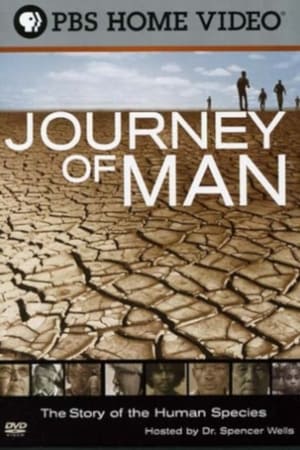
Many geneticists and archaeologists have long surmised that human life began in Africa. Dr. Spencer Wells, one of a group of scientists studying the origin of human life, offers evidence and theories to support such a thesis in this PBS special. He claims that Africa was populated by only a few thousand people that some deserted their homeland in a conquest that has resulted in global domination.
Life in the GDR was not only documented on behalf of the state, but also by photographic artists and journalists. The documentary goes on a journey through time with some of them and shows little-known aspects of the GDR from its foundation to the fall of the Wall. Photographers in the GDR had a surprising amount of freedom; there was no explicit censorship of images. This allowed them to make visible what the state wanted to hide. This documentary presents two photographers who observed life in the GDR and whose work has been rediscovered in recent years.
Explorer Robert Ballard sets out to solve the mystery of Amelia Earhart's disappearance as he and a team of experts travel to the remote Pacific atoll named Nikumaroro in search of her final resting place.
A New Yorker journeys to the jungle in the Darien Gap of Panama to reconnect with an indigenous tribe he met and photographed 20 years ago. Their reunion highlights the profound power of photos and the human connection that transcends cultural barriers.
Inspired by over a decade of documenting Iceland's glacial river systems and their intersection with the ocean from the seats of a small aircraft, Chris Burkard sets out for an immersive expedition across 41 of these rivers - by connecting a 400km series of exposed sandbars that provide a barrier between the harsh waters of the north Atlantic along Iceland's southern coast, armed only with a fat bike and inflatable raft and accompanied by two seasoned bike-pack/rafting veterans, Steve "Doom" Fassbinder and Cameron Lawson.
A documentary about New Zealanders in Antarctica: researching International Geophysical Year, and supporting the Trans-Antarctic Expedition by laying supply depots for Vivian Fuchs’ overland crossing.
Sixty snowmobilers, indigenous and non-indigenous, join forces to take part in a huge snowmobiling expedition: a 3500 km journey to be completed in 16 days. The goal: to cross a large swath of Quebec to work towards reconciliation between peoples. In this choral film, which is as much a physical ordeal as a spiritual and psychological one, the participants take on the mission of raising public awareness of the issues dear to their communities. Through the challenges posed by the weather and the long daily journeys that put the group to the test, a powerful bond is forged between the participants, who face enormous adversity. A journey on the land of ancestors that reveals the strength of togetherness.
A scenes from a tour of Manipur State and a women's bazaar in Imphal.
Joseph Vallot, geographer, naturalist and mountaineer born in 1854 in Lodève, was a visionary man, full of humor and whose curiosity was insatiable. He had spent some forty years of his life studying the Mont Blanc massif, sacrificing a good part of his fortune to this multifaceted passion. He was notably the first to demonstrate that one could sleep, work and even do science at an altitude of over 4000 meters, at a time when ascents to the summit of Western Europe were still adventurous expeditions. This documentary tribute follows in his footsteps, via the route taken at the time, on foot from Chamonix via the Grands Mulets refuge to the summit of Mont Blanc to the Joseph Vallot observatory nestled at an altitude of 4400m, with a team of guides, journalists and scientists.
Documentary on the Shackleton Antartic expedition. A retelling of Sir Ernest Shackleton's ill-fated expedition to Antarctica in and the crew of his vessel 'The Endurance', which was trapped in the ice floes and frigid open ocean of the Antarctic in 1914. Shackleton decided, with many of his crew injured and weak from exposure and starvation, to take a team of his fittest men and attempt to find help. Setting out in appalling conditions with hopelessly inadequate equipment, they endured all weather and terrain and finally reached safety. Persuading a local team of his confidence that the abandoned team would still be alive, he set out again to find them. After almost 2 years trapped on the ice, all members of the crew were finally rescued.
Země jihu – Vietnam
Take to the sky and come face-to-face with Washington states majestic mountains, including one of the Pacific Northwests most well-known symbols: Mount Rainier. Celebrate the diversity of the states landscapes in Over Washington, from the glittering Puget Sound in the west to the rolling Palouse in the east. Stunning aerial cinematography and original music bring these spectacular images to life.
K2 La Montagne Inachevée
After years of preparation, a team of highly motivated Quebeckers set out on one of the longest wilderness expeditions ever documented. Stage one involves skiing in relentless polar conditions from Ellesmere Island to the Northwest Passage where the challenge was reaching the mainland. Cue canoes for a 2000km journey across Nunavut and NWT until they reach the first dirt road available where bikes are waiting to be pedalled 4000km to Point Pelee in Ontario.
A short film produced during a photographic expedition of the Svalbard Archipelago. It takes the natural highlights of the expedition and includes Bråsvellbreen, Storøya, Alkefjellet, polar bears, walrus, and phenomenal seabird colonies.
The film chronicles the journey of the renowned De Le Rue family: Xavier, a 7 x World Champion; his younger brother Victor, a 3 x World Champion; and his daughter Mila, who is turning 18 and embarking on her first expedition. Their first challenge is sailing across the infamous Drake passage before confronting the otherworldly white continent. Unimaginably steep icy lines rise from the ocean, towering seracs, pods of orcas and colonies of penguins, but at the bottom of the world, rescue is not an option. For Xavier and Victor, it's a giant playground filled with first descents; for Mila, it's an intimidating initiation into big-mountain free riding. The film captures their intimate inner dialogue through personal diaries, showcasing Mila's journey as she confronts her fears and embraces the challenge. A celebration of discovery, adventure, and the passing of the torch to the next generation against the breathtaking backdrop of Antarctica. The voyage of a lifetime.
Decolonising the Curatorial Process is a forty-minute documentary which explores decolonial strategies in an academic and curatorial context. The film features academics, activists and practitioners, and contains case studies of institutions that are deploying critical, self-reflective forms of curatorial practice. The Museum of London Docklands exhibition on slavery and the sugar industry is examined as an example of how an institution can decolonise the curatorial process, utilise the work of artists in a museum context, and critically examine East London's imperial history. The Pitt Rivers museum in Oxford, who are working with Maasai activists from Kenya and Tanzania on a project centred on repatriating the museum's collection of sacred Maasai artefacts, also features in the film.
The River of Life and Death captures the slow time in the well-known Indian pilgrimage place of Benares, the act of purification by water, the burning funeral pyres, and the dandling snakeheads under the temple stairs.