19 years after the dropping of atomic bombs in Japan, the Olympic Games of 1964 took place in Tokyo. In the midst of the cold war, the games are supposed to become a symbol for a peaceful world. Especially the divided Germany is expected to prove this: By order of the IOC, both German states must participate in Tokyo with a joint team despite deep ideological rifts. The fact that athletes from both German states still had to compete against each other in order to form a joint team for the 1964 Olympic Games in Innsbruck and in Tokyo is all but forgotten. The film tells the story of the East-West German team of 1964 for the first time and is simultaneously a current document about the relation of sports and politics in international relations.
Made at the height of 'cold war' paranoia, this drama-documentary shows the work of the UK Warning and Monitoring Organisation, who's duties included the issuing of public warnings of any nuclear missile strike and the subsequent fallout.
Film sponsored by Western Electric (AT&T's equipment manufacturing division), the builder of the United States Air Force's White Alice Communications System in Alaska. Introduces the people and geography of the new state as well as the Western Electric radio-relay system, which links far-flung military sites, alert stations, and missile-warning facilities. Ralph Caplan praised the film's "intrinsically dramatic and highly photogenic" portrayal of communications equipment.
This film shows how far we have come since the cold-war days of the 50s and 60s. Back then the Russians were our "enemies". And to them the Americans were their "enemies" who couldn't be trusted. Somewhere in all this a young girl in Oklahoma named Shannon set her sights on becoming one of those space explorers, even though she was told "girls can't do that." But she did.
Exploring the rise and fall of the groundbreaking animated series Ren & Stimpy and its controversial creator, John Kricfalusi, through archival footage, show artwork and interviews with the artists, actors and executives behind the show.
Vassar College's Department of Child Study produced this training film for nursery school staff, one of a series on "Preschool Incidents." Unstaged playground scenes of two to five-year-olds in conflict are shown, then repeated for further analysis and discussion. We learn how to "size-up situations," differentiating between "playful attacks" the kids can adequately handle themselves and truly aggressive behavior (as when "a child has gone on a rampage") that requires immediate adult intervention.
An educational film about power sources that’s rendered as a lyrical meditation on heat and vapor, The Four Elements is a poetic and avant-garde documentary Curtis Harrington made for the United States Information Agency.
A documentary that introduces FIT Hives, a student-run organization whose mission is to educate the FIT community about the importance of bees to the environment, the use of bee-derived resources in the industries related to the majors at FIT and its goal to put a beehive on the roof. FIT Hives is a recipient of an FIT Innovation Grant which also supported the making of this documentary.
This 1974 film is dedicated by the Chlorine Institute to the public interest. It is specifically intended to assist firefighters and other emergency services. The techniques demonstrated are appropriate for emergency use; different circumstances might require modified or additional procedure. The information is drawn from sources believed to be reliable. The Institute, its members any organizations cooperating in the development of this film, jointly or severally, cannot be responsible for how the information is used and must make this legal disclaimer. This is a 1960s era, color movie about Chlorine and emergency workers… specifically, firefighters. The film is intended to show firefighters what chlorine is, what a chlorine emergency might involve, how a company can plan ahead and how an emergency can be handled safely.
Dramatizes the plight of a young adventure seeker whose canoe is capsized by a wall of water during a flood. Shows community flood preparations, pointing out that a flood's predictability usually allows ample warning time to save lives. Designed to stimulate discussion on civil preparedness for floods
Intercuts scenes from Jack London's To build a fire with modern urban and rural winter scenes to point out the dangers of winter storms and low temperatures. Designed to stimulate discussion on civil preparedness for winter storms.
Portrays the challenges of creating a film about nuclear disaster amid public apathy. It captures behind-the-scenes moments as the crew discusses the gravity of nuclear threats, the importance of preparation, and the emotional impact of a nuclear attack. The narrative emphasizes the need for individuals to take responsibility for their safety and community in the event of an attack, blending factual information with a call to action.
A surrealistic look at the future if man does not learn to control pollution.
Darujte odpovědně
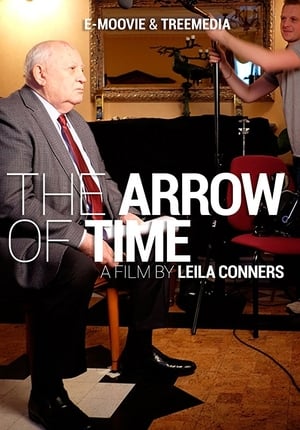
President Mikhail Gorbachev recounts the end of the Cold War and the reduction of nuclear arms.
A short film portrays the events of a depressed man's day, culminating, presumably, in his suicide, though the ending is ambiguous. Afterwards, a roundtable of mental hygiene professionals and social workers examine the film, while discussing the phenomenon of suicide more broadly.
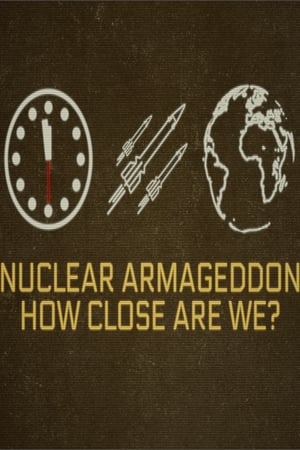
With the Doomsday Clock the closest it's ever been to midnight, Jane Corbin investigates the proliferation of nuclear weapons across the globe. She visits Los Alamos, home to the United States’ nuclear weapons development facility and the historic home of Oppenheimer’s Manhattan Project. In Scotland, she reveals the strategy behind Britain’s nuclear deterrent, and speaks to campaigners in Suffolk fighting against US weapons they fear will be based on UK soil. Jane also discovers how many of the global agreements and safeguards that have constrained the spread of nuclear weapons since the 1970s are breaking down. This is a story told by the scientists, investigators and diplomats who set the clock and have fought to ensure that the ultimate deterrent has not been used in over 70 years.
The film provides a comprehensive guide on snorkeling skills and rescue techniques, emphasizing the importance of proper equipment such as masks, snorkels, and fins. It discusses how to choose the right mask for comfort and fit, the proper use of snorkels, and techniques for clearing water from both masks and snorkels. The film also covers essential skills for entering the water safely, practicing buddy systems during snorkeling, and techniques for locating and rescuing submerged victims. It highlights the need for training and emphasizes that while these skills are crucial for rescue, they do not replace the need for a full certified course in skin diving.
The transcript discusses the prevalent drug culture, particularly marijuana use, among youth in national parks. It highlights the perception that marijuana is less harmful than harder drugs and reflects on the challenges park rangers face in enforcing drug laws. While acknowledging the existence of drug trafficking, the narrative emphasizes that marijuana use is often seen as a minor issue compared to alcohol consumption or harder narcotics. The conversation also touches on the need for a more nuanced understanding of drug use, suggesting that current laws may be overly stringent and not reflective of societal attitudes.
What happens when you bring gender training to an elementary school? In Creating Gender Inclusive Schools the Peralta Elementary School in Oakland, CA demonstrates the power of an open and honest conversation about gender.