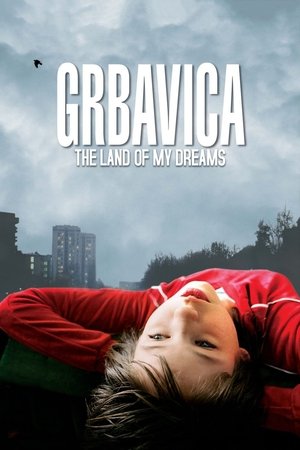
A bitter coming-of-age story about boy who grows up in a remote Bosnian village shortly after World War II.
Three intertwined stories about Serbian truck driver who is involved into drug trafficking without knowing, Czech family who live by the road which makes them a lot of troubles since many cars crash into their house, and a bus full of Swedish grannies who go on a Trans-European package holiday.
Ahmet Nurudin is a dervish and head of the Islamic monastery of the Mevlevi order in Sarajevo. He is a personification of morale and dogmatic belief, everything that Muslim religion of the Ottoman rule rests on. Throughout his life, the atmosphere of the city, the relations with the judge and the mechanism of government, the image of Ottoman Empire at the beginning of the nineteenth century is being revealed. Based on a highly praised novel by Meša Selimović.
Middle-aged cinephile and film projectionist Pera still lives with his mother - and best friend - Mara, in Belgrade. It's 1999 and when NATO bombs start raining down on Serbia, the two of them become refugees. After a surreal journey, they end up in New York, where Pera realizes that he can no longer do the old job he loved so much. While he and Mara were struggling to survive, the new age of digital projection was born. Then Pera stumbles upon some discarded projectors and his new mission in life becomes clear: he will travel around and show people the magic of Real Cinema - the magic that can only be created by celluoid, mechanical projectors, the silver screen and flickering light.
During the Battle of Sutjeska, partisan troops must endure 24 hours of big and heavy attacks on German units Ljubino grave, to the main Partisan units, with the wounded and the Supreme Headquarters, pulled out the ring that is tightened around them.
The events in Sarajevo in June 1914 are the backdrop for a thriller directed by Andreas Prochaska and written by Martin Ambrosch, focusing on the examining magistrate Dr. Leo Pfeffer (Florian Teichtmeister) investigating the assassination of Archduke Franz Ferdinand. Trying to do his job in a time of lawlessness and violence, intrigues and betrayal, Leo struggles to maintain his integrity and save his love, Marija, and her father, prominent Serbian merchant. But the events of Sarajevo have set into motion an inescapable course of events that will escalate to become … the Great War.
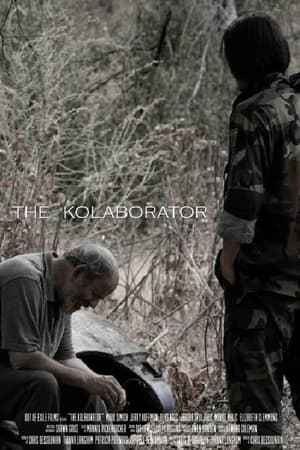
During the conflict in the former Yugoslavia many soldiers were convinced to kill fellow citizens including friends and relatives in the name of patriotism. The Kolaborator follows the story of Goran, 24, a promising young soccer player who is forced to become a soldier. Goran goes from being a talented athlete to an executioner virtually overnight. Following orders, Goran lines up civilians, shoots them and drags them into mass graves. Justifying his role as a protector of his people, Goran becomes increasingly detached from the task until his soccer coach and life-long friend, Asim, is led in front of him. As a familiar face stands defeated before him, Goran must reconsider his actions and choose between his own life and that of his dear friend.
A woman and her daughter struggle to make their way through the aftermath of the Balkan war.
Following the 2001 terrorist attacks on New York City, one item of clothing has gained a scandalous global reputation: the headscarf. All over the world, a major debate is going on about whether Muslim women should be allowed to wear the headscarf in public.
A beautiful and poetic at the same time difficult and tragic story. In the distant mountain village in Herzegovina, shortly after the end of World War II, lonely women and children await the return of men from the front. The few men that remained in the village trying to go to America and find the salvation of the lumber and stone. Center of the story is loneliness and anticipation. This is a tragic story of two men whose fight for the heart of a woman cost the head of both.
Filmmaker Sabina Vajraca documents her Bosnian Muslim family's return to their home of Banja Luka, Bosnia, to recover their stolen belongings many years after being forced to flee to the United States. In Bosnia, they witness the devastation of the city, visit war crimes sites, and confront the family that has been living in their former apartment -- with all their furnishings -- for a decade.
Between 1993 and 1995, artist and photographer Louis Jammes took pictures of people on the streets of Sarajevo under siege and gave them angelic face and wings. Then he put his huge portraits on destroyed city walls. Suddenly, it seems as life is getting back with their arrival, because they brought a sense of peace, beauty, nostalgia...
Loving young couple Luna and Amar try their best to overcome unexpected obstacles that threaten their relationship. After Amar's dramatic change in a fundamentalist community, Luna tears herself apart searching if love is truly enough to keep the couple together on the path to a lifetime of happiness...
Silent Waters
Finding Bosnia puts a human face on the aftermath of displacement and explores the experience of living between cultures. Join Ivana Horvat as she returns to her home country of Bosnia and Herzegovina for the first time since fleeing war in 1992. Home video footage, stories from various generations of Bosnians, and experiences with friends and family paint an authentic picture of this post-war, post-socialist country while highlighting the magnificent spirit of the Balkans.
What is the true phrase? Heart is where the home is? Home is where the heart is? Bajo (37) is Bosnian-born Swede. After 18 years he has to visit his hometown. Against his will, Sarajevo is changing him. But that does not make him less Swedish or more Bosnian, just more himself. Or simply, home is where you are.
The war has ended. Villages of Bosnian Croats have been destroyed, and they are living in the homes of the Croatian Serbs. An old man, a Bosnian Croat, disappears. A policeman Filip, himself living in a Serbian home, investigates the case uninterestedly. Through the relationship with his father, Filip tries to understand the motives of the missing old man. As the film moves towards the end, Filip’s investigation becomes more and more personal.
I went to Bosnia after war ended, in 1996, when the Danton Peace Accord was being implemented. Bosnia had been divided in two entities, which separated the two main opposing forces of the conflict; the Serb Bosnians and the Muslim Bosnians. Two years later, in 1998, I returned to Bosnia... This movie is a diary of the two voyages, in which I deal with the memories of the war, the death and destruction and with the victim’s struggle who don’t know how to return home.
A young boy plays an accordion in a shopping mall. Béla Tarr picks up the camera one more time to shoot his very last scene. It is his anger about how refugees are treated in Europe, and especially in Hungary, that drove him to make a statement.
Professor Gerasim and assistant Tugomir are in a ski-resort where opportunity for cheating and love is around every corner.