In a remote mountain village of 15th-century Joseon, humble headman Heung-do hears a rumor that any village hosting an exiled nobleman will be blessed with abundance and fortune. Hoping to bring prosperity to his impoverished community, he eagerly submits a petition to host one—unaware that his guest is none other than the fallen monarch, deposed boy-king Danjong.
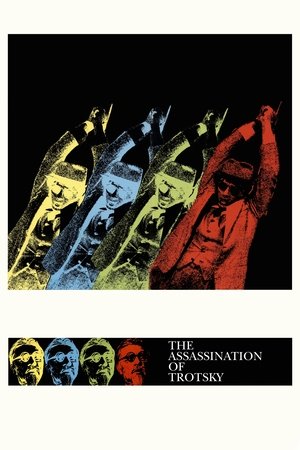
A Stalinist assassin tracks exiled revolutionary Leon Trotsky to Mexico in 1940.
Spanning several decades, this powerful biopic offers a glimpse into the life of famed Cuban poet and novelist Reinaldo Arenas, an artist who was vilified for his homosexuality in Fidel Castro's Cuba.
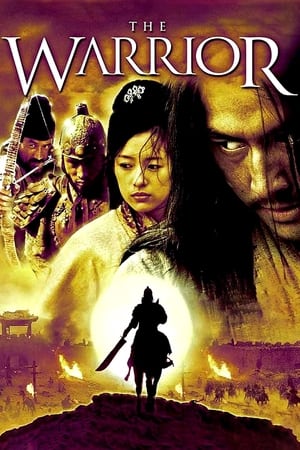
In 1375, China was in chaos between Yuan Dynasty and Ming Dynasty. Coryo (an ancient kingdom of Korea then) sent a delegation of many diplomats, soldiers and a silent slave to make peace with the new Chinese government. However, this delegation got charged as spies and sent in exile to a remote desert.
Collin
No hay olvido, composed of three parts, each directed by a young Chilean filmmaker forced to flee his country, is about the difficult condition of exiles in a specific political and social context, in this case, Quebec. The first part, entitled J'explique certaines choses, is in Spanish with French subtitles, and shows us more precisely the lifestyle of a group of Chileans. In Slowly, which forms the second part, we are asked, through Lucia, a young Chilean exile, the problem of integration into a new social environment. Finally, Jours de fer (Steel Blues), the third and only part available in English, is a cruel reminder of the harsh condition of the uprooted man who must find work at all costs to ensure his survival.
In a time of war and disease, a young officer gallantly tries to help a young woman find her husband.
After going through a series of tragic events in his life, martial arts master Huo Yuanjia returns to Tianjin and must fight four international soldiers, in order to safeguard his nation's pride.
Chilean exiles in Paris discuss the problems facing them. They kidnap and attempt to re-educate a touring singer from their fatherland.
Unit 2 of the StB receive information from their Polish counterparts on a suspicious Indonesian diplomat. He is to be stationed in the Indonesian Embassy in Warsaw but flew early and is headed towards Prague instead. He was seen to be carrying a nondescript box. Agent Tomáš of the StB is assigned to stalk him and find out why he decided to go to Prague.
Set during the early part of his reign, Ivan faces betrayal from the aristocracy and even his closest friends as he seeks to unite the Russian people. Sergei Eisenstein's final film, this is the first part of a three-part biopic of Tsar Ivan IV of Russia, which was never completed due to the producer's dissatisfaction with Eisenstein's attempts to use forbidden experimental filming techniques and excessive cost overruns. The second part was completed but not released for a decade after Eisenstein's death and a change of heart in the USSR government toward his work; the third part was only in its earliest stage of filming when shooting was stopped altogether.
A sorcerer (played by the director himself) controls all activities in a village. Manipulating the different parties, the sorcerer promises love, good health and riches in exchange for the most extravagant rewards. One day someone exposes him, and the sorcerer becomes the laughing stock of the whole village. Desperate, he throws himself of a cliff.
Russian exiles in Paris plot to collect ten million pounds from the Bank of England by grooming a destitute, suicidal girl to pose as heir to the Russian throne. While Bounin is coaching her, he comes to believe that she is really Anastasia. In the end, the Empress must decide her claim.
Ten short pieces directed by ten different directors, including Ken Russell, Jean-Luc Godard, Robert Altman, Bruce Beresford, and Nicolas Roeg. Each short uses an aria as soundtrack/sound, and is an interpretation of the particular aria.
This is the story of Pablo, a young uruguayan exiled in México, whose father was disappeared during the military dictatorship.
Election night. Aimar, leader of the left-wing Basque nationalist movement, returns home more tired than ever. Itziar awaits him, exhausted. At the entrance, the remnants of a protest by the radical youth of their own party. Aimar has to make a decision: Does he want to continue dedicating his life to the nationalist cause, even in the worst of times?
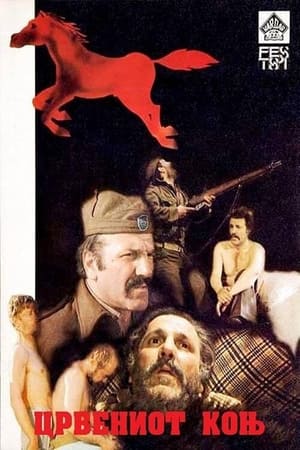
During the conflict in the former Yugoslavia many soldiers were convinced to kill fellow citizens including friends and relatives in the name of patriotism. The Kolaborator follows the story of Goran, 24, a promising young soccer player who is forced to become a soldier. Goran goes from being a talented athlete to an executioner virtually overnight. Following orders, Goran lines up civilians, shoots them and drags them into mass graves. Justifying his role as a protector of his people, Goran becomes increasingly detached from the task until his soccer coach and life-long friend, Asim, is led in front of him. As a familiar face stands defeated before him, Goran must reconsider his actions and choose between his own life and that of his dear friend.
Hassouna identifies customs with the businessman Shaheen, who offers him assistance in exchange for facilitating the procedures of his illicit goods. Hasina is lured to get involved in a relationship, and recorded by Shaheen motivated, until Hassouna becomes at their disposal, Shahine Hassouna claims that his wife, threatens him with tape and acquiesces to him for fear of the scandal, and agrees to facilitate his suspicious operations, but after an innocent injustice at customs as a result of Hassouna's corruption, He then dies, wakes up his conscience, surrenders himself, reports on Shaheen and the rest of his corrupt partners to purify himself, and his deceased colleague is considered.
In 11th-century feudal Japan, following the exile of an idealistic governor, his wife and children are separated by slave traders; the children, Zushio and Anju, are sold into brutal servitude under the cruel bailiff Sansho.
Rome, AD 303. Emperor Diocletian demotes his favourite, Sebastian, from captain of the palace guard to the rank of common soldier and banishes him to a remote coastal outpost where his fellow soldiers, weakened by their desires, turn to homosexual activities to satisfy their needs. Sebastian becomes the target of lust for the officer Severus, but repeatedly rejects the man's advances. Castigated for his Christian faith, he is tortured, humiliated and ultimately killed.