An anthology of one-minute films created by 51 international filmmakers on the theme of the death of cinema. Intended as an ode to 35mm, the film was screened one time only on a purpose-built 20x12 meter public cinema screen in the Port of Tallinn, Estonia, on 22 December 2011. A special projector was constructed for the event which allowed the actual filmstrip to be burnt at the same time as the film was shown.
Swedish efficiency researchers come to Norway for a study of Norwegian men, to optimize their use of their kitchen. Folke Nilsson (Tomas Norström) is assigned to study the habits of Isak Bjørvik (Joachim Calmeyer). By the rules of the research institute, Folke has to sit on an umpire's chair in Isak's kitchen and observe him from there, but never talk to him. Isak stops using his kitchen and observes Folke through a hole in the ceiling instead. However, the two lonely men slowly overcome the initial post-war Norwegian-Swede distrust and become friends.
Second short film by Andrea Campos, about a teenager who tries to combat her mother's compulsive alcoholism with the help of her stepfather. Kind of experimental.
The film is a day in the life of a young artist, Jean-Michel Basquiat, who needs to raise money to reclaim the apartment from which he has been evicted. He wanders the downtown streets carrying a painting he hopes to sell, encountering friends, whose lives (and performances) we peek into.
Eight months after the death of his wife, Frank Goode looks forward to a reunion with his four adult children. When all of them cancel their visits at the last minute, Frank, against the advice of his doctor, sets out on a road trip to reconnect with his offspring. As he visits each one in turn, Frank finds that his children's lives are not quite as picture-perfect as they've made them out to be.
Two brothers, Harry and Max, who are both teen idols, come to terms with their dysfunctional family past and deep affection for each other
Singer-songwriter Winslow Leach seeks revenge on the nefarious music producer Swan, who steals both Winslow's music and his favorite singer for the grand opening of Swan's new rock palace, the Paradise.
In a desolate supermarket, a religious woman's peaceful evening is interrupted by the sudden arrival of three punks, who are running away from the police and hiding something much more valuable than money.
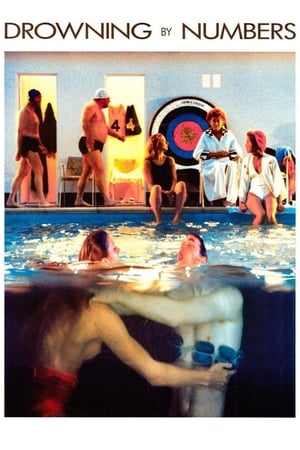
Cissie Colpitts drowns her cheating husband and, in the ensuing cover-up, enlists the help of lonely coroner Henry Madgett, an old friend with a longstanding weakness for her charms. But when Cissie's daughter and granddaughter—both also named Cissie Colpitts—decide to resort to the same methods for solving conflicts with their own frustrating husbands, the women and their repeated appeals for help begin to wear on Madgett's conscience.
Martin, a young blind photographer, is divided between his friendship with restaurant worker Andy and the exclusive love that Celia—who is terribly jealous of this new friendship—has for him.
The personification of Death's love for a lonely man is challenged when he falls for a lively woman.
Eleven young film-makers got together to collaborate in this atypical project. Atypical not only because of its technical specs, but because of its narrative structure. There are several scenes with only the city in common, and more as a conceptual presence at that than as a precise geography. None of those scenes contains a single "story": Each one of them is part of a larger situation that we cannot see, as though the beginning and end of each "story" had to be filled in by the audience.
In their spare time, after their studies or their work, children and adolescents between the ages of eight and sixteen meet at the School of Bullfighting in Madrid to learn the Art of Cúchares: Torear. In their stomachs there is no hunger as in the past, their dreams do not lie in having a farmhouse and being famous. Their only dreams are to be in front of a bull, animal with which death goes, fact of which they are fully aware, as their teachers continually remind them. These, retired bullfighters, some by age, others by force and all with their bodies full of scars produced by the horns of a bull. The nude bullfighting scene is fascinating without being exploitive, and it serves as an analogy for the vulnerability these young bullfighters have when in the ring with the bulls.
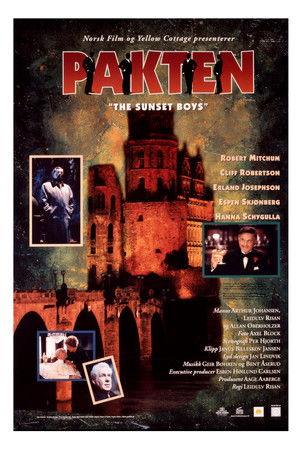
Ernest, Ted and August fulfill their friend Carl's dying wish and take him to Heidelberg, where they all first met 45 years ago, to see his old girlfriend one last time. However, the locals won't talk about her, due to a WW2 secret.
Markus returns home to care for his daughter when his wife dies in a tragic train accident. However, when a survivor of the wreck surfaces and claims foul play, Markus suspects his wife was murdered and embarks on a mission to find those responsible.
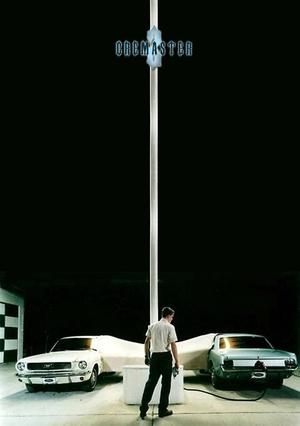
CREMASTER 2 is rendered as a gothic Western that introduces conflict into the system. On the biological level it corresponds to the phase of fetal development during which sexual division begins. In Matthew Barney's abstraction of this process, the system resists partition and tries to remain in the state of equilibrium imagined in Cremaster 1.
CREMASTER 3 is set in New York City and narrates the construction of the Chrysler Building, which is in itself a character - host to inner, antagonistic forces at play for access to the process of (spiritual) transcendence. These factions find form in the struggle between Hiram Abiff or the Architect...
In 17th-century Tuscany, a church play is performed for the benefit of young aristocrat Cosimo. In the play, a grotesque old woman gives birth to a beautiful baby boy. The child's older sister is quick to exploit the situation, selling blessings from the baby, and even claiming she's the true mother by virgin birth. However, when she attempts to seduce the bishop's son, the Church exacts a terrible revenge.
In 1942, Friedrich Weimer's boxing skills get him an appointment to a National Political Academy (NaPolA) – high schools that produce Nazi elite. Over his father's objections, Friedrich enrolls. During his year in seventh column, Friedrich encounters hazing, cruelty, death, and the Nazi code. His friendship with Albrecht, the ascetic son of the area's governor, is central to this education.
A romantic and nocturnal encounter between Arthus, a "masculine" young man and Marin, a drag-queen. Their discussion around gender and sexuality slowly leads them to understand and tame each other.