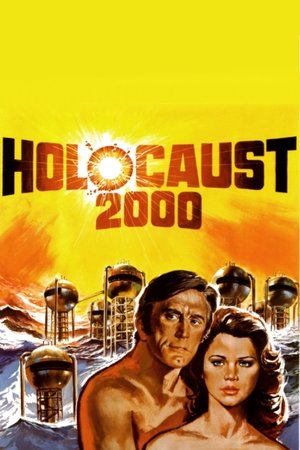
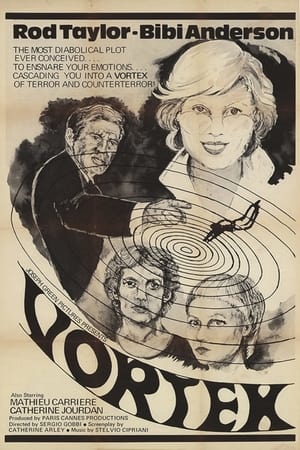
Tony and Brad investigate the murders of politicians and scientists. They soon face off against a team of super hit women with their usual flair.
While doing a series of reports on alternative energy sources, opportunistic reporter Kimberly Wells witnesses an accident at a nuclear power plant. Wells is determined to publicize the incident, but soon finds herself entangled in a sinister conspiracy to keep the full impact of the incident a secret.
1986 - The protest movement against the construction of the nuclear power plant in Brokdorf is on its last legs. Only one rural commune remains: the "Alternative Wohnkollektiv Regenbogen". For them, it could go on and on with endless consensus discussions, shearing sheep and naked communal bathing. One day, the lowland communards are joined by two city dwellers, Hanne and her son Niels. While Hanne gets used to scream therapy and raising vegetables surprisingly quickly - and even more quickly to the tantra games with commune guru Peter - Niels has less and less desire for the dogmatic commune rules. Out of defiance, he joins the violent nuclear power plant resistance, thus upsetting the tranquil chaos of the commune. The big bang, however, comes when a reactor explodes in distant Chernobyl. Exactly on the day Bobby Ewing dies, the petroleum prince from "Dallas" and series favorite of the commune.
This short documentary offers a look at Canada’s Chalk River Project in the late 1940s. While humanity pondered the ultimate threat or promise of atomic energy, Chalk River scientists worked on the first set of experiments that attempted to apply atomic energy to medical and biological uses. Inside the Atom examines this frontier of science and assesses its value in terms of human progress.
With unprecedented access to the nuclear industry in France, Russia, and the United States, Nuclear Now explores the possibility for the global community to overcome the challenges of climate change and energy poverty to reach a brighter future through the power of nuclear energy. Beneath our feet, Uranium atoms in the Earth’s crust hold incredibly concentrated energy. Science unlocked this energy in the mid-20th century, first for bombs and then to power submarines. The United States led the effort to generate electricity from this new source. Yet in the mid-20th century as societies began the transition to nuclear power and away from fossil fuels, a long-term PR campaign to scare the public began, funded in part by coal and oil interests.
Like most of the people in her town, Karen Silkwood works at the local nuclear plant producing highly radioactive plutonium. Exposed one day to a lethal dose of radiation, Karen faces the blank walls of corporate indifference and denial. As her illness increases, her protest grows louder and she becomes an obvious danger to the powers that be.
Eight visually rich vignettes drawn from Kurosawa’s own dreams—fox weddings and vanished orchards, a soldier’s ghosts, a walk through Van Gogh’s canvases, nuclear nightmares, and a water-mill utopia—meditate on childhood, art, mortality, and humanity’s uneasy bond with nature.
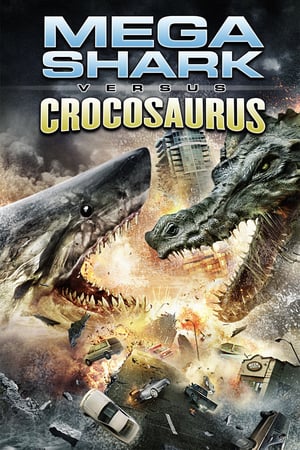
When the prehistoric warm-water beast the Crocosaurus crosses paths with that cold-water monster the Mega Shark, all hell breaks loose in the oceans as the world's top scientists explore every option to halt the aquatic frenzy. Swallowing everything in their paths -- including a submarine or two -- Croc and Mega lead an explorer and an oceanographer on a wild chase. Eventually, the desperate men turn to a volcano for aid.
About the question of whether we should proceed in developing and using nuclear power and the breakdown at Three Mile Island, Harrisburg, Pennsylvania, in March 28, 1979.
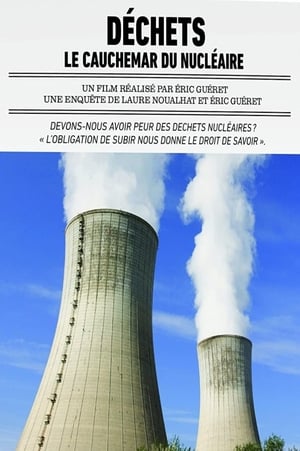
The documentary presents the results of research on nuclear waste management in the U.S., Russia, Germany and France. The authors Eric Noualhat Guéret and Laure were accompanied by the independent French laboratory technicians radiation control, CRIIRAD. They have detected and measured radiation in many places like the U.S. Columbia River or the French plutonium factory called reprocessing plant at La Hague.
On April 26, 1986, a 1,000 feet high flame rises into the sky of the Ukraine. The fourth reactor of the Chernobyl nuclear power plant just exploded. A battle begins in which 500,000 men are engaged throughout the Soviet Union to "liquidate" the radioactivity, build the "sarcophagus" of the damaged reactor and save the world from a second explosion that would have destroyed half of Europe. Become a reference film, this documentary combines testimonials and unseen footage, tells for the first time the Battle of Chernobyl.
FAA system analyzer named Neil McCabe is the only person who seems to have this different hunch towards a group of international terrorists after a horrific plane incident occured. He thinks that an evil genius computer hacker sets out and manipulate the computer electronical system which linked to several airplanes to cause destruction and tragedy. In order to prevent the mishap, McCabe and his teammate, Rudy, finds out about the machine used by the criminals which leads them to a psychotic thrilling fight between the terrorist.
Wolsong: Vanishing Town
Farmers and parents of young children, who live in the Harrisburg, Pa., area, discuss their fears of radioactive contamination from the Three Mile Island nuclear reactor accident in 1979. Scientists and physicians also expound on the lethal dangers of nuclear power and the risks in containment processes.
Who is Kim Yo-jong? In a context of maximum tensions between North Korea and the United States, Pierre Haski paints an unprecedented portrait of the little sister of Kim Jong-un, whose influence in Pyongyang is growing stronger day by day.
Filmed at the Pickering, Ontario, nuclear power plant, showing also the earlier Douglas Point station and Québec's new Gentilly plant, this film offers audiences a clear illustration of how an atomic reactor produces electricity. Special features of the Canadian (CANDU) (Canada Deuterium Uranium) system are explained: on-power refueling; the use of natural uranium; the use of heavy water as moderator. CANDU is recognized internationally as a leader in man's search for new sources of energy. Produced for the NFB by Crawley Films Ltd. for Atomic Energy of Canada Limited.
A two-part study of nuclear power with Larry Henderson, skilled observer, analyst and commentator on public affairs as guide. Part 1 shows civilian applications outside Canada. Part 2 shows the history of atomic energy development in Canada, from the outset of World War II to the installations at Chalk River.
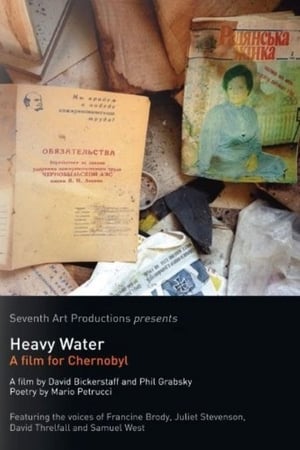
On April 26th, 1986, reactor four at Chernobyl nuclear power station explodes, sending an enormous radioactive cloud over Northern Ukraine and neighbouring Belarus. The danger is kept a secret from the rest of the world and the nearby population who go about their business as usual. May Day celebrations begin, children play and the residents of Pripyat marvel at the spectacular fire raging at the reactor. After three days, an area the size of England becomes contaminated with radioactive dust, creating a 'zone' of poisoned land. Based on Mario Petrucci's award-winning book-length poem (split over two books), 'Heavy Water: a film for Chernobyl', and the shorter version 'Half Life: a Journey to Chernobyl", tells the story of the people who dealt with the disaster at ground-level: the fire-fighters, soldiers, 'liquidators', and their families.
Filmmaker Jean Chabot looks at the use of nuclear energy in Quebec. Do we need this expensive and dangerous energy?
In a quiet forest, a sign warns of radiation hazard. “Is this the past or the future?” muses the masked figure who appears like a kind of ghost in nuclear disaster areas. At a time when nuclear power may be re-emerging as an alternative to fossil fuels, this calmly observed and compelling tour takes us to places that may serve as a warning.