Within the French and American armies, virtual reality prepares soldiers for their future battles just as it treats post-traumatic stress disorder after their baptism of fire. Antoine Chapon meets Cyril, former military video game designer and a veteran, who is dealing with the return to civilian life and loss of identity.
Jean-Luc Godard brings his firebrand political cinema to the UK, exploring the revolutionary signals in late '60s British society. Constructed as a montage of various disconnected political acts (in line with Godard's then appropriation of Soviet director Dziga Vertov's agitprop techniques), it combines a diverse range of footage, from students discussing The Beatles to the production line at the MG factory in Oxfordshire, burnished with onscreen political sloganeering.
"My Socialist Home" is a documentary film exploring the significance of gender in the constitution of domestic space in the socialist and postsocialist state.
A Experimental Docu-Drama about the Red Army Faction's formation, and events leading up to their imprisonment and death, from 1970 to 1977.
A ház
A leftist revolutionary or a reformist democrat? A committed Marxist or a constitutionalist politician? An ethical and moral man or, as Richard Nixon called him, a "son of a bitch"? In SALVADOR ALLENDE, acclaimed Chilean filmmaker Patricio Guzmán (The Battle of Chile and Chile, Obstinate Memory) returns to his native country thirty years after the 1973 military coup that overthrew Chile's Popular Unity government to examine the life of its leader, Salvador Allende, both as a politician and a man.
Trump Card is an expose of the socialism, corruption and gangsterization that now define the Democratic Party. Whether it is the creeping socialism of Joe Biden or the overt socialism of Bernie Sanders, the film reveals what is unique about modern socialism, who is behind it, why it’s evil, and how we can work together with President Trump to stop it.
A documentary film-project by Dmytro Komarov. He was the first journalist to witness and film the horrors of the just-liberated towns of Bucha, Irpin and Hostomel. He saw the first emotions of people immediately after the de-occupation of Kyiv region, Kharkiv region, and Kherson region. The documentary is the author's view of the war from angles that you won't see in the news. Unique, rare, exclusive comments from those whose hands and minds are shaping our future victory. The main heroes of documentary are both ordinary Ukrainians who heroically show their strength and power every day for a year and high-ranking officials such as Minister of Defense of Ukraine Oleksiy Reznikov, Chief of the General Staff of the Armed Forces of Ukraine Kyrylo Budanov, Major General Oleksandr Syrskyi, Commander of the Air Force of the Armed Forces of Ukraine Lieutenant General Mykola Oleshchuk. Initially, "Year" was a series of journalistic reports, later they were edited into a two-part film.
This provocative documentary uncovers a lost chapter in Canadian military history: how the Armed Forces dealt with homosexual behaviour among soldiers, during and after World War II. More than 60 years later, a group of five veterans, barely adults when they enlisted, break the silence to talk about how homosexual behaviour "was even more unmentionable than cancer." Yet amidst the brutality of war, instances of sexual awakening among soldiers and officers were occuring. Initially, the Army overlooked it, but as the war advanced, they began to crack down: military tribunals, threats of imprisonment, discharge and public exposure. After the war, officers accused of homosexuality were discharged. Back home in Canada, reputations and careers were ruined. For the young men who had served their country with valour, this final chapter was often too much to bear. Based on the book Courting Homosexuals in the Military by Paul Jackson.
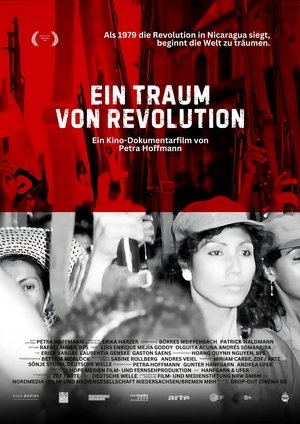
Shot in 1983–84 and focusing on the work of the Historical Institute, this film witnesses how Nicaraguans are recovering their history, the memory of Sandino’s struggle, to transform their sense of identity.
“Binxet – Under the border” is a journey between life and death, dignity and pain, struggle and freedom. It takes place along the 911 km of the turkish-Syrian border. On the one hand the ISIS, in the other Erdogan’s Turkey. In the middle the borders and one hope. This hope is called Rojava, only one point on the chart of a troubled region, a region of resistance and an example of grassroots democracy that speaks about gender equality, self-determination of peoples and peaceful coexistence.
Seven years after completing an Israeli Defense Course for female combat soldiers, director Hen Lasker returns to take a deeper look at the place where she first fell in love with a woman. Over the course of 66 days and nights, Lasker shoots a fly-on-the-wall documentary that allows unprecedented intimacy into the lives of the trainees and commanders of the Israeli army. The dichotomy of the innocence of these baby-faced trainees with the heavy burden of military service is a central theme of the film, illustrated in a scene where they discuss losing their virginity while waiting their turn to fire a machine gun. But it is the director’s relationship with Smadar, a breathtaking commander struggling to mask her gentle soul with a strict military persona, which makes the film truly enchanting. The intersection of love, duty, and personal growth thrive through to the film’s surprisingly moving finish.
Marion Stokes secretly recorded television 24 hours a day for 30 years from 1975 until her death in 2012. For Marion taping was a form of activism to seek the truth, and she believed that a comprehensive archive of the media would be invaluable for future generations. Her visionary and maddening project nearly tore her family apart, but now her 70,000 VHS tapes are being digitized and they'll be searchable online.
In an unprecedented and candid series of interviews, six former heads of the Shin Bet — Israel's intelligence and security agency — speak about their role in Israel's decades-long counterterrorism campaign, discussing their controversial methods and whether the ends ultimately justify the means.
A documentary film account of the Russian Revolution, based on archival footage.
An examination of Israel and its society after many months of war, seen initially through the prism of viral social media posts - and exclusive interviews with the soldiers behind them. These posts, some shared millions of times, show soldiers humiliating bound Palestinians, ransacking their homes, joking as they detonate schools and whole districts, and laughing as they launch high explosive ordnance into densely-packed areas. The award-winning team behind this Basement Films production traveled to Israel to interview some of these soldiers, who proudly defended themselves and their videos, some expressing callous disregard for Palestinians in Gaza. Through additional interviews with Israeli radical groups, politicians, and media figures, the film reveals Israeli Jewish society in the aftermath of October 7th, gripped by a vengeance and hate that puts into question any possibility for peace.
Amérique latine, l'année de tous les dangers
Turkish democracy got over the 27th of May and the 12th of March and set off again, but the storm did not subside and the mutual reckoning was not over. On the contrary, new fronts were opened in the country and blood began to flow like a gutter. Finally, on September 12, there was a knock on the door again. Those who came that day changed everything, everything. Nothing would ever be the same again, nothing would be the same as before.
13 824