Eight people from very different backgrounds cross paths in Barcelona, Spain. Lawyers, musicians, translators, security guards, call center agents. They are all immigrants. Some have just arrived, others arrived years ago, leaving behind a war, a dictatorship or some sort of social or cultural discrimination. They all chose exile over submission.
Tilburg artist Tommy van der Loo searches for the influence of superiority thinking, racism and colour in his life. Van der Loo is an emerging artist and his work has been purchased by Boijmans van Beuningen in Rotterdam. He also had an exhibition at the Kunsthal. He also made the memorial for the abolition of slavery in Eindhoven. He has had multiple experiences with discrimination and incorporates that into his sculptures. Identity and image formation are important to him: How do you look at others, how do others look at you. The search is the inspiration for his new sculpture.
A few years ago, the al-Mahamids fled Bashar al-Assad and Syria to settle in Montreal. A nuanced portrayal of a courageous family coping with a seemingly interminable war, thousands of kilometres away, that continues to affect their lives.
To mark the 20th anniversary of the Baobab program, we invited several young people to create a documentary portraying their experience in this host community, managed by Pueblos Unidos. Through various workshops, we explored audiovisual language as a tool for expression and memory, and collaboratively developed the documentary's format. Finally, we filmed this short film, in which the participants share their first steps in Spain, their dreams, challenges, and experiences within the Baobab program.
Farida, Rachid, Zinedine et les autres
School integration problems of Turkish children and the inaction of the German and Turkish governments are the focus of this film. The Turkish journalists Aysim and Yagmur Atsis examine new teaching models and present further proposals for solutions as to how equal opportunities can be guaranteed for all children while retaining their respective national identities.
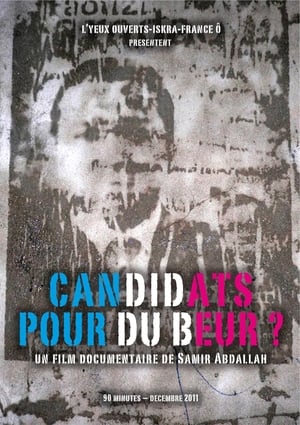
Looking back at the history of the struggle for true equality, we follow the daughters and sons of immigrant workers who have been nominated as candidates representing "diversity" in various election campaigns since the 2007 presidential election. On the ground, through meetings, debates, and more "intimate" encounters with candidates and actors from past struggles, a great diversity of thought emerges. But they all have the same goal: not to be just "candidates for Beurs." With many activists from working-class neighborhoods, from Clichy-sous-Bois to Marseille, via Roubaix, and candidates Mouloud Aounit, Kamel Hamza, Faouzi Lamdaoui, Halima Boumedienne, Omar Slaouti, Samia Ghali, Karim Zeribi, Rama Yade, and others... Will these "new faces" of the Republic be in the picture when the votes are counted, or will they simply be "candidates for the Beurs"?
La Vie sans Brahim
A satire about an alien who lands in Belgium and tries to attain citizenship. During the integration programme he experiences discrimination and unfairness whilst he just wants to fit in with the rest.
Diaspora
La Vie rêvée de Fatna
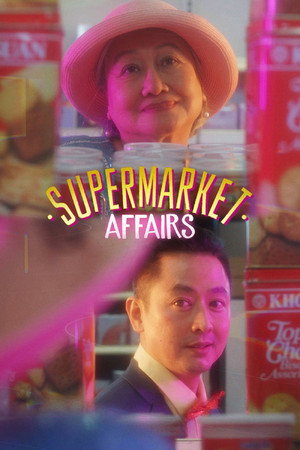
A Vietnamese immigrant mother and daughter in the US argue over how to honor the late patriarch as they shop for his second death anniversary, and inadvertently involve a handsome stranger at the local Asian supermarket.
An upcoming documentary project.
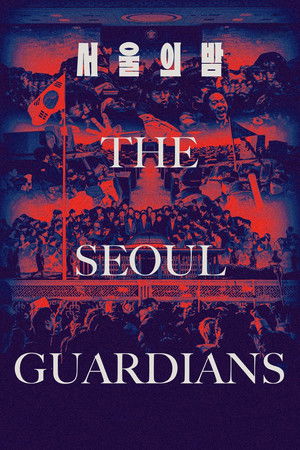
On December 3, 2024, in Seoul, the President of South Korea Yoon Sukyeol declares the martial law. Troops move toward the National Assembly to seize control. Meanwhile, citizens rush to the National Assembly to block the troops, while lawmakers break through police's barricades at the main gate, climb over the walls to attend the session that lifts the martial law.
On October 16th, 1958, a family fled Indonesia. They spent a month at sea aboard the M.S. Sibajak on a voyage to The Netherlands. When they arrived, it was getting winter. Coming from the tropics, the cold was a shock. The family quickly noticed that the spirits who had always been with them in Indonesia were no longer there - they had left them along the journey.
Documentary about Berlin's "Salon Kitty," a brothel that was systematically used by the Nazis for espionage. The owner's daughter took over the premises in 1953 and gradually converted them into an artists' guesthouse. In the early 1990s, her grandson tried unsuccessfully to set up a guitar school, and since then the guesthouse has mainly accommodated asylum seekers. Rosa von Praunheim traces the history of the house in conversation with prominent contemporary witnesses.
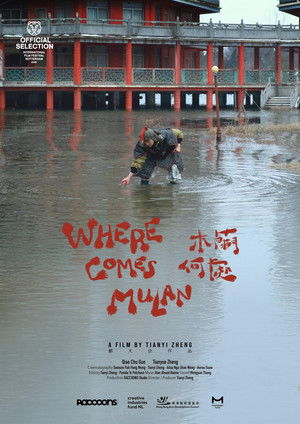
Where Comes Mulan follows artist and filmmaker Tianyi Zheng as she returns to her ancestral village in Huangpi, Wuhan, where the legendary figure of Mulan is said to have originated. Beginning with intimate conversations with relatives and local residents, the film traces how Mulan has been remembered or forgotten in everyday life, only to collide with how local authorities have transformed her image into a powerful tourism brand. Through walks across tourist sites and abandoned ruins, Zheng questions the gap between lived memory and official narrative.
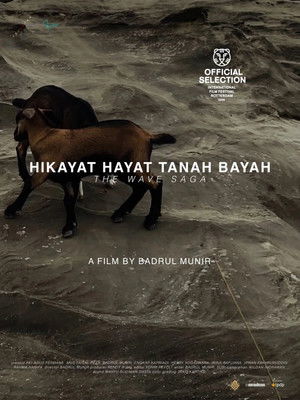
West Java, in current-day Indonesia, was home to the Sundanese Kingdom that flourished for over nine centuries, yet few physical traces remain today that sing of its glory. Nestled in a geologically sensitive zone, the region has long been subject to nature’s unabated fury, with periodic earthquakes, tsunamis and volcanic eruptions wiping out its heritage and reducing it to a “landscape of amnesia”.
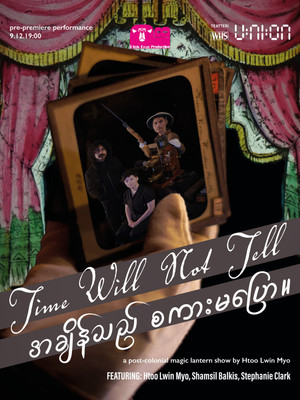
Artist-filmmaker Htoo Lwin Myo examines some of the earliest pre-cinematic objects portraying Myanmar's colonial past: magic lantern slides. A polyphonous essay on the perils of history and the many stories we can find in the remains of times gone.
A documentary on the development and evolving situation in Berlin from 1945 until the early 1960s from both a political and human perspective,