A day in the life of an old shepherd during the lambing season on the Sussex Downs. He talks of the problems in Winter, when lambing is complicated by snow. -BFI
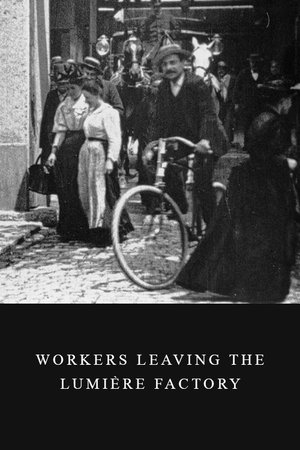
Working men and women leave through the main gate of the Lumière factory in Lyon, France. Filmed on 22 March 1895, it is often referred to as the first real motion picture ever made, although Louis Le Prince's 1888 Roundhay Garden Scene pre-dated it by seven years. Three separate versions of this film exist, which differ from one another in numerous ways. The first version features a carriage drawn by one horse, while in the second version the carriage is drawn by two horses, and there is no carriage at all in the third version. The clothing style is also different between the three versions, demonstrating the different seasons in which each was filmed. This film was made in the 35 mm format with an aspect ratio of 1.33:1, and at a speed of 16 frames per second. At that rate, the 17 meters of film length provided a duration of 46 seconds, holding a total of 800 frames.
This walk in the daily life of several psychiatric institutions, allows us to meet extraordinary people who let us enter their privacy.
An exploration —manipulated and staged— of life in Las Hurdes, in the province of Cáceres, in Extremadura, Spain, as it was in 1932. Insalubrity, misery and lack of opportunities provoke the emigration of young people and the solitude of those who remain in the desolation of one of the poorest and least developed Spanish regions at that time.
A detailed account of the life and artistic journey of Michelangelo.
The incredible life of novelist, screenwriter, actress and nude dancer Sidonie-Gabrielle Colette (1873-1954), who led her life to the beat, constantly reinventing herself through words, scandals and metamorphoses; a peasant woman who became an icon of the European Belle Époque; an artist who defied religion and social prejudices to live a hedonist existence worthy of her desires; a real woman who turned herself into a fictional character…
Several behind the scenes aspects of the movie-making business, which results in the enjoyment the movie going public has in going to the theater, are presented. They include: the production of celluloid aka film stock, the materials used in the production of which include cotton and silver; construction crews who build sets including those to look like cities, towns and villages around the world; a visit with Jack Dawn who demonstrates the process of creating a makeup design; the screen testing process, where many an acting hopeful gets his/her start; the work of the candid camera man, the prying eyes behind the movie camera; a visit with Adrian, who designs the clothes worn by many of the stars on screen; and a visit with Herbert Stothart as he conducts his musical score for Conquest (1937). These behind the scenes looks provide the opportunity to get acquainted with the cavalcade of MGM stars and their productions that will grace the silver screen in the 1937/38 movie season.
Some months after the fall of the Berlin wall, during the time of federal elections in Germany in 1990, Chris Marker shot this passionate documentary, reflecting the state of the place and its spirit with remarkable acuity.
Filmmaker Alain Resnais documents the atrocities behind the walls of Hitler's concentration camps.
When capitalism is slowly taking possession of the Alps, Alain, an old hardened mountain dweller, tries somehow to perpetuate the everyday life of yesteryear men. This documentary traces the coexistence of two worlds united in one single valley.
Joshua Littman, a 12-year-old boy with Asperger's syndrome, interviews his mother, Sarah. Joshua's unique questions and Sarah's loving, unguarded answers reveal a beautiful relationship that reminds us of the best—and the most challenging—parts of being a parent.
A Japanese food writer embarks on her quest to cook the perfect Sunday roast. Her gravy evokes a taste of home both gently Japanese and quintessentially English. Blending her passion for British food with the memories that accompany each dish, it is a labor of love with all the trimmings.
SOAR
JB Smoove and Martin Starr host a celebration of 20 years of "Spider-Man" movies, from the Sam Raimi trilogy to Marc Webb's movies and the trio from Jon Watts.
The story of Emeer - AKA B-boy Zulu Rema - a Tunisian teenager, who had both is leg amputated as a child, and of his passion for art and dance, that has helped him become a break dance champion at national level and a role model for young people all over the world.
Between reality and animation, the story of Nidhal is told, a young homosexual Tunisian who defended individual freedoms in Tunisia through his work in radio. He found himself under a lot of pressure which forced him to leave the country and seek asylum in the Netherlands.
Paparazzi explores the relationship between Brigitte Bardot and groups of invasive photographers attempting to photograph her while she works on the set of Jean-Luc Godard's film Le Mépris (Contempt). Through video footage of Bardot, interviews with the paparazzi, and still photos of Bardot from magazine covers and elsewhere, director Rozier investigates some of the ramifications of international movie stardom, specifically the loss of privacy to the paparazzi. The film explains the shooting of the film on the island of Capri, and the photographers' valiant, even foolishly dangerous, attempts to get a photograph of Bardot.
Efforts to save the Atchafalaya Basin are highlighted with stunning visuals of the largest wetland and swamp in the United States. Located in south central Louisiana, it is a combination of wetlands and river delta area where the Atchafalaya River and the Gulf of Mexico converge.
After the sunset, a man wonders between the edges of the highways gathering edible roadkill animals.
Marketing film for Walt Disney World showing the creation of the new theme park, with footage of WED designers at work, actual construction, scale models, the Preview Center, and Walt Disney discussing his hopes for the project from an earlier 1966 film.