Three detectives in the corrupt and brutal L.A. police force of the 1950s use differing methods to uncover a conspiracy behind the shotgun slayings of the patrons at an all-night diner.
In his Miami studio, built as a solar observatory, a famous painter lives alone, without a wife or children. His only obsession is to paint at dawn. But for some unknown reason, as he prepares to finish his last canvas, that morning the sun does not rise.
A children's film about the largest mass suicide of the 20th century reconstructs the 1978 event. The Reverend Jim Jones forced nearly a thousand followers of his People's Temple sect to drink poison in the settlement of Jonestown, Guyana, South America. A third of them were children. Jan Bušta gives sadists, voyeurs, and necrophiliacs one minute to leave the cinema. His self-reflective documentary, which is the result of ten years of time-lapse filming, does not depict dramatic scenes. To the sound of an audio recording from that fateful day, we see a collage of child ghosts preaching about escaping the corruption of the world.
The film starts with the veteran thespian Harish Mishra, he is gravely ill. The punishments of a film shoot have left the old man in a coma. His co-star, Shabnam, is wracked with worry, but their director, Siddharth, keeps strangely distant and refuses to visit his ailing star. In flashbacks, their story emerges.
Told through the voice of former KGB agent Viktor Petrovich, whose life becomes inextricably linked with Ronald Reagan's when Reagan first caught the Soviets’ attention as an actor in Hollywood, Reagan overcomes the odds to become the 40th president of the United States.
When actress Nikki Grace gets the lead role in a cursed film, her world becomes more and more surreal, blending realities and ideas of infidelity, reincarnation, and supernatural forces.
An actor who is considering the role of a supermarket manager arrives at a grocery store on the outskirts of Los Angeles to do some field research. He subsequently becomes stranded, without a car or cell phone, and accepts a ride home with Scarlet, a cashier who is about to interview for a new job. The actor rediscovers the essence of his craft while helping Scarlet gain the confidence she needs to change her life.
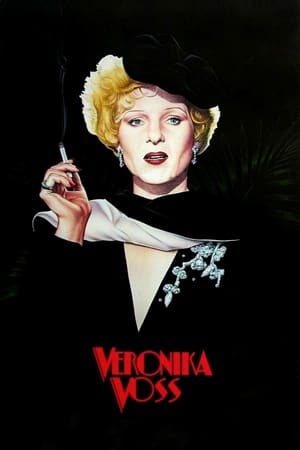
In Munich 1955, German film star Veronika Voss becomes a drug addict at the mercy of corrupt Dr. Marianne Katz, who keeps her supplied with morphine. After meeting sports writer Robert Krohn, Veronika begins to dream of a return to stardom. As the couple's relationship escalates in intensity, Veronika begins seriously planning her return to the screen -- only to realize how debilitated she has become through her drug habit.
A young woman is catapulted into pop stardom, with her already-famous DJ boyfriend calling the shots.
Creating a universe between two small pieces of Cardboard. When Jack and Jill of Cardboard City are separated by Jill's torrid illness, Jack must think outside the box to assure they will be together again.
An experimental film revolving around how an artist perceives a man and a woman.
A solitary man struggles to cultivate beauty in a desolate urban world. Lonely and dislocated, he drifts in and out of a dream state envisioning the promise of regeneration. ROSEWATER tells a story of hope sustained through perseverance, ritual and, ultimately, revelation.
Washed-up novelty musician Reuben Gimbel wants to resurrect his career after his agent dies.
An omnibus film based on Kim Oki's album Hip Hop Retreat. Twenty characters share the same table at different times, in different emotional states, each with their own story. Shot in one day, edited in one day.
A personal reflection on hands, the word "tear," and caring for oneself that experiments with sound, silence, and definitions.
The career of screenwriter Dalton Trumbo is halted by a witch hunt in the late 1940s when he defies the anti-communist HUAC committee and is blacklisted.
A 16mm experimental film that analogizes the discourse of racialized criminality and the carceral apparatus, which surveils and delimits the movements of Black people’s bodies, with the conventions and mechanics of the cinematic apparatus which regulates and standardizes the movement of the filmstrip through the motion picture camera and projector. Equal parts essay and visual art, Speaking in Tongues embodies the cinematic Black ecstatic that simultaneously re-envisions resistance defiance in the face of anti-Black state violence and subverts the conventions of cinematic realism through a manually and optically altered collage of original documentary and archival film sourced from Hollywood movies, television commercials, educational films, cartoons, European art cinema and miscellaneous ephemera.
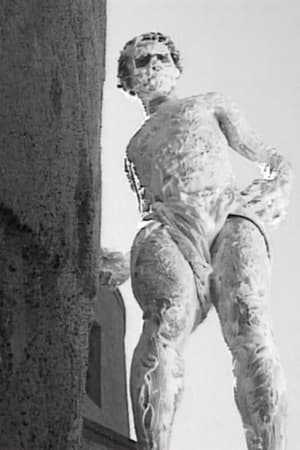
X-ray images were invented in 1895, the same year in which the Lumière brothers presented their respective invention in what today is considered to be the first cinema screening. Thus, both cinema and radiography fall within the scopic regime inaugurated by modernity. The use of X-rays on two sculptures from the Bilbao Fine Arts Museum generates images that reveal certain elements of them that would otherwise be invisible to our eyes. These images, despite being generally created for technical or scientific purposes, seem to produce a certain form of 'photogénie': they lend the radiographed objects a new appearance that lies somewhere between the material and the ethereal, endowing them with a vaporous and spectral quality. It is not by chance that physics and phantasmagoria share the term 'spectrum' in their vocabulary.
Experimental short film that reflects through the voice of the protagonist, poetically, about a fateful intimate and personal event.