Efêmero
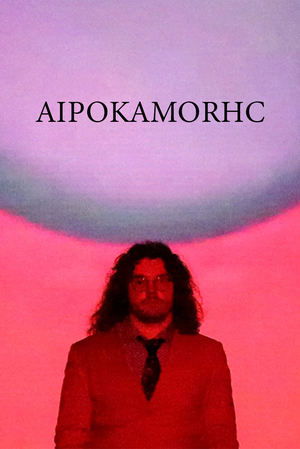
A unique visual interpretation of Tyler, the Creator's latest album, Chromakopia.
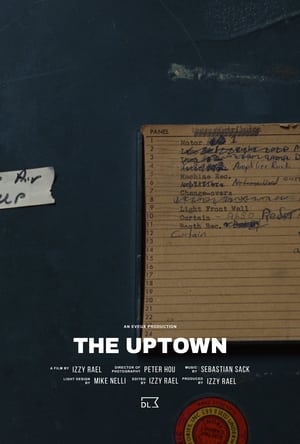
A vacant theater still has “screenings” of its own: apparitions that come to life on a curved screen without anyone to see them, creating spectacular scenes without any projectors at all.
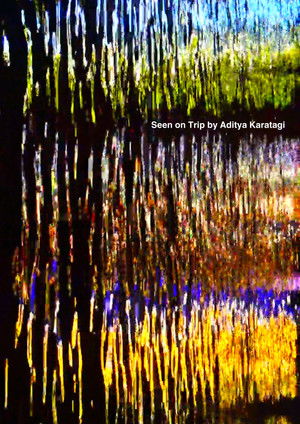
Endless images, flowing in and out, set to a collection of looped sounds. Shot and heard on a family trip.
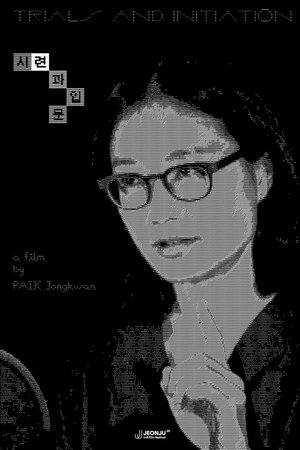
Here is an actor, one who has been asked to dwell in the perilous gap between text and image. In the voids where traces of the past have been erased by an unknown error, she begins to assemble her own script.
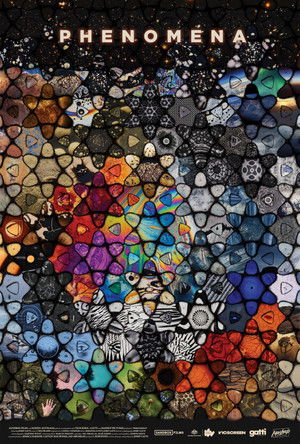
A psychedelic odyssey into the fabric of the universe, guided by a filmmaker’s immersive practical experiments that transcend into a deeply hypnotic audio-visual experience of awe and human connection to the natural world.
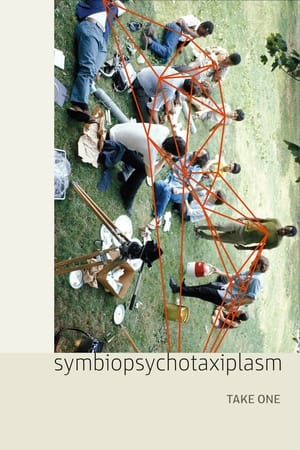
In Manhattan's Central Park, a film crew directed by William Greaves is shooting a screen test with various pairs of actors. It's a confrontation between a couple: he demands to know what's wrong, she challenges his sexual orientation. Cameras shoot the exchange, and another camera records Greaves and his crew. Sometimes we watch the crew discussing this scene, its language, and the process of making a movie. Is there such a thing as natural language? Are all things related to sex? The camera records distractions - a woman rides horseback past them; a garrulous homeless vet who sleeps in the park chats them up. What's the nature of making a movie?
A cyclical venture into a forest.
A video project meant to highlight the human cost in Palestine.
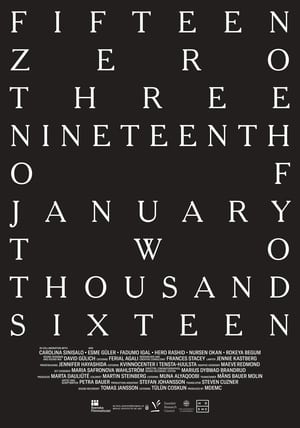
fifteen zero three nineteenth of january two thousand sixteen explores how everyday routines and gestures are transformed when a mother loses her child in the violence impacting Swedish outskirts since the early 2000s. The film resists simplistic media depictions of the suburbs and shows how a home can hold both mourning and the mobilization of women to fight for their own and others' children.
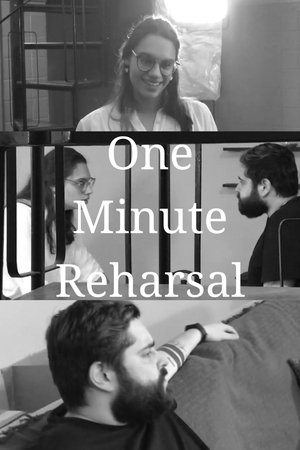
Actors Isabella Lafin and Rafael Grendene reharsing a scene from the movie Marriage Story (2019).
An experimental half-documentary half-fiction about a young person’s routine of getting to sleep and waking up.
memory file 01
The audience is taken through a range of years through archival footage exploring the ups and downs of our lives and the thing that connects us all, love. Seven interview subjects: a philosophy professor, a film professor, a humanities professor, a retired lawyer turned archivist, a volunteer, a dance student, and a fashion student, explore their backgrounds with religion, their current personal philosophies, whether or not they believe we have a purpose, or if the things we do have any meaning at all. Eventually everything wraps back around to love.
From cradle to grave. A travelogue in the vein of the early super 8 films by Derek Jarman and Mark Jenkin, and the rambling grimoires of Ithell Colquhoun, retracing the primal journey of the early Holocene mystics of the Guernsey bailiwick.
This work is an attempt to overcome alienation amidst the fragmented construction reality of everyday narrative. Rethinking the meaning of reflections and shadows, framed subjects, body movements, screen, as well as sounds that are constructed by connecting the expression of their existence with the history of representation in modern art.
This work re-examines the relationship between the elements that make up the quality of space, namely: "subject" and "object", "organic" and "mechanical", "reality" and "representation", "wholeness" and "partiality", " determinacy” and “indeterminacy”, “visibility” and “invisibility”, “natural” and “non-natural”.
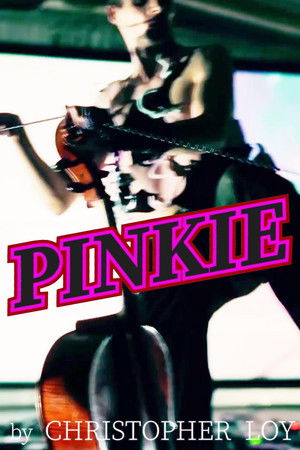
A sonic, surrealist narration in which the musicians fingers’ are the protagonists. Reflecting on common hierarchies and roles of the fingers when navigating through physical, digital and sonic realms, "Pinkie" is taking a perspective of deconstructing and reassigning them towards a queer, holistic reception of playing an instrument.
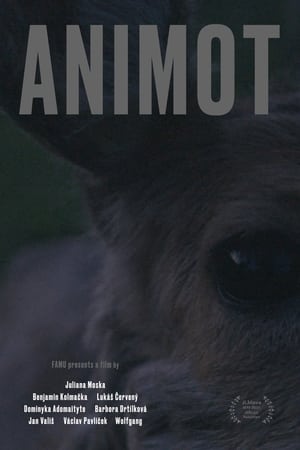
The experimental documentary filmed at rescue centres in Prague and Vlašim refuses the anthropocentric perspective and views the world through the eyes of wounded animals. The term Animot was taken over from Jacque Derrida. While the French philosopher and deconstructivist uses the term to refer to everything animalistic and non-human, the film, on the other hand, uses intimate details to point out the proximity between human beings and animals. They are connected by their vulnerability, helplessness and mortality.
This film is an imprint on the film strip, an imprint in the mind just like a memory of my father’s garden where a child is playing; an imprint of the father on the garden as a reflection of his character; an imprint of the garden on the father; an imprint of him on a person. As if the seeds were falling from his beard, skin, or hair and become the garden, roots, sprouting and growing, just like a child.