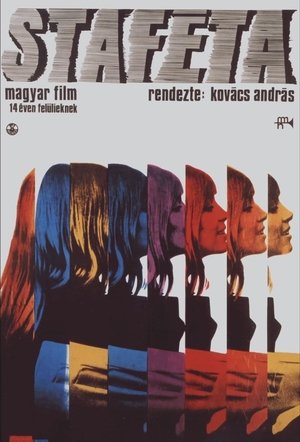
This film is a documentaristic dispute about the possibilities of young people to assert themselves, to make a career. Zsuzsa is a third-year university student studying pedagogy. She has been dating Zoltán for three years, and her thinking has been fundamentally shaped by this relationship. Yet now she would like to break up with him.
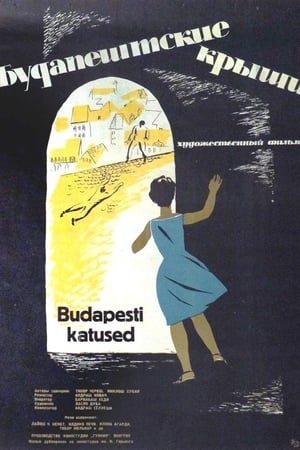
Gráci has been recently released from a reformatory school. His old gang would like to involve him in a new action, but he hesitates. His past record is bad enough already, and he would not like to get into new trouble.
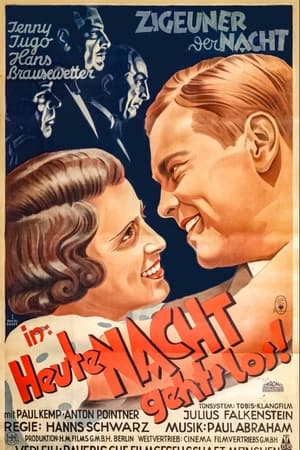
Zigeuner der Nacht
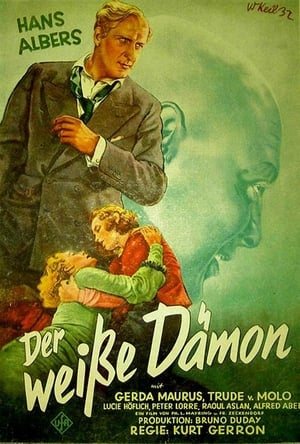
When Albers takes his drug-addicted opera star sister Gerda to a sanitarium, they both become targets of slimy dope peddler Peter Lorre, who fears that Gerda will blow the whistle on him. Lorre kidnaps the woman, leading Albers on a frantic chase.
The engineer Ambrus has been suspended in his job because he publicly called the attention of the customers to a construction mistake of some goods designed to be exported. His immediate boss learns the news on a business trip to Paris. He meets his old friend Lendvay, an emigrant from Hungary, and his French wife in a cellar bar. After their talk Benkő starts seeing things in a different perspective. When he returns home, he decides to take a stand for Ambrus against Ferenczi, the general director, despite his wife's and the old director's advice.
Lotte and Daisy run away from the orphanage and make their way to Berlin, where they meet shady characters. The police are looking for the two of them, especially as several girls have recently disappeared without trace.
The story of the film with a touch of journalistic atmosphere takes place in the autumn 1919 after the fall of the proletarian dictatorship. The main figure is Zilahy Kálmán, a high-school teacher, very much attracted to Ady's ideology. He is, at the same time, a rational minded sober character keeping a certain distance from the chaotic events. During the first months of the terror of the Whites, he takes a stand for his persecuted colleague, and with his wife's help, he hides Pálos, a Communist commissar in his flat.
The scene is Ukraine. In 1943, after the Hungarian' defeat at the river Don, soldier Balogh decides to visit his family.
The film is a true account of the drama of "non-action" on 14th and 15th of October, 1944. The Nazis, having a straightforward program, occupy Hungary with little or no difficulty, as the Hungarian political leadership had no unambiguous program for responding to possible steps of the Nazis. In spite of the secretly signed cease-fire agreement and proclamation, Horty gives up all plans of resistance at the news of the kidnapping of his son. The Nazis take over power and roll up the so-called conspiracy aimed at Hungary's breaking away from the German alliance.
1943. French POWs escape through Hungary towards the Balkan. Jacques and Gérard are caught and taken to an internment camp at Lake Balaton. Jacques meets Klári here, who was abandoned by her military officer husband for her Jewish origin. Both want to have a short affair, but love unfolds between them.
A poor dandy embezzled large sums of money and buys the title Marquis De Sade to impress the upper class. The film premiered as "I am a Marquis."
Vera is an engineer and a young divorcée. She is pretty, lonely, and has a boyfriend, Tamás, whom she is dating secretly on a certain day of the week at the week-end house of one of their friends, as Tamás has a family and does not intend to divorce his wife. Vera would like their relationship to be publicly acknowledged.
The plot of the film starts at the beginning of the century, in the heyday of the Andrássy and Károlyi families, during the ever increasing crisis of the Austro-Hungarian Monarchy, and ends with the emigration of the Károlyi couple after the collapse of the 1918-19 revolutions. It tells the story of this historical period (war, revolution, take-over by the proletariat, dictatorship) from the view of an extremely wealthy lady, Andrássy Katinka. The authors tried to evoke the special story during which a strange and unique woman gets thoroughly involved in history through her love and at the same time keeps her own identity and self-governance.
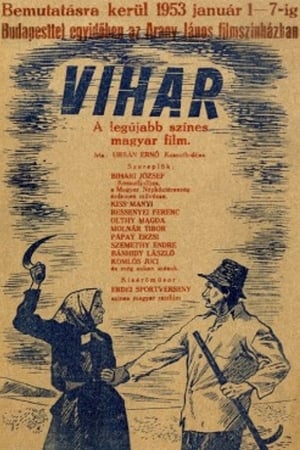
Vörös Hajnal (Red Dawn), a co-operative is the venue of skylarking, while the storm destroys the wheat which is to be harvested soon. Árendás, a middle-peasant, voices severe accusations against members of the co-operative: out of negligence, they failed to keep the ditches clean. It is always the soft option they seem to favour, while the necessity of properly taking care of the farmlands is long-forgotten. Members of the co-operative and the village people are deeply divided.
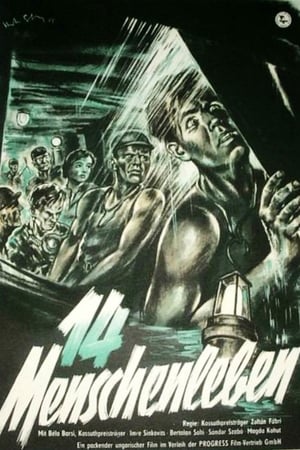
In September 1952, psychological torment ensues when fourteen miners are trapped inside a collapsed mine, and the community in northern Hungary unites to save them.
In 1963 in Tihany, somebody addresses the writer Gábor Náday. He is reminded of a night drive in 1944 that saved his life. Painful memories start coming to Náday.
The head of the nunnery is dying, and the members are divided in two groups as the election of the new head approaches. Led by Virginia, the younger nuns stand up for changing the strict religious dogmas and would like a modern school with genuine science, a bathroom to be built, and a freer spirit. Their candidate is sister Magdolna, who went to secular universities, too. The seminarists, led by Király Erzsi, also rebel against the older nuns' strict discipline and the depressed atmosphere of the institution. However, Magdolna does not want to stay involved in the fight because she is deterred by Virginia's sinful attraction towards her and the tools Virginia is using to gain victory at any price.
War criminal Baradla Géza returns after 25 years, alongside his ex-accomplice, Obrád Simon, to the village where he burned occupied homes and executed partisans. The ex squad-leader is chased to this place by his 'heroic deed' and the memory of his love. Like a maniac, he seeks to forgive the villagers for having killed six of his soldiers.
In 1918, Fábián Bálint is forced to kill on the Italian front. At home, his sons drown the priest, the lover of their mother, in the river Kraszna, an action that drives her insane. Following his return home, Bálint becomes the liveried coachman of the baron.
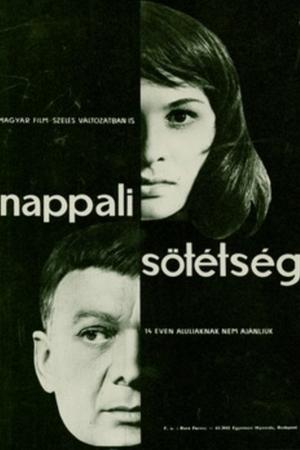
Two personalities battle for dominance inside the mind of a woman. But how can one personality be entitled to everything when both have their own lives?