Wolves divide and fascinate us. 150 years after they were driven to extinction in Central Europe, they are returning slowly but inexorably. Are they dangerous to humans? Is it possible to coexist? Using Switzerland as a point of departure, where wolves have returned in the very recent past, this documentary sheds light on the wolf situation in Austria, eastern Germany, Poland, Bulgaria, and even Minnesota, where freely roaming packs of wolves are more common sight.
Lusatia - the former energy production center of the GDR, today a landscape depleted by lignite mining. Large lakes have been created in which you can "rust" while swimming, and landscape formations reminiscent of the Grand Canyon of the Wild West. Native wolves and many exotic species of international flora and fauna are inexorably conquering new habitats. The people who have remained persevere like settlers. They appear in the film as narrators of their sometimes bizarre stories. We see how they try with imagination and commitment to wrest a re-inhabitable piece of earth from their battered landscape. For Lusatia harbors the old dream of Prince Pückler: the dream of a landscape for people. More is happening in Lusatia than we dare to dream.
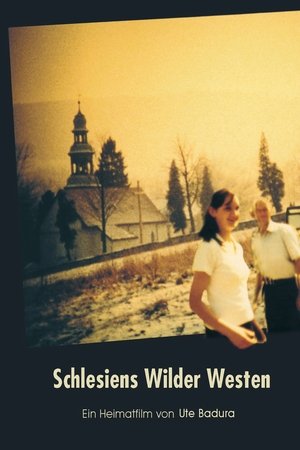
"I can live better in a place whose history I know," says a young Pole in the prologue of this film. He lives in Kopaniec, formerly Seifershau - a village in Lower Silesia. Between the past and the present lay the expulsion of the Germans and the resettlement of the Poles, many of whom were themselves expellees from what is now Ukraine. The village is the focus of the film and the link between the former and present inhabitants. The younger Poles have grown up with the visits of the former German inhabitants. The life stories of the older Poles and Germans tell of war and expulsion, but also of the time when they lived together in the village, directly after the war. The region was called "The Wild West" in Poland at the time. "Silesia's Wild West" asks what home is: a place, a person, a feeling, a memory?
winterlieb - libawka
wuhlo – kohle
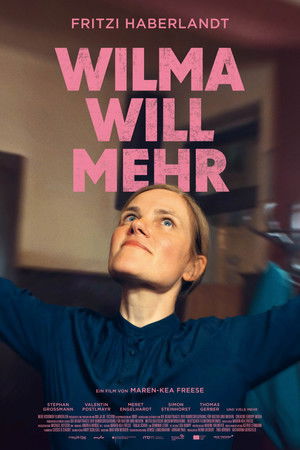
Wilma has many qualifications and talents, yet suffers just as many disappointments in life. After she catches her husband cheating, she runs away to Vienna in search of a new life. There she lives with bustling bohemians, tries her luck at a variety of jobs and perhaps... at love again.
Two brothers grow up in the Saxon province (part of Germany) at the turn of the millennium, where the dream of family happiness in a new house quickly turns into a nightmare of decay, violence and xenophobia as they desperately search for stability and belonging.
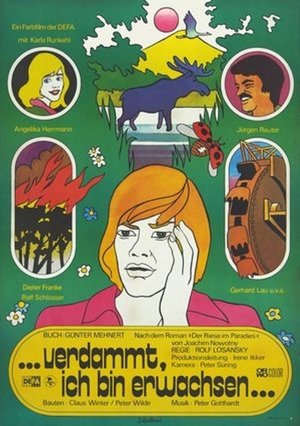
15-year old Klaus Kambor, called Kurbel, is living in a village in Lusatia and already thinks of himself as an adult. He can hold a lot of rhubarb wine and has already kissed a girl. But with his new method of lawn mowing, which he thinks is brilliant, Klaus makes a big mistake: He causes a wild fire in the forest. Then he does not react adult-like at all, but shirks the responsibility, which leads to the break-up with his girlfriend Daniela. Furthermore, Klaus does not realize that several of the places he likes the most in his environment are now going to be sacrificed to mining. When Klaus becomes friends with the teacher Konzak and with the construction worker Jule, he feels understood for the first time and starts to take more responsibility.
Tiny meerkats survive in the harsh desert elements and follow the matriarch that is pressured to produce heirs and ensure the family's survival for generations to come.
This documentary traces the history of the B-Western from it's silent movie origins to its demise in the early 1950s. The film contains a large number of scenes from early silents and seldom seen films, as well as old photographs of the stars and one-sheet advertisements for lost films.
The extraordinary rise of Olympic boxing champion, record-breaker, feminist and LGBT icon Nicola Adams. From the streets of Leeds to the world stage, Adams fought her way to the top and changed the game. This, is her story.
Four female climbers face the sporting challenge of a lifetime as they attempt to compete in the first ever Olympic climbing competition at the Tokyo 2020 Olympics. The Wall: Climb for Gold follows four elite climbers, Janja Garnbret, Shauna Coxsey, Brooke Raboutou, and Miho Nonaka, over an extraordinary two years. They battle through Olympic qualifying events to earn their place at Tokyo, then face a gruelling season of competition and training that sees everything put on hold when the Covid-19 pandemic forces the Games to be postponed. As the young women confront their own mental and physical demons en-route to Tokyo, the film reveals an astonishing and inspiring insight into what it takes to be an Olympian and ultimately what it means to be human.
Ten young people from all over the world meet in Rome with Pope Francis with the aim of talking and conveying to him the main concerns of their generation. What awaits them is an unprecedented meeting, a face-to-face conversation, and a unique event.
Bad Boys featurette.
A journey in search of adventures, unexplored shores, empty waves in the mediterranean most secluded places living with almost zero carbon footprint. This is a surf-film about our small Ocean, the cradle of civilization and a reflection on living a simple lifestyle in symbiosis with nature. The boats together with the Onde Nostre Crew traveled the Mediterranean Sea following Ulisse's journey with surfers, sailors, free divers, musicians, artists.—Luca Merli
Jean-Luc Godard brings his firebrand political cinema to the UK, exploring the revolutionary signals in late '60s British society. Constructed as a montage of various disconnected political acts (in line with Godard's then appropriation of Soviet director Dziga Vertov's agitprop techniques), it combines a diverse range of footage, from students discussing The Beatles to the production line at the MG factory in Oxfordshire, burnished with onscreen political sloganeering.
Bert Haanstra paints a portrait of The Netherlands and the Dutch, in his own unparalleled manner. Partly with the aid of a hidden camera he observes people in the most diverse situations. He shows the unusual in the usual and the usual in the unusual. The harsh years of the post war era of reconstruction have passed and for most people life is better than before.
This is the true story of a love triangle that takes place entirely online. Lies lead to murder in real life, as a teenage vixen (screen name 'talhotblond') lures men into her web. Revealing a shocking true crime story that shows the Internet's power to unleash our most dangerous fantasies.
This collection consists of four of the most cherished shows in television history. On February 9, 1964, The Beatles made their debut TV appearance in the U.S. on the Ed Sullivan Show. 73 million Americans watched and Beatlemania is born! Other shows included were February 16, 1964, February 23, 1964, and September 12, 1965. Includes 20 song performances, as well as the rest of the four Ed Sullivan shows. Also included in some special editions is the show rehearsal (Deauville Hotel, Miami - Feb.16, 1964)
A showcase of German chancellor and Nazi Party leader Adolf Hitler at the 1934 Nuremberg Rally.