Концерт
Magnús Magnússon´s captivating footage gives viewers the opportunity to experience Icelandic nature in a unique way. The film portrays the lives of two gyr falcon couples in the North of Iceland. The viewer follows their struggle to raise chicks under harsh conditions. In the Realm of the Gyr Falcon is fascinating cinema for all those interested in birds and Icelandic nature.
When a female barn-owl's home - an old disused barn - is demolished, she has to seek a new place to live. On the way, flying through forests and across grasslands, she encounters most of the common owl species in Central Europe.
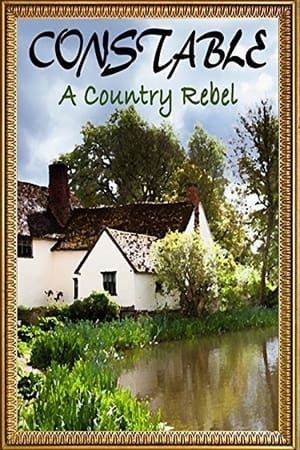
The Haywain by John Constable is such a comfortingly familiar image of rural Britain that it is difficult to believe it was ever regarded as a revolutionary painting, but in this film, made in conjunction with a landmark exhibition at the V&A, Alastair Sooke discovers that Constable was painting in a way that was completely new and groundbreaking at the time. Through experimentation and innovation, he managed to make a sublime art from humble things and, though he struggled in his own country during his lifetime, his genius was surprisingly widely admired in France.
Footage of the seabirds found in the Shetland Isles. One of a group of films made by Jenny Brown and bought by John Grierson for the GPO Film Library in the 1930s.
An excellent display of how humans can rehabilitate and restore an area where a heavy industry polluted the water so severely that it was unsuitable to sustain any kind of life. A a film showing how birds returned to an environment once devastated by industry. The lakes around the northern Slovenian town of Velenje, placed in the Central Europe, are geographic center of the film. They emerged as the land above the lignite mines subsided and the depressions were filled with water. The mines started operating at the end of the 19th century. In the mid 20th century a power plant was built that caused a severe pollution of the lake waters to the extent of the lakes not being fit for any kind of life. As a consequence many birds moved from these parts. After a long ecological restoration that started in the mid 1980s, life returned to the water. Gradually the birds returned as well, including some there were previously never observed in this area.
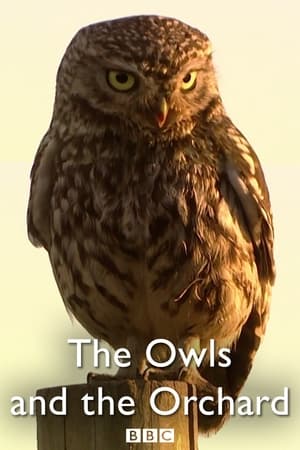
Owls are remarkable, highly resourceful birds that have carved out a unique way to live. They have colonized terrains from tundra to rain forest and will hunt almost anything.
Meet the big birds, a feathered family who have never flown a day in their lives! From ostriches to kiwis, these bizarre birds appear to be nature's greatest novelty act. How they came to be and how they continue to survive is a fascinating tale that has long captivated Sir David Attenborough. It is a story of dedicated dads, enormous eggs and a serious need for speed. And far from being the court jesters of the animal world, these flightless curiosities once nearly ruled the land.
Finland’s first nature documentary. The filmmakers’ expedition leads them all the way to the Åland Islands and the Karelian Isthmus.
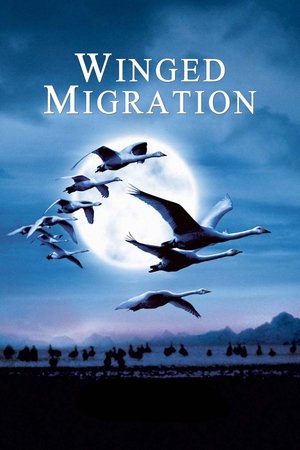
This documentary follows various migratory bird species on their long journeys from their summer homes to the equator and back, covering thousands of miles and navigating by the stars. These arduous treks are crucial for survival, seeking hospitable climates and food sources. Birds face numerous challenges, including crossing oceans and evading predators, illness, and injury. Although migrations are undertaken as a community, birds disperse into family units once they reach their destinations, and every continent is affected by these migrations, hosting migratory bird species at least part of the year.
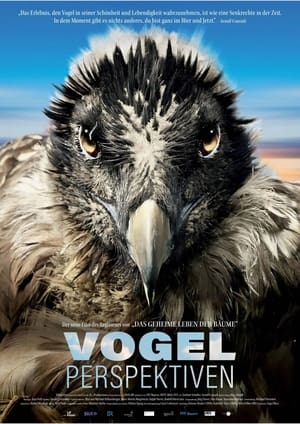
The documentary explores the life of birds of prey and their struggle for survival in a changing world. From nesting to hunting, it reveals their importance in ecosystems and the threats from human activities. Through impressive images, it presents nature’s diversity and the need to preserve this preciousness.
China's Secret Monkey Kingdom
Sid James learns of the joys of owning a budgerigar.
After a premonition of an unusual bird, a father loses his voice. His daughter undertakes a search to rediscover him, through an intimate narrative that explores the past, the new facets and the silences of a man who is no longer the same.
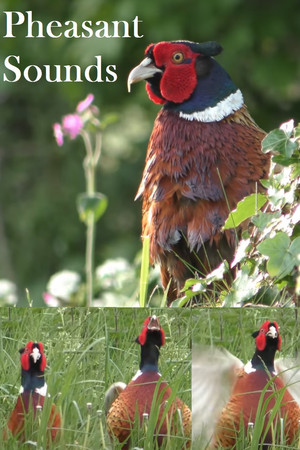
Ornithologist Seán Ronayne from Cobh, Co. Cork is on a mission to record the sound of every bird species in Ireland – that’s nearly 200 birds. Often joined by his partner Alba, he travels to some of the country’s most beautiful and remote locations to capture its most elusive species and soundscapes: the busy seabird colony of Skellig Michael; a native woodland free from road noise in the Burren; the corncrake stronghold of Tory Island; a solitary nest in the Donegal uplands. Along the way we get to know Seán, whose hypersensitivity to sound has proven both a struggle and a strength. At once inspiring and cautionary, Seán’s journey illustrates the beauty and importance of sound, and what listening can tell us about the state of our natural world.
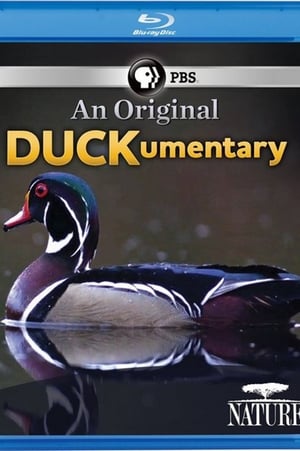
Ducks are true originals. There are more than 120 different species of ducks in all, a fantastical group of complex characters. Ducks have a talent for survival, and life stories filled with personality and charm. Each bird is more fun than the last, and will leave you wanting more.
A homeless musician finds meaning in his life when he starts a friendship with dozens of parrots.
Whoever came up with the term 'bird brain' never met these feathered thinkers, who use their claws and beaks to solve puzzles, make tools and more.
Arne Sucksdorff’s short documentary observes gulls raiding nests and stealing eggs with ruthless persistence. Though presented as pure nature study, the film was widely read as an allegory of Nazism—a symbolic parable of predation and violence during wartime. Sucksdorff himself denied such intent, but remarked that “a film that is not open to interpretation is a dead film.”
Dessine - moi une hirondelle