Short about the daily life of the Apaches, including their ceremonies.
In this experimental collage film, Arthur Lipsett reworks over fifty years of newsreel footage into a surreal audiovisual montage of twentieth-century life. Juxtaposing images of scientific progress, political figures, spectacle, warfare, and everyday leisure, the film becomes a fragmented “time capsule” exploring the rituals and contradictions of modern technological culture.
Métis filmmaker Christine Welsh puts a human face on a national tragedy: the murders and disappearances of an estimated 500 Aboriginal women in Canada over the past 30 years. Explores the deep historical, social, and economic factors that contribute to this epidemic of violence against Native women.
Rolling Stones – Hearts for Prague
This short follows a day of work for an Everglades wildlife trapper catching animals for zoos around America. In this film, his assignment is to go out into the swamp with his Indian assistant and find a bobcat, two black bear cubs and six rattlesnakes.
Řečtí umělci
One of the very few films made by Etienne O'Leary, all of which emerged from the French underground circa 1968 and can be very loosely designated 'diary films.' Like the contemporaneous films by O'Leary's more famous friend Pierre Clementi, they trippily document the drug-drenched hedonism of that era's dandies. O'Leary worked with an intoxicating style that foregrounded rapid and even subliminal cutting, dense layering of superimposed images and a spontaneous notebook type shooting style. Yet even if much of O'Leary's material was initially 'diaristic,' depicting the friends, lovers, and places that he encountered in his private life, the metamorphoses it underwent during editing transformed it into a series of ambiguously fictionalized, sometimes darkly sexual fantasias. - Experimental Film Club
The documentary of Kill Bill Vol.2, and how it was made. This is a documentary found on the DVD of Kill Bill Vol. 2. It consists of interviews, behind-the-scenes footage, and clips of the movie.
Sailors training with swords.
A woman wearing dragonfly wings performs a romantic dreamlike dance.
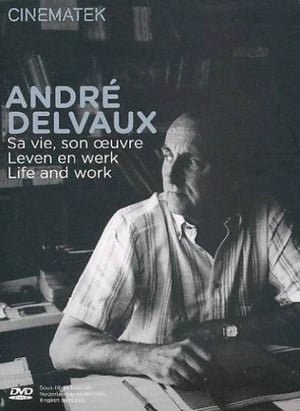
BEPPIE is a moving and disarming portrait of an Amsterdam street urchin. Van der Keuken once described her as follows: 'She was ten years old and the joy of the Achtergracht, where I was living at the time. An Amsterdam child, sweet and crooked as a corkscrew.' He films her while she skims the city with some friends and knocks at strangers' doors. Her family has nine children and is not well off. In those days, a visit to the De Miranda swimming pool cost a quarter, but only ten cents if the weather was bad. At school, Beppie gets a poor mark because she is too boisterous, but when the whole class rattles off the multiplication tables, she joins in at the top of her voice. All of TV-watching Holland was wildly enthusiastic about this portrait, with which Van der Keuken even made the front page of the national newspaper De Telegraaf.
The 1900 Paris World's Fair as seen from Trocadéro.
The Holy Sepulcher in Jerusalem.
A religious procession during the Holy Week in Seville, Spain.
The President of France and entourage on a pier's promenade.
A moustachioed Frenchman presents his performing cats.
Workmen fix a walkway with bitumen.
Alix Cléo Roubaud, a photographer, describes her images to Eustache’s son Boris. An “essay in the shape of a hoax”, Eustache’s last film wittily questions the relationship between showing and telling as it gradually shifts Alix’s narration out of sync with what we see.
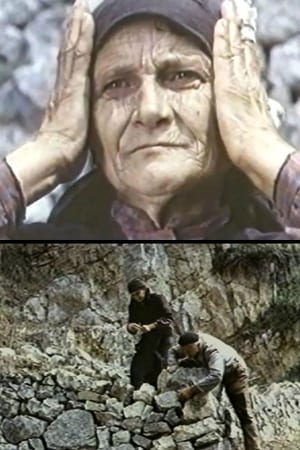
A man paves his own way to his own soul through an intellectual quest, tragedies of nations and personal drama. The road moving through the cosmic distances is a flight into one's internal world. This flight and this drama are revealed in this philosophical film-poem.
Cormac McCarthy has spent the last 25 years writing his novels at the mountain top retreat of the Santa Fe Institute (SFI) in New Mexico. An institute dedicated to the formal analysis of complex systems. In this documentary filmed at the library at SFI (and in the desert), Cormac in conversation with his colleague David Krakauer, reflects on isolation, mathematics, character, and the nature of the unconscious