DRIVER is a soulful exploration of resolute female long-haul truck drivers pursuing validation for their hard-earned work as they navigate the oppressive forces in their industry. Employing an intimate lens, Nesa Azimi’s first feature brings the audience into a community of solidarity and self-determination.
Shot with a big cowboy nod to the Western genre, this road safety film shows the danger of speeding on an unknown country road at night.
Caribou
In the new world of high-speed highway driving, there are a host of new dangers to take into account.
United States Navy Training Film produced under the supervision to the Bureau of Aeronautics by Walt Disney Productions in Technicolor
A doctor talks about the number of injuries and deaths resulting from automobile accidents.
Through experimentation, direct observational filmmaking, and performative play, filmmaker Amy Reid rides and films with women truckers who have fled domestic violence, the stigmas of being formerly incarcerated, and mental health issues. The three subjects -- Sandi, Lori, and Tracy -- each share how they started trucking and what keeps them trucking.
Recent scandals have revealed the brutal methods often imposed on young top athletes. Fueled by numerous testimonies, this damning investigation reveals the workings of a system which sacrifices children in the name of economic interests and glory.
This 1964 training film, “Mob and Riot Control,” was produced by Charles Cahill and Associates, Inc and presented by Federal Laboratories, Inc. illustrating police tactics and techniques for controlling civil disturbances. The film opens with unruly mobs shouting and overturning a car.
Three young commuter cyclists set out to bike from San Francisco to Orlando, interviewing crash victims, urban planners, activists and law enforcement to investigate what makes the U.S the most dangerous developed country for cyclists. Shot on location, the trio travel to each interview by bicycle, with cameras, tripods and microphones strapped to their front-racks. Carrying the stories of fellow cyclists killed on American roads, SPOKE is an adventure-tale that looks to empower users of the humble bicycle.
A British documentary on tunneling if a building falls in ruins.
This 1974 film is dedicated by the Chlorine Institute to the public interest. It is specifically intended to assist firefighters and other emergency services. The techniques demonstrated are appropriate for emergency use; different circumstances might require modified or additional procedure. The information is drawn from sources believed to be reliable. The Institute, its members any organizations cooperating in the development of this film, jointly or severally, cannot be responsible for how the information is used and must make this legal disclaimer. This is a 1960s era, color movie about Chlorine and emergency workers… specifically, firefighters. The film is intended to show firefighters what chlorine is, what a chlorine emergency might involve, how a company can plan ahead and how an emergency can be handled safely.
This film is a treasure. It's one of the best examples of the theory and practice of the art of camouflaging military targets from air observation & attack that you'll find anywhere, presented in a highly entertaining Disney style full color animation supplemented by live action film. Hosted by “Yehudi the Chameleon,” the action is centered around a P-39 Airacobra base in the Pacific and is chocked full of useful information & “how-tos.” Some of the many things you'll learn: how camouflage works in Nature, analyzing the specific camouflage needs of your location, theories and application of different camouflages, hiding in shadow, using camouflage netting, creating dummy targets, breaking up distinctive shadow lines that outline structures, concealment by “blending,” making “trees,” hiding routes & paths or creating fake ones, hiding targets in plain sight by adding minimal camouflage and more.
Race tracks are places of longing. But only the Nürburgring in the Eifel is truly spectacular and idyllic at the same time. Loved by fans, feared by drivers: Dozens of bends, many of them with illustrious names: Schwedenkreuz, Karussell, Fuchsröhre, Bergwerk, Brünnchen. To mark the 100th anniversary of the ground-breaking ceremony in 1925, this documentary tells the story of the ups and downs of the Nürburgring.
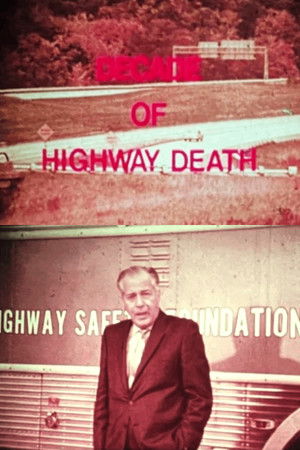
This highway scare film produced by the Highway Safety Foundation in 1971, "Decade of Death", is a retrospective of the organization's 10 years of gory, shocking social guidance films which aimed to promote traffic safety and driver responsibility through the display of bloody and horrific footage of traffic crashes.The Highway Safety Foundation made driver scare films such as "Signal 30," "Mechanized Death," and "Highways of Agony" that intended to encourage drivers to drive responsibly and with consideration of the risks and consequences. It was the organization's belief that crash footage, while horrific, was the best way to convey the importance of driving safely.
Stories of serious traffic accidents caused by texting and driving are told by the perpetrators and surviving victims.
In this documentary, Alex trusts his twin, Marcus, to tell him about his past after he loses his memory. But Marcus is hiding a dark family secret.
One in a series of traffic safety films made in 1950 by James S. Kemper for the Lumbermans Mutual Casualty Company, with the technical assistance of the LAPD, "Teenicide" addresses the alarming issue of teenage driving-related deaths. The film referrs to "teenocide" because as the police officer narrator states, there has been an 86% increase in the 15-24 age group over the past 25 years.
Discusses essential scuba diving safety and rescue techniques. It highlights the importance of following safety rules, such as not diving alone and knowing how to use rescue equipment effectively. It demonstrates various rescue methods, including the removal of a weight belt, inflating life vests, and using paddleboards and rescue tubes. The film emphasizes that proper training and equipment can significantly enhance a rescuer's ability to save lives in emergencies.
Learn how to climb Great Gable in the Lake District, via the Arrowhead ridge climb.