Documentary about the merging of the Communist Party of Germany and the Socialist Unity Party of Germany in the Soviet occupation zone, a merger that would lead to the creation of the Socialist Unity Party that would rule the soon-to-be-created East Germany until 1989.
A group of uniformed Japanese schoolchildren make their way to class. But what they will be taught when they get there is a subject increasingly under government scrutiny. EDUCATION AND NATIONALISM traces growing government intervention in Japanese history and social science education over the last decade — a process embraced by the late Japanese Prime Minister Shinzo Abe.
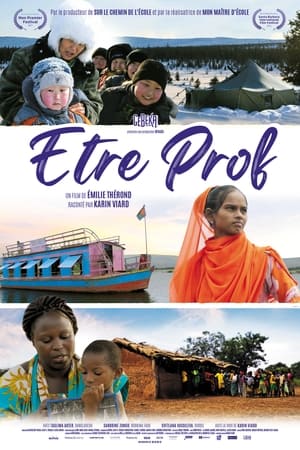
The documentary's title translates as "to be and to have", the two auxiliary verbs in the French language. It is about a primary school in the commune of Saint-Étienne-sur-Usson, Puy-de-Dôme, France, the population of which is just over 200. The school has one small class of mixed ages (from four to twelve years), with a dedicated teacher, Georges Lopez, who shows patience and respect for the children as we follow their story through a single school year.
The dangers of LSD are driven home to teenagers in this classroom training film, which is "narrated" by an LSD tab. The "tab" tells kids that he is "a depth charge in the mind!" and various teenagers are shwn babbling about their LSD experiences. "Experts" are presented who warn that LSD makes kids "paint themselves green" and has various other horrible side effects, the most serious of which is that it gives users a police record, and that there is "no known way of getting your fingerprints out of a police file once they're in there."
Taking stock of the extraordinary adventure of "Pif Gadget", a French publishing phenomenon of the 1970s-80s and even of the whole history of children's press. For the comic-strip magazine with the iconic dog, created in 1969 by the French Communist Party, often reached a million copies. With editions available for all of Europe (including Germany, under the title Yps), and on both sides of the Iron Curtain.
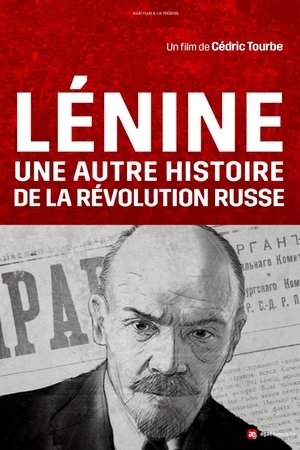
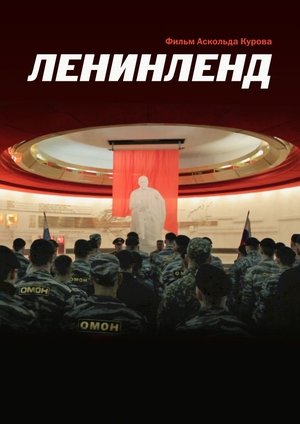
Lenin and the Future
Electricity Management
Des-Extinción
In a Europe traumatized by the First World War, educationalists point the finger of blame: the school, which produced “brave soldiers”. The task now is to build peace and develop a new education for a generation of children who, it is hoped, will never wage war again. How can we educate them without surveillance and punishment? How can we help them to emancipate themselves? To make children happy is to make them better adults, according to those who embarked on the adventure. Their names are Rudolf Steiner, Maria Montessori, Célestin Freinet, Alexander S. Neill, Ovide Decroly, Paul Geheeb or Janusz Korczak, each of them inventing educational methods. A Swiss pedagogue, Adolphe Ferrière, brought them together in the Ligue internationale de l'éducation nouvelle.
The world knows the image of the good Canadian. But what if there was a dark secret behind a national identity? THE GOOD CANADIAN exposes the truth behind the idea of a True North strong and free. In this unflinching and eye-opening documentary, directors Leena Minifie and David Paperny move us through the corridors of systemic inequity, from the Indian Act to residential schools, to modern-day family separation. Fusing shocking footage with detailed interviews with experts, advocates, whistleblowers and politicians, THE GOOD CANADIAN challenges national myth-making, while offering Canadians the chance to forge a new identity from the truth.
A fascinating new look at the biblical, historical, and scientific evidence for Creation and the Flood. Learn from more than a dozen scientists and scholars as they explore the world around us in light of Genesis. Dr. Del Tackett, creator of The Truth Project, hikes through canyons, climbs up mountains, and dives below the sea in an exploration of two competing views... one compelling truth.
"A Home On The Range" tells the little-known story of Jews who fled the pogroms and hardships of Eastern Europe and traveled to California to become chicken ranchers. Even in the sweatshops of New York they heard about Petaluma where the Jews were not the shopkeepers and the professionals, they were the farmers. Meet this fractious, idealistic, intrepid group of Eastern European Jews and their descendants as they confront obstacles of language and culture on their journey towards becoming Americans. Jack London, California vigilantes, McCarthyism, the Cold War and agribusiness all come to life in this quintessentially American story of how a group of immigrants found their new home, a home on the range.
Bubisher, as well as being 'the bird of luck', is a word loaded with literary meaning in Spanish in the Sahrawi refugee camps of Tindouf. Seeing the way in which two cultures interact through small stories and tales can is striking and so is the contrast between the resilience of the young female generations and the realities of life in the desert. This documentary paints a picture of a generation of young female Sahrawis.
Xu Xin’s film “Dao Lu” (China 2012) offers an exclusive “in camera” encounter with Zheng Yan, an 83 year-old veteran of the Chinese Red Army, who calmly relates how he has navigated his country’s turbulent history over three-quarters of a century.Born to a wealthy family in a foreign concession, Yan joined the Chinese Communist Party (CCP) in 1941 because he sincerely believed in the socialist project, and in its immediate capacity to free China from the Japanese yoke and eradicate deep-rooted corruption.
In American Sign Language (ASL) with subtitles available in English, Spanish and Canadian French. This powerful documentary uses real life experiences from Deaf people of varied social, racial, and educational boundaries showing how this form of oppression does lasting and harmful damage. Bonus materials include directors' comments from Ben Bahan and H-Dirksen Bauman and additional scences. Teachers: This film is a wonderful tool for beginning ASL students, as an introduction to a side of Deaf culture that cannot be found in any textbook.
Paul Robeson was a celebrated African-American Actor, Athlete, Singer, Writer, and Civil Rights Activist. Robeson's many achievements are chronicled in this program, ranging from playing with the NFL to graduating from Columbia Law School, performing on Broadway and in Hollywood films to founding the American Crusade against Lynching as well as Council on African Affairs. Robeson was one of the most talented performers of his time and a dedicated humanitarian who ultimately sacrificed fame and fortune for what he believed in. His association with Leftist Politics during the era of the Cold War, and frequent denouncing of American political parties led to his eventual blacklisting with other prominent writers and artists during the McCarthy Era. His talents in all areas are remarkable, and his dedication to attaining a peaceful coexistence between all the people of the world is truly admirable.
A portrait of Chinese writer Liu Xiaobo (1955-2017), a witness of the Tiananmen Square massacre (1989), a dissident, a woodpecker who tirelessly pecked the putrid brain of the Communist regime for decades, demanding democracy loudly and fearlessly. Silenced, arrested, convicted, imprisoned, dead. Nobel Peace Prize winner in 2010, alive forever. These are his last words.
In the late 1960s, with the triumph of bilingualism and biculturalism, New Brunswick's Université de Moncton became the setting for the awakening of Acadian nationalism after centuries of defeatism and resignation. Although 40% of the province's population spoke French, they had been unable to make their voices heard. The movement started with students-sit-ins, demonstrations against Parliament, run-ins with the police - and soon spread to a majority of Acadians. The film captures the behind-the-scenes action and the students' determination to bring about change. An invaluable document of the rebirth of a people.
In 2016, DEFA celebrates its 70th anniversary: the film embarks on a journey into the exciting film history of the GDR. In a comprehensive kaleidoscope, the importance of DEFA productions is illuminated, the relevance of the films as propaganda productions for the GDR, which socio-political themes were in the foreground, but also which heroes DEFA brought to the screen and celebrated as people from the people.
Robert McChesney lays the blame for the US's current state of affairs squarely at the doors of the corporate boardrooms of big media, which far from delivering on their promises of more choice and more diversity, have organized a system characterized by a lack of competition, homogenization of opinion and formulaic programming.