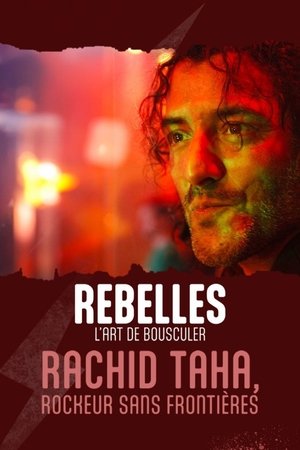
Rachid Taha, rockeur sans frontières
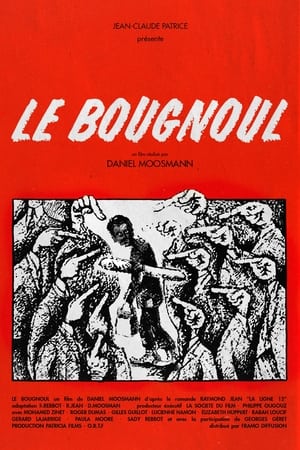
In a working-class immigrant neighborhood slated for demolition, Jo, the son of Ali, known as the Rescuer from the Algerian war, lives idle and delinquent, committing small assaults to pay for his drugs. One day, while attacking Slim's bar, he is arrested by Ben, a young beur cop torn between his roots and the imperatives of his mission to maintain public order. Giving in to the respect and friendship he feels for Ali, Ben agrees to release his son. But alas, far from calming down, Jo drifts deeper into violence, until the inevitable drama.
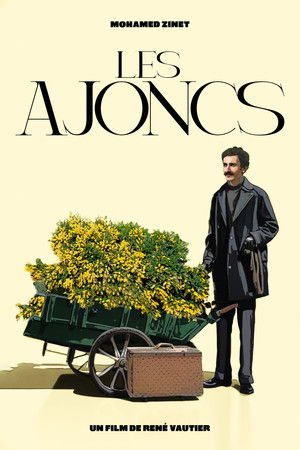
An unemployed Algerian worker leaves Paris by hitchhiking. He soon found himself in Brittany and, seduced by the beauty of wild gorse, eventually established himself as a gorse merchant. But for problems with parking his little cart, he had a rough explanation with a law enforcement officer. The happy intervention of factory workers, the eager kindness they showed him, saved him from despair. This film is part of a trilogy "Them And Us" with the films "Les 3 Cousins" and "Techniquement Si Simple".
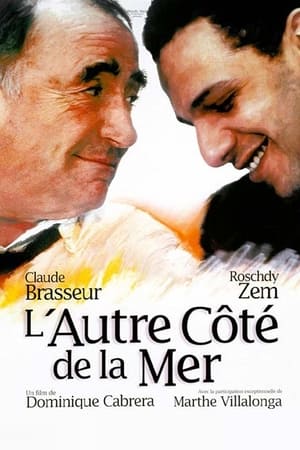
This film deals with the aftermath of the Algerian war of liberation. Georges Montero, an Algerian-born Frenchman, manages an olive canning factory in Oran. He travels to Paris for a cataract operation. Marinette, his sister, and Belka, his friend and a recent immigrant, want him to return to France permanently. Friction develops between the two friends as Georges is pressured to sell his factory. Friendship developed between Georges and his surgeon, who as a French Arab has severed ties with his culture and country of origin.
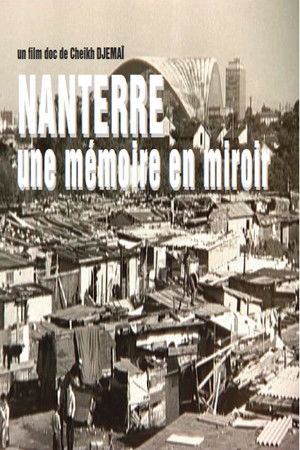
NANTERRE, une mémoire en miroire
Ali in Wonderland unveils the condition of immigrant workers in Paris in the 1970s. It is a cry of anger against exploitation and racism, uncompromisingly raising the role of the French state, the media, capitalism, and colonization in this system of domination that crushes those who suffer it. In this experimental essay on the condition of Algerian migrants in Giscard's France in the mid-1970s, every aesthetic choice has a precise and legible political motivation and gives body and voice to a figure completely absent from the experimental cinema of the time: that of the immigrant worker. Abouda is one of the children of immigrants seen in the film, and not a simple activist serving a cause, which is why the emotion of her experimental gesture, which she throws in the viewer's face, springs from a ferocity inscribed in her body, from an insatiable anger that inhabits her gaze.
A construction worker on a construction site in the Paris suburbs, Mehdi takes the bus to return home after work. Wishing to get off while the vehicle is stationary in a traffic jam, the driver refuses: while restarting, the bus hits the car in front of it. The bus driver attacks Mehdi whom he holds responsible for the incident, claiming that it is forbidden to “talk to the stagehand”. Mehdi is implicated in court and his lawyer tries to draw attention to the living conditions of immigrant workers.
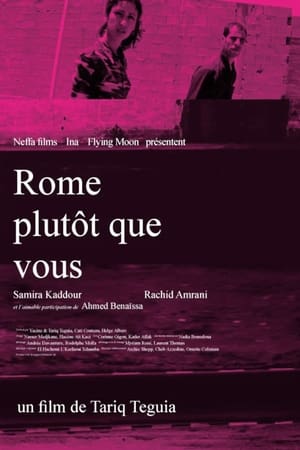
"For more than ten years, Algeria has been living a slow war, a war without a front line but having caused more than 100,000 deaths. It is this desert that Zina and Kamel – two young Algerians sometimes hallucinated and joyful, sometimes dejected and serene – will want to travel one last time before leaving it for elsewhere. Road Movie on the territories of a city, Algiers whose construction sites are in decline. Roma wa la n'touma will show that fleeing abroad is not is not a refusal of combat, but an obscure struggle against assignment. Tariq Teguia
In april of 1975, a moroccan fisherman disappears after being summoned to a Marseille police station. The next day, a young algerian thief is taken away by officers upon his release from prison. They share a lawyer, a young corsican communist who alerts a journalist. They throw themselves into an investigation and discover the existence of a warehouse on the docks where the police have been detaining immigrants before deporting them for over ten years. The discovery became a national scandal, before being suppressed and eventually forgotten.
Fleeing their war-torn homeland, forty thousand Algerians come to Montreal, Quebec in the 1990’s. Many are refused refugee status and are not allowed to study or work normally. Years go by, children are born and Canada becomes home. Then comes 911. Deportations begin.
Gajaman is a henchman of the local politician Magodisthuma. Gajaman's life is turned upside down when Magodisthuma asks him to pick up his daughter and her friend from the airport. The trouble is, Gajaman falls in love with Magodisthuma's daughter immediately as he sees her. Magodisthuma becomes furious when he finds out about this. Gajaman is exiled from his village and he tries to sneak back in with the help of his friend Amdan. The movie revolves around the classic Sri Lankan characters Gajaman and Magodisthuma created by Camillus Perera from newspaper cartoons in the 60s.
After finding out her grandmother won't be visiting for Christmas, Lucy decides to cheer herself up by throwing the ultimate New Year's Eve party. Meanwhile, Charlie Brown tries to fulfill one of his resolutions before the clock strikes midnight.
The ancient struggle between good and evil.
This animated short looks at the building of Canada's transcontinental railroad with wit and whimsy. Engine 371 illustrates the struggle humans have with nature and how this fundamental tension united a country.
Mamori transports us into a black-and-white universe of fluid shapes, dappled and striated with shadows and light, where the texture of the visuals and of the celluloid itself have been transformed through the filmmaker’s artistry. The raw material of images and sounds was captured in the Amazon rainforest by filmmaker Karl Lemieux and avant-garde composer Francisco López, a specialist in field recordings. Re-filming the photographs on 16 mm stock, then developing the film stock itself and digitally editing the whole, Lemieux transmutes the raw images and accompanying sounds into an intense sensory experience at the outer limits of representation and abstraction. Fragmented musical phrases filter through the soundtrack, evoking in our imagination the clamour of the tropical rainforest in this remote Amazonian location called Mamori.
The surreal black comedy follows Nyatta, an anthropomorphic kitten, on his travel to the land of the dead and back in an effort to save his sister's soul.
Hiromi appears on the outside to be a mature, resilient girl, but on the inside she feels like she's falling apart. She is having troubles at home mainly because of her parents wanting to separate. Her dog, Junkers, tries to comfort her in ways no other dog can. You see, he can talk and grant her 3 wishes.
Confined to an endlessly burning waiting room, a dying sedentary woman experiences herself blurring in and out of her body. In her last remaining fragments she tries to make amends with her spirit before her remaining fragments either decay or create.