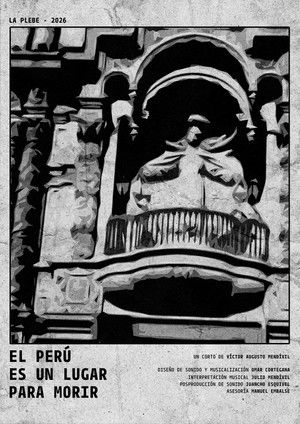
Using footage filmed in Peru in 1950 by a foreigner, Víctor writes a letter to his son to question the country he will inherit: among heartbeats and ruins, he searches for a hope that still endures amid disillusionment.
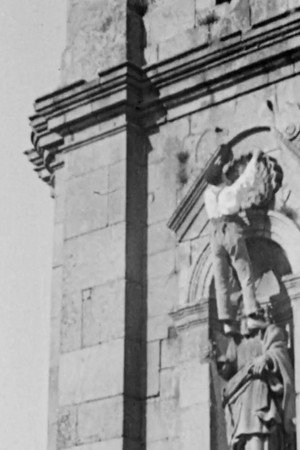
Escalada à Torre dos Clérigos
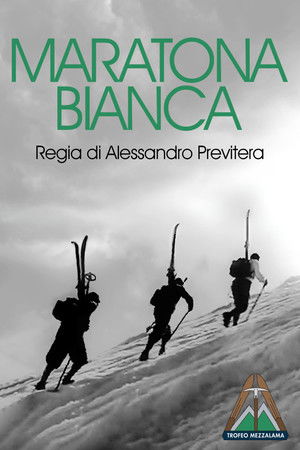
Documentary on one of the first editions of the Trofeo Mezzalama, the highest ski mountaineering race in Europe, at more than 4,200 meters above sea level, which takes place on the glaciers of Monte Rosa, from Breuil to Gressoney-La-Trinité, crossing the summits of Castor (4,199 meters) and Nez du Liskamm (4,100 meters). The film recounts the last hours of feverish preparation before the start, the teams preparing for the race linked in ropes, then follows the stages of the competition by following the groups of skiers from a plane. Created in 1933, the Trofeo Mezzalama was contested until 1938, before falling into oblivion during the war. A second version was organized from 1970 to 1973. A third biannual version has been organized since 1997.
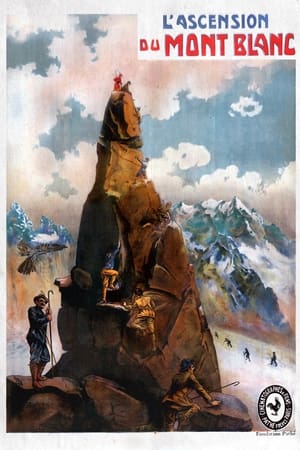
Joseph Vallot and his team of guides and porters climb Mont Blanc in 1906. Their ascent will take three days. They spent their nights at the Grands Mulets refuge and the Grand Plateau refuge. This is the very first successfully filmed ascent. Joseph Vallot (1854-1925), rich heir of Lodève in Occitania. He devotes part of his fortune to the observation of the Alps, sometimes opposing the scientific community. He built an observatory, still standing today.
Before we knew how to write, we learned how to draw, and with it, to bring all our dreams onto paper... So, where would you travel with a teleportation machine?
A travelogue set in the jungles of Borneo.
Disque Quilombola
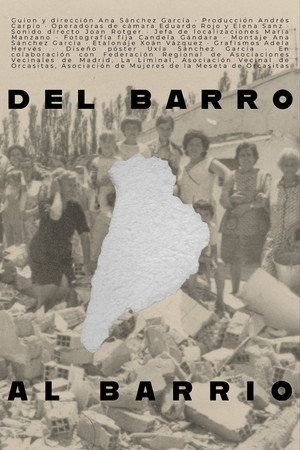
Del barro al barrio
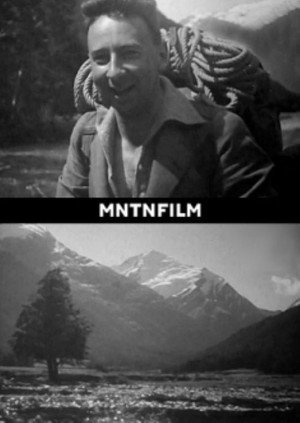
A group of men shows the 'before and after' physical effects of a journey upon the Mount Aspiring area. Mount Aspiring (9,960 ft.), known as the Matterhorn of New Zealand, together with Mount French, mark the end of the Otago and Westland regions. The movie does not show scenes of the climbing itself, but collects the testimonies of the members of the group, led by Jack Aitken. The other members are Bill Young, Stewert J. Macdonald, Victor Bowden, and Roland Ellis.
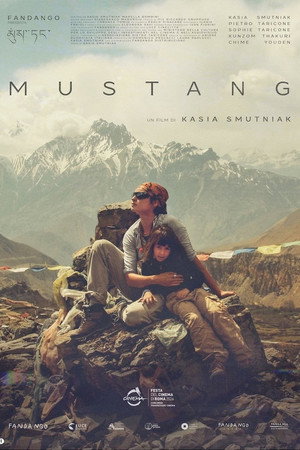
At the age of twenty, Sophie Taricone sets out to tell a story that began before she was born. Through archival footage shot by her parents, Kasia Smutniak and Pietro Taricone, she retraces their 2003 journey to Mustang—a remote Himalayan kingdom known as "the last Tibet"—and she follows Kasia’s return there after Pietro’s death. Spanning more than two decades, the film weaves together past and present as Kasia forges a lasting bond with a local community in Mustang and helps to establish a school dedicated to preserving its culture. Through Sophie’s journey, the film explores memory, identity, and the fragile balance between Western progress and an ancient, spiritual way of life.
Nine-year-old Marbella lives through her passion for wrestling, a world that extends beyond the ring and into her everyday life. Between training, competitions, and family, "ZAS" portrays how a popular tradition becomes a place of identity, growth, and belonging as a young girl discovers her own path inside and outside the ring.
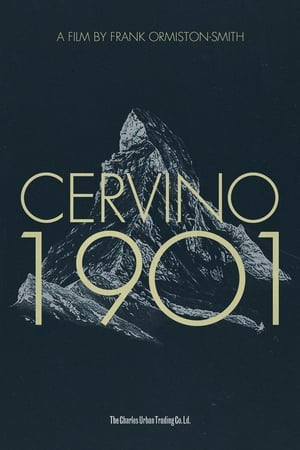
On September 28th, 1903, the Urban Mountaineering Expedition, headed by Frank Ormiston-Smith, left Zermatt to attempt the conquest of the Matterhorn. On the 29th, the conquest was completed by the filming of the panorama from the actual summit of the mountain. The film consists of 20 scenes and illustrates the whole ascent from Zermatt through the Hornli Ridge. A copy of the film was found in Zermatt in 1953 and was was erroneously attributed to Frederick Burlingham and dated 1901. Since then, the film has been widely publicized as the first mountain film under the title of 'Cervin 1901', but this is incorrect. Ormiston previously had made 'Alpine series' (1901), 'The ascent of Mont Blanc' (1902), 'Climbing the Great Schreckhorn' (1902) and 'Ascent of the Jungfrau' (1903). The pictures and descriptions of the Charles Urban Trading 1903 film catalogue show without any doubt that 'Ascent of the Matterhorn' and 'Cervin 1901' are the same film.
Film made with two photographs taken at the Unité d’Habitation, built by Le Corbusier in Marseille. For the editing the film are used a film adaptation of the rules of the Modulor, measurement system designed by Le Corbusier himself. Includes a tribute to Paul Sharits and another to Agnès Varda.
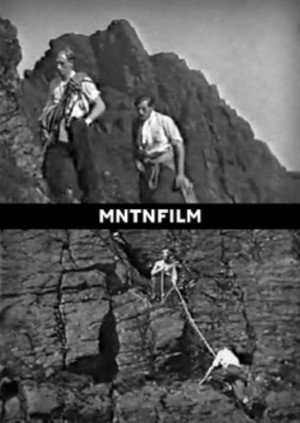
Rock climbing on the "Cobbler". Awarded first prize by Michael Powell in the 1948 Scottish Amateur Film Festival
La Staffetta della Memoria
Retrato permanente
1906, produced by Charles Urban, cinematography by Frank Ormiston-Smith.
El Pisito
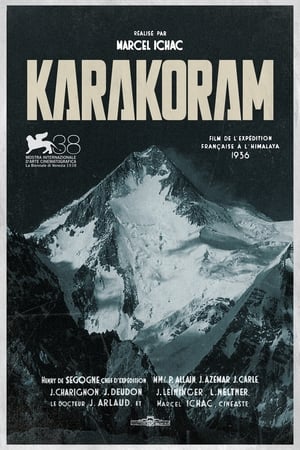
Account of the first French expedition to the Himalayas, which attempted to climb the hidden peak (Gasherbrum I) in 1936, from the preparations for the trip to the end of the ascent. After a long approach walk through quasi-desert regions, then on a huge glacier, the caravan of 700 porters arrives at the foot of Hidden Peak. The expedition was led by Henry de Ségogne, with Jean Charignon, Pierre Allain, Raymond Leininger, Jean Carle, Jean Deudon, Louis Neltner, Jacques Azémar, doctor Jeand Arlaud and director Marcel Ichac. Weather conditions, logistical problems and a strike among Sherpas forced the team to retire at 6900m on the south face. The film received the Silver Lion at the Venice Film Festival in 1938.
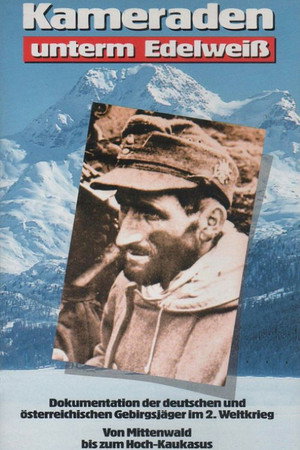
This rare documentary was filmed with the participation and personal camera of Wolfgang Gorther, a German military cinematographer of the 1st mining division, who participated in the legendary ascent of Elbrus on the night of August 21, 1942. From the beginning of the Second World War and the last international winter sports week in Garmisch-Partenkirchen follows the invasion of the German troops into the Soviet Union: Dnieper, Zaporozhy, Kharkov, Rostov-on-Don, Nogaean Steppe, Caucasus – fighting at 50 degrees below zero, military expedition into the world of ice and snow; – ascent of mountain arrows and subsequent hoisting of flags on the Elbrus at an altitude of 5,633 meters.