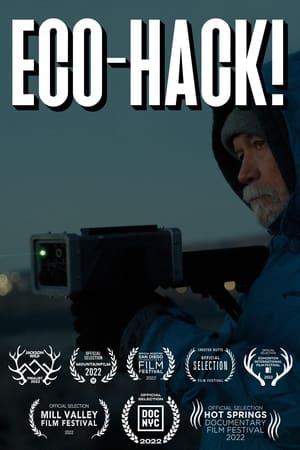
Conservation biologist Tim Shields sees urgency in the field and finds that traditional conservation practices are lacking when it comes to saving desert tortoise populations from ravens. He goes rogue, employing an arsenal of lasers, exploding model turtles, drones and desert rovers as a means of protecting the tortoise's dwindling numbers.
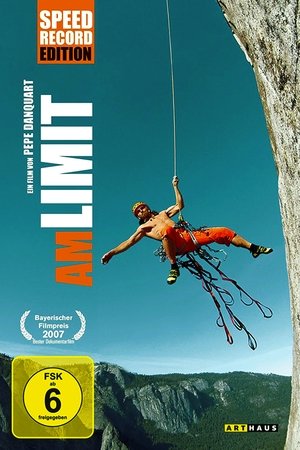
At the Limit is a documentary about extreme climbing. In this sports documentary, Pepe Danquart shows brothers Thomas and Alexander Huber climbing in Patagonia and on the granite rock "El Capitan" in Yosemite Valley (USA). A key part of the film is their attempt at a speed ascent of the 1,000-meter-high route "The Nose," in which the two athletes aim to break the then speed record of 2:48:30 hours, set by Hans Florine and Yuji Hirayama in September 2002.
Proyecto Ibera
Nóouhàh-Toka’na, known as swift fox in English, once roamed the North American Great Plains from Canada to Texas. Like bison, pronghorn and other plains animals, Nóouhàh-Toka’na held cultural significance for the Native Americans who lived alongside them. But predator control programs in the mid-1900s reduced the foxes to just 10 percent of their native range. At the Fort Belknap Indian Community in Montana, members of the Aaniiih and Nakoda tribes are working with the Smithsonian’s National Zoo and Conservation Biology Institute and other conservation partners to restore biodiversity and return Nóouhàh-Toka’na to the land.
A mechanic discovers the fossil of a huge carnivorous dinosaur, unleashing a war between scientists, mayors and neighboring towns to keep “the biggest dinosaur in the world.” Among bone thefts, replicas and a mayor obsessed with creating Dinolandia, anything goes when it comes to surviving.
In the mountains of Sichuan, China, a researcher forms a bond with Qian Qian, a panda who is about to experience nature for the first time.
The 'Gauchos del Mar' brothers pursue their goal of surfing at the Isla de los Estados. They wander the Patagonia for six months, sharing their experiences with the locals, getting to know their ways. They face hard weather conditions before getting to Ushuaia and later they sail through the Beagle Channel and the Strait of Le Maire on their way to the uninhabited island.
In this first installment of the Exposure Series, we'll follow professional climbers Dave Graham, Nalle Hukkataival, Matt Wilder, Cheyne Lempe, Mason Earle, Angie Payne, and Cody Roth as they seek out and attempt to climb some of the worlds most challenging boulders, mountains, and traditional routes. Experience the emotional hardships, physical pain, and mental battles as these athletes attempt to redefine their boundaries in the world of rock climbing. Their dedication and commitment to the sport will take them from the windy peaks of Patagonia to the harsh desert of Utah.
A doctor's efforts to live a green life near the Appalachian Mountains lead to the development of a radical idea to use green burials to conserve one million acres of land and to create wildlife reserves.
RHINO MAN follows the courageous field rangers who risk their lives every day to protect South Africa's rhinos from being poached to extinction.
An excellent display of how humans can rehabilitate and restore an area where a heavy industry polluted the water so severely that it was unsuitable to sustain any kind of life. A a film showing how birds returned to an environment once devastated by industry. The lakes around the northern Slovenian town of Velenje, placed in the Central Europe, are geographic center of the film. They emerged as the land above the lignite mines subsided and the depressions were filled with water. The mines started operating at the end of the 19th century. In the mid 20th century a power plant was built that caused a severe pollution of the lake waters to the extent of the lakes not being fit for any kind of life. As a consequence many birds moved from these parts. After a long ecological restoration that started in the mid 1980s, life returned to the water. Gradually the birds returned as well, including some there were previously never observed in this area.
The documentary follows leaders and community members from the tropical Pacific island nation who are making bold changes to move the needle on marine protection. With a population of under 2,000 people and a marine reserve covering 40% of its waters, Niue has demonstrated the ways in which traditional knowledge and contemporary science can live in harmony for the benefit of people and the planet.
In 2009, the underwater world around the Central Polynesian Sporades in the eastern Pacific was intact. But a few years later, the corals died massively. Now they have recovered.
Canadian wildlife specialists work to preserve and nurture the creatures that remain in our wilderness areas - species such as the whooping crane, prairie falcons, bighorn sheep, bison, polar bears, and grizzlies.
A passionate conservation biologist brings together a river bushman fearful of losing his past and a young scientist uncertain of her future on an epic, four-month expedition across three countries, through unexplored and dangerous landscapes, in order to save the Okavango Delta, one of our planet's last pristine wildernesses.
From Oscar-winning filmmakers Chai Vasarhelyi and Jimmy Chin, "Wild Life" follows conservationist Kris Tompkins on an epic, decades-spanning love story as wild as the landscapes she dedicated her life to protecting. After falling in love in mid-life, Kris and the outdoorsman and entrepreneur Doug Tompkins left behind the world of the massively successful outdoor brands they'd helped pioneer like Patagonia, The North Face, and Esprit, and turned their attention to a visionary effort to create National Parks throughout Chile and Argentina. "Wild Life" chronicles the highs and lows of their journey to effect the largest private land donation in history.
Cumbre
Wildlife biologist Karsten Heuer and his wife, environmentalist Leanne Allison follow a herd of 120,000 caribou on foot across 1500 km of Arctic tundra, hoping to raise awareness of the threats to the caribou's survival. Along this journey, they brave torrid conditions, dangerous wildlife and treacherous terrain all in the hopes of learning the truth about this epic migration.
Etienne-Jules Marey, a French inventor who turned a gun into a camera. A hand-drawn hunter whose weapon, instead of firing ammunition, shoots photographs. Carlos, a Mexican wildlife photographer who used to be a real life hunter until he chose to get rid of all his guns. All come together in this poetic yet approachable animated documentary short film.
Marc-André Leclerc, an exceptional climber, has made solo his religion and ice his homeland. When filmmaker Peter Mortimer begins his film, he places his camera at the base of a British Columbia cliff and waits patiently for the star climber to come down to answer his questions. Marc André, a little uncomfortable, prefers to return to the depths of the forest where he lives in a tent with his girlfriend Brette Harrington. In the heart of winter, Peter films vertiginous solos on fragile ice. He tries to make appointments with the climber who is never there and does not seem really concerned by this camera pointed at him "For me, it would not be a solo if there was someone else" . Marc-André is thus, the "pure light" of the mountaineers of his time, which marvel Barry Blanchard, Alex Honnold or Reinhold Messner, interviewed in the film. An event film for an extraordinary character.