Cuisines hors de portée : sous-marin nucléaire
Created in the Victorian era to widen the mouth of the River Tees for shipping, South Gare is a man-made peninsula extending four kilometres into the cold North Sea. Today, the industry it was built for has gone, but the Gare remains as a haven for all sorts of unexpected communities - kite-surfers, photographers, bird-watchers, scuba-divers and the people who simply appreciate its strange, lonely beauty.
The sinking of the RMS Titanic remains one of the most enduring and mysterious tragedies of the 20th century. For decades, investigators and amateurs alike have floated theories for why it occurred and who was to blame for the extraordinary loss of life, but no one answer could fully explain what happened. Until now. To mark the 100th anniversary of the infamous disaster, Smithsonian Channel will premiere Titanic's Final Mystery. The two-hour special investigates a century of theories and uncovers astonishing new forensic evidence that proves the most likely theory for the case.
With the good of the people in mind, Valery Legasov, a Soviet scientist called to the scene of the Chernobyl nuclear disaster, stands up to censorship behind the iron curtain.
Explore the 1928 collapse of the St. Francis Dam, the second deadliest disaster in California history. A colossal engineering and human failure, the dam was built by William Mulholland, a self-taught engineer who ensured the growth of Los Angeles by bringing the city water via aqueduct. The catastrophe killed more than 400 people and destroyed millions of dollars of property.
HISTORY brings you an all-encompassing documentary event cantered around the 25th anniversary of the LA Riots, the most destructive riot in American history that left 53 people dead and caused over a billion dollars in damage.
With a team of the world's foremost historic and marine experts as well as friend Bill Paxton, James Cameron embarks on an unscripted adventure back to the wreck of the Titanic where nearly 1,500 souls lost their lives almost a century ago.
On November 13, 2015, the attacks in Paris and Saint-Denis, carried out by three Islamist commandos and claimed by ISIS, were the deadliest in France since the end of World War II. In the months that followed, the November 13 Program was launched by the CNRS and Inserm to study the construction of individual and collective memory around an event that profoundly marked French society. Today, the testimonies of 27 volunteers—among some 1,000 people—who participated in the study form a mosaic of experiences that shows how trauma extends beyond the immediate circle to permeate the national collective memory.
This documentary records the journey undertaken by Jacques Cousteau, his 24-member team, and an NFB film crew to explore the Grand Banks of Newfoundland, one of the world's richest fishing areas. They discover shipwrecks, film icebergs and observe beluga whales, humpback whales and harp seals. The film also includes a fascinating sequence showing Calypso divers freeing a calf whale entrapped in a fishing net.
In this spectacular feature-length documentary, oceanographer Jacques Cousteau and an NFB crew sail up the St. Lawrence River to the Great Lakes on board the specially equipped vessel, the Calypso. They explore the countryside from their helicopter and plumb the depths of the waters in their diving saucer. They encounter shipwrecks, the Manicouagan power dam, Niagara Falls, the locks of the St. Lawrence Seaway and an underwater chase with caribou.
The adventures and exploits of Jean-Baptiste Charcot (1867-1936), an intrepid scientist and explorer who laid the foundations of modern oceanography.
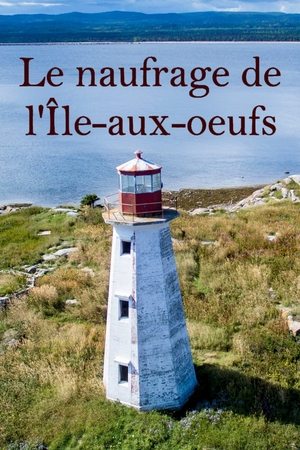
Patrick Bourgeois dives into the history of one of the worst naval tragedies that ever occurred in Quebec. In 1711, Admiral Hovenden Walker lead a 75-ship English fleet, carrying 15 000 soldiers, towards Quebec City. Eight of his boats shipwrecked on l’Île-aux-oeufs and 1000 people lost their life.
Two Finnish filmmakers and an international team of divers embark on a quest to find the lost WWII German U-boat, U-479, in the Gulf of Finland. Despite Soviet claims of its sinking by the submarine Lembit, unanswered questions prompted the filmmakers to investigate the mystery firsthand.
Au cœur de Mégantic
In August 1997, the tragic death of Diana, Princess of Wales, stunned her family and catapulted the British public into one of the most extraordinary weeks in modern history. What was it about Diana that resulted in such an outpouring of grief? And what does that week reveal about Britain's relationship with the monarchy, then and now?
In 2016, a young Austrialian filmmaker began documenting amateur inventor Peter Madsen. One year in, Madsen brutally murdered Kim Wall aboard his homemade submarine. An unprecedented revelation of a killer and the journey his young helpers take as they reckon with their own complicity and prepare to testify.
Forty years later, rock legends Pete Townshend and Roger Daltrey sat down for first-of-a-kind, exclusive interviews with WCPO Anchor Tanya O’Rourke. Their candid revelations about the horrific night of Dec. 3, 1979 in Cincinnati form the basis for O'Rourke's historical documentary, "The Who: The Night That Changed Rock."
The late Len Bias still leaves more questions than answers. When Bias dropped dead two days after the 1986 NBA Draft, he forever altered our perception of casual drug use and became the tipping point of America's drug crisis in the mid-80's. Future generations continue to face the harsh punishment of drug policies that were influenced by the public outcry after his heartbreaking death. Instead of becoming an NBA star, he became a one-man deterrent, the athlete who reminded everyone just how dangerous drug use can be. Amazingly, questions still linger about his death nearly a quarter-century later. How good could he have been in the pro ranks? Has he become underrated or overrated as the years pass? How could a University of Maryland superstar and Boston Celtics lottery pick be derailed by a cocaine binge? Was Bias a one-time user as we were led to believe, or was there a pattern of recreational use that led to his fatal last night? Did he fall in with the wrong crowd.
Sous-marins, fleurons de la marine française
12,000 feet down, life is erupting. Alvin, a deep-sea mechanized probe, makes a voyage some 12,000 feet underwater to explore the Azores, a constantly-erupting volcanic rift between Europe and North America.