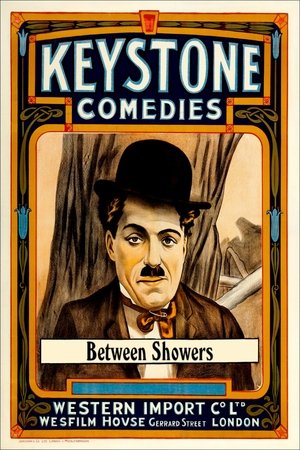
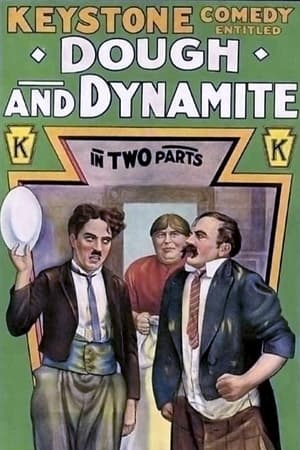
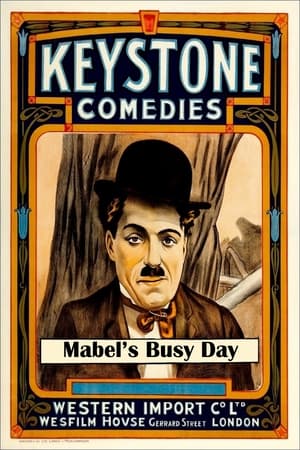
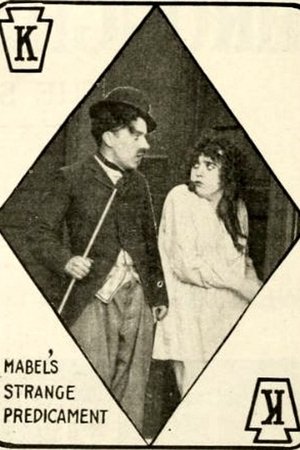
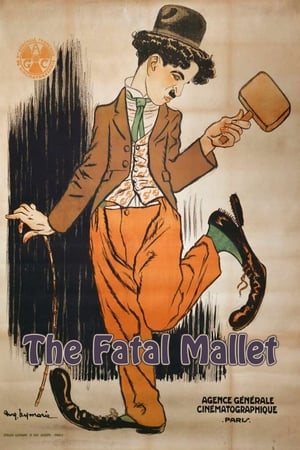
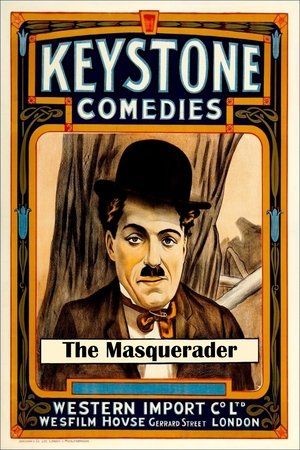
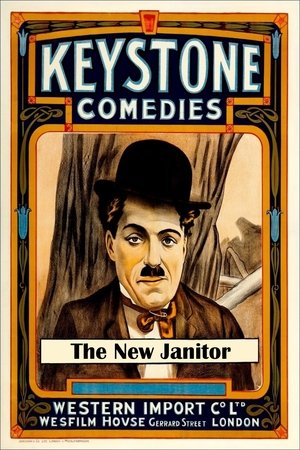
A tramp enters a cabaret and orders a drink, but then is thrown out when he cannot pay for it. After trying again, he is told by the manager that if he wants to avoid being charged and sent to jail, he will have to work.
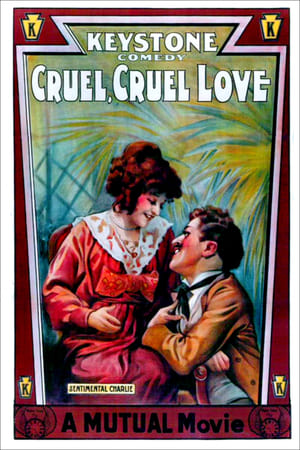
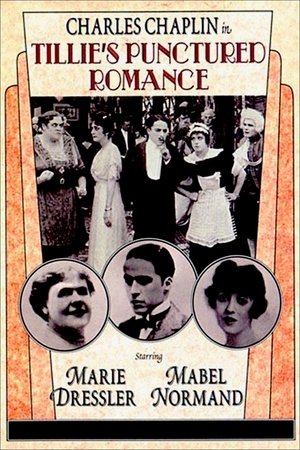
Honey Skinner is proud of her successful husband. When he tells her he's going to ask for a raise, she knows he'll get it. He asks his boss just as their big client announces he's not renewing his contract. He doesn't get the raise, but he's too embarrassed to tell his wife the truth. She starts making plans to spend that extra $10 a week; the first thing is a new dress suit for him and a new outfit for her so they can fit in at a swanky party. They're the hit of the party, and Honey is embraced by the 'smart set.' Meanwhile, business is bad and Skinner loses his job. The tailor is after him for payment on the suit, and Honey is still spending the salary he doesn't have.
Using every known means of transportation, several savants from the Geographic Society undertake a journey through the Alps to the Sun which finishes under the sea.
Hanns Heinz Ewers' grim science-fiction novel Alraune has already been filmed twice when this version was assembled in 1928. In another of his "mad doctor" roles, Paul Wegener plays Professor Brinken, sociopathic scientist who combines the genes of an executed murderer with those of a prostitute. The result is a beautiful young woman named Alraune (Brigitte Helm), who is incapable of feeling any real emotions -- least of all guilt or regret. Upon attaining adulthood, Alraune sets about to seduce and destroy every male who crosses her path. Ultimately, Professor Brinken is hoist on his own petard when he falls hopelessly in love with Alraune himself. Alraune was remade in 1930, with Brigitte Helm repeating her role, and again in 1951, with Hildegarde Knef as the "heroine" and Erich von Stroheim as her misguided mentor.
In 16th-century Prague, a rabbi creates the Golem - a giant creature made of clay. Using sorcery, he brings the creature to life in order to protect the Jews of Prague from persecution.
Nunu and Iago are in love with each other. The married guard Girgola wants to get hold of the woman. Girgola gets Iago arrested and makes Nunu marry his retarded brother. On one occasion he finds the woman alone and rapes her. Nunu jumps in the river to commit suicide but gets saved by Iago’s friends. Iago escapes from jail, but Girgola attacks his hideout and haves him killed together with his friends. Girgola also kills Nunu’s old father and accuses Nunu of the murder. Nunu is tied to a pole and dies in the exile.
Adrift in the vast expanse of the ocean, a solitary boat carries three castaways—a man and two women. Stranded and devoid of any glimmer of rescue, they find solace in recounting the tales of their lives to one another. As they delve into their personal narratives, reminiscing about the circumstances that led them to this desolate predicament, they navigate through the depths of three distinct destinies. Bound by the confines of their shared space, every aspect of their existence becomes a boundary, underscoring their plight.
Love blossoms for Lily over double Meaty Boy burgers at mid-day when uber-computer nerd Jarrod comes in and leaves with free extra large fries. After gatecrashing Jarrod's party and proving her skills on the game console, Lily goes down to Jarrod's home town with him so he can settle an old score with a past school bully.
Following the benevolent King's disappearance, the Evil Queen dominated the once fair land with a cruel streak. Princess Snow White flees the castle when the Queen, in her jealousy over Snow White's inner beauty, tries to kill her. Deep into the dark woods, she stumbles upon seven magical dwarves and a young bandit named Jonathan. Together, they strive to survive the Queen's relentless pursuit and aspire to take back the kingdom.
The Misleading Widow is a 1919 silent film comedy starring Billie Burke as Betty Taradine. It was based on the 1917 stage play Billeted by F. Tennyson Jesse and H.M. Harwood. The film was produced by Famous Players-Lasky and distributed through Paramount Pictures. It appears to be a lost film.
When a British army officer, Harry Faversham, resigns his commission on the eve of his regiment's departure for service in the Sudan he is sent four white feathers of cowardice by his comrades and fiancee. In an attempt to redeem himself, Faversham travels out to the Sudan where he saves the lives of his former comrades.
An 1895 British short black and white silent comedy film featuring two drunken men and a boy squabbling in a small bar.
Believed to be the first film to feature cannibals.
Anita and Marion realize that an abandoned baby they sneaked into an orphanage was kidnapped from a millionaire. For the reward, they proceed to break into the institution at night, dressed as men to beat curfew, to get the kid out again. This film survives only in very fragmentary form.
After the train station clerk is assaulted and left bound and gagged, then the departing train and its passengers robbed, a posse goes in hot pursuit of the fleeing bandits.
The film consists of a series of tightly interlinked vignettes, the most sustained of which details the story of a man and a woman who are passionately in love. Their attempts to consummate their passion are constantly thwarted, by their families, by the Church and bourgeois society in general.
The young serf Eremey Mizgir is surrendered as a soldier by his mistress for his mischievous tricks. Mizgir ends up in St. Petersburg in the guards regiment. Resourceful, quick-witted, cheerful, he easily copes with his official duties and, although he often gets punished by the sergeant-major for his pranks, he never loses heart. But then sad news came from the village: the old people’s cow had died, and Eremey’s bride Dunya was being relentlessly pursued by the clerk. The soldier felt sad. Standing on guard at the rich, diamond-studded icon of the Kazan Mother of God and thinking about how to help the elderly and the bride, Mizgir decides to take a desperate step. He breaks the glass of the icon and picks out a large gemstone from the aureole of the Mother of God. When the loss is discovered, Mizgir, without blinking an eye, announces that the Mother of God herself gave him the stone.
Covering only the first 22 chapters of the Book of Genesis, vignettes include: Adam and Eve frolicking in the Garden of Eden until their indulgence in the forbidden fruit sees them driven out; Cain murdering his brother Abel; Noah building an ark to preserve the animals of the world from the coming flood; and Abraham making a covenant with God.
With input from actor and writer Jan Hlobil, director and cinematographer Rene Smaal presents a film in the true surrealist tradition, in the sense that only 'found' elements were used, and that it defies interpretation based on ordinary cause-and-effect time sequence.
A bumbling tramp desires to build a home with a young woman, yet is thwarted time and time again by his lack of experience and habit of being in the wrong place at the wrong time...