The first part tells the story of Moses leading the Jews from Egypt to the Promised Land, his receipt of the tablets and the worship of the golden calf. The second part shows the efficacy of the commandments in modern life through a story set in San Francisco. Two brothers, rivals for the love of Mary, also come into conflict when John discovers Dan used shoddy materials to construct a cathedral.
Rebel Ibrahim Hamdy assassinates a pro-colonial Prime Minister but is arrested and hides with a fellow university student, who initially refuses but eventually accepts him. Abdul Hamid Khatib meets Samia and her cousin, and Ibrahim uses the situation to hasten Samia’s marriage, which she rejects. Nawal, the youngest daughter, becomes the liaison between Ibrahim and his colleagues, helping him escape. Abdul Hamid tries to inform the political police of Ibrahim’s location, but Samia stops him. The head of the political police suspects them and punishes them to find Ibrahim. Ibrahim refuses to leave the country, returning to fight colonialism and participating in an operation.
Drei Frauen
Biopic of the Turkish poet Nâzim Hikmet and Ahmet Ümit, who followed in his footsteps. Based on the real-life stories of the two writers, the film explores the impact of Nâzım Hikmet's journey to Moscow on Ahmet Ümit's turbulent life and his move to Moscow in the 1980s. The film, which also features important segments of Turkish history, highlights the most dramatic aspects of the writers' challenging journeys while emphasizing the redemptive power of art and literature. Embracing the slogan "Life is short, art is long," the film explores how two young people were transformed into writers by the influence of their era.
Mikolás and his brother Adam end up with a young German hostage of noble blood during a robbery. While their clan prepares for the wrath of the German king, Mikolás is sent to pressure his neighbor Lazar into a defense pact. Persuasion fails and he abducts Lazar's daughter Marketa on the eve of her initiation as a nun in an act of vengeance.
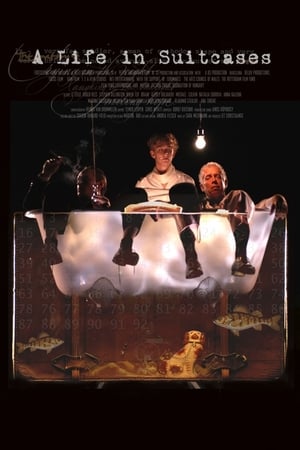
A comic study of 20th-century history, reconstructing the life of writer, creator and professional prisoner Tulse Luper. Born in 1911 Newport and last heard of in 1989, Luper’s life is pieced together from the evidence found in 92 suitcases scattered across the globe. A Life in Suitcases condenses the six-hour trilogy into a single two-hour feature, and in doing so, accentuates the project as a filmic essay in multiple narratives, listings, sidebars, footnotes, commentaries and anecdotes; a project for an Information Age ready to understand that there never is a phenomenon called History, there can only be Historians, gatekeepers to vested interests.
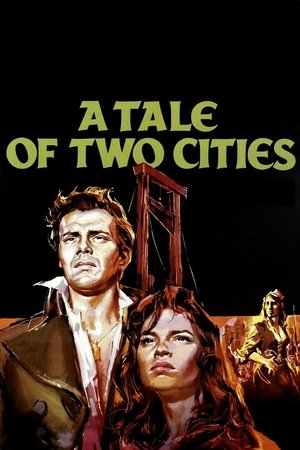
Set against the conditions leading up to the French Revolution and the Reign of Terror, French doctor Alexandre Manette serves an 18-year imprisonment in the Bastille in Paris, followed by his release to live in London with the daughter he has never met.
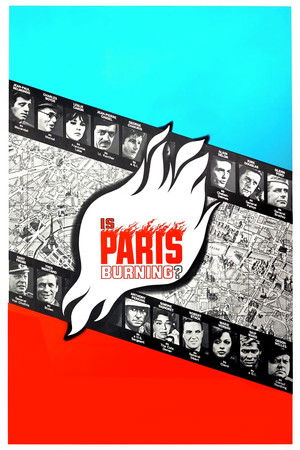
Near the end of World War II, General Dietrich von Choltitz receives orders to burn down Paris if it becomes clear the Allies are going to invade, or if he's unable to maintain control of the city. After much contemplation, Choltitz ignores orders, enraging the Germans and giving hope to various resistance factions that the city will be liberated. Choltitz, alongside Swedish diplomat Raoul Nordling, helps a leader organise his forces.
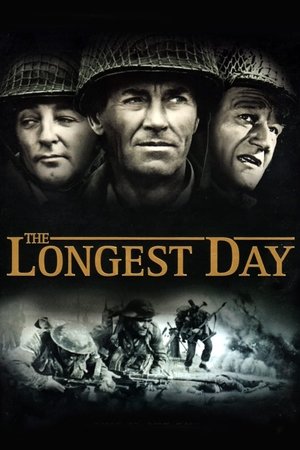
At the start of World War II, Cmdr. Ericson is assigned to convoy escort HMS Compass Rose with inexperienced officers and men just out of training. The winter seas make life miserable enough, but the men must also harden themselves to rescuing survivors of U-Boat attacks, while seldom able to strike back. Traumatic events afloat and ashore create a warm bond between the skipper and his first officer.
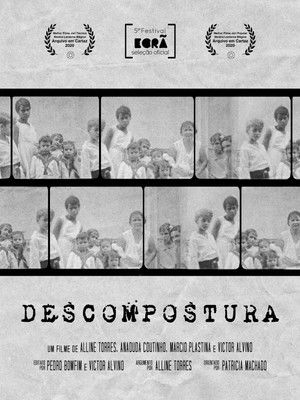
Discomposure is an experimental movie made of moving images of women, while they worked and were filmed under an aesthetic of fracture. Her bodies were positioned by the white middle classes men's eyes as if they were parts that served like props, support, and of spectators of lives which depended on these women. The movie disorganized this visual aesthetic. It did to see that, between who was filming and those entered, marginally, the scene, there was the black female look that stared at the camera, as an affront, so showing affirmation, contestation, and constraint.
"In order to preserve all our achievements for posterity it is necessary to resort to the aid of the motion picture, which will be a great contribution to the immortalization of our art. The years are passing by, and we hope that our achievements, registered on film, will aid future generations to learn and perfect themselves. In the not too distant future our first experience in this field will be shown to a wide public: pictures of the methodology of classical ballet at the Moscow and Leningrad Ballet Schools. This film will be a scientific aid in outlying districts as well." - Agrippina Vaganova
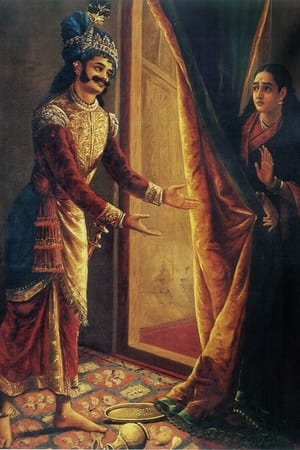
This film is a story from the Mahabharatam where Draupadi, the wife of the Pandavas, resists the advances of Keechaka, a lustful general in the court of King Virata. The confrontation leads to Keechaka's death, highlighting Draupadi's resilience during the Pandavas' exile.
In this dramatized account of his early law career in Illinois, Abraham Lincoln is born into a modest log cabin, where he is encouraged by his first love, Ann Rutledge, to pursue law. Following her tragic death, Lincoln establishes a law practice in Springfield, where he meets a young Mary Todd. Lincoln's law skills are put to the test when he takes on the difficult task of defending two brothers who have been accused of murder.
A film about peace, love and war. Dedicated to the 100th anniversary of the end of the Civil War in Russia. The film takes place at the end of the summer of 1917, when Russia and the whole world were at a crossroads between two eras. None of the people could even imagine how much his life would change in the very near future. In a strange way, the atmosphere of the film echoes our current reality and what is happening in Russia today. According to the form of visualization, the film belongs to experimental mockumentary cinema. To give greater authenticity to what is happening on the screen, the shooting was carried out on black-and-white negatives of 16 and 35 mm, hand-operated cameras were used and the material was developed in manual spiral tanks. The documentary chronicle of the Kolchak army of 1919 and the White army in the Far East of 1922 is embedded in the finale of the film.
Germany, 1945. Soldier Willi Herold, a deserter of the German army, stumbles into a uniform of a Nazi captain abandoned during the last and desperate weeks of the Third Reich. Newly emboldened by the allure of a suit that he has stolen only to stay warm, Willi discovers that many Germans will follow the leader, whoever he is.
Set in 13th century, a man locks himself in an oubliette, where he confronts human misery.
A short film depicting the execution of Mary, Queen of the Scots. Mary is brought to the execution block and made to kneel down with her neck over it. The executioner lifts his axe ready to bring it down. After that frame Mary has been replaced by a dummy. The axe comes down and severs the head of the dummy from the body. The executioner picks up the head and shows it around for everyone else to see. One of the first camera tricks to be used in a movie.
A biopic of Napoleon Bonaparte, tracing the Corsican's career from his schooldays (where a snowball fight is staged like a military campaign) to his flight from Corsica, through the French Revolution (where a real storm is intercut with a political storm) and the Terror, culminating in his triumphant invasion of Italy in 1797.
Captain Ralls fights Dutch shipping magnate Mayrant Sidneye for the woman he loves, Angelique Desaix, and for a fortune in gold aboard the Red Witch.
The twisted Richard III is haunted by the ghosts of those he has murdered in his attempt to become the King of England.