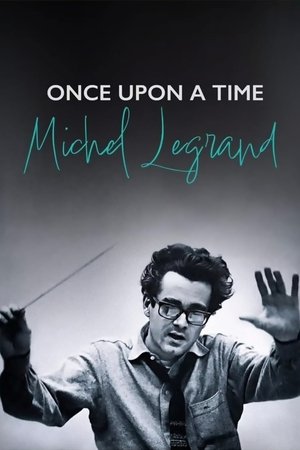
Michel Legrand, jazz musician and composer extraordinaire, has left his mark on the history of cinema, including the films of Jacques Demy, especially The Umbrellas of Cherbourg, the 60th anniversary of which is being celebrated in Cannes. Using never-before-seen archives and personal accounts, the film looks back on a lifetime dedicated to music, and the career of a man who served it masterfully to the very end.
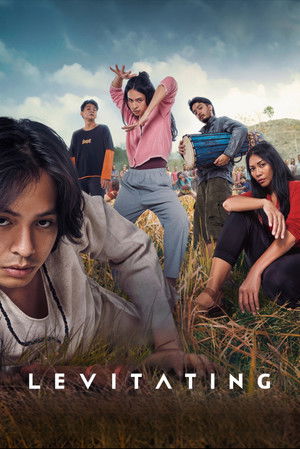
Darta, a man from an impoverished family, is rejected by the wealthy parents of the woman he loves. Desperate, he strikes a bargain with the Monkey King, performing a dark ritual to gain wealth. However, in doing so, he accidentally curses his wife and child to a life of suffering. Rooted in Indonesian mysticism, this universal narrative explores the insatiable hunger to become something one is not and the boundaries one is willing to cross to achieve it.
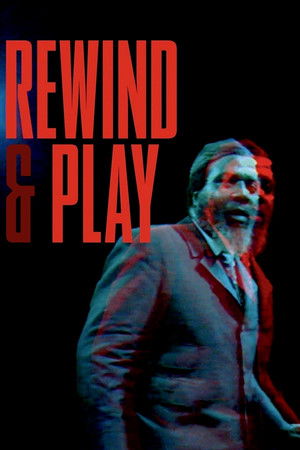
The lack of respect with which the Black musician Thelonious Monk was treated in Autumn, 1969. At the end of his European tour, legendary jazz musician Thelonious Monk appears on an interview show in Paris for French state television.
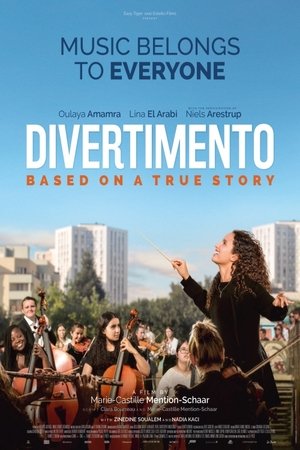
Zahia Ziouani, 17, dreams of becoming a conductor, while her twin sister Fettouma hopes to be a professional cellist. They want to make classical music accessible to everyone and create their own orchestra.
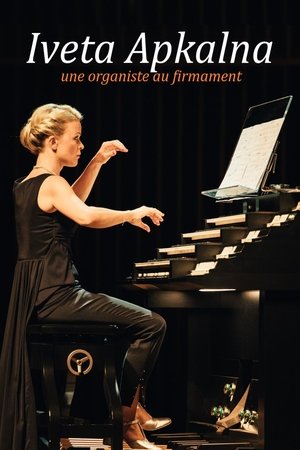
This film portrait of organist Iveta Apkalna reveals her journey from her native Latvia to the world's greatest stages. Her name is synonymous with virtuosity and complete dedication to music. "Iveta has the ability to bring music to life," says Finnish composer Esa-Pekka Salonen. The film shows the contrasts in Iveta Apkalna's professional life — from the glamour of the stage to lonely hours of rehearsal at night. The film features her performances with virtuoso violinist Hilary Hahn, outstanding conductor Paavo Järvi, and contemporary music composer Nico Muhly, as well as audience ovations and adrenaline.
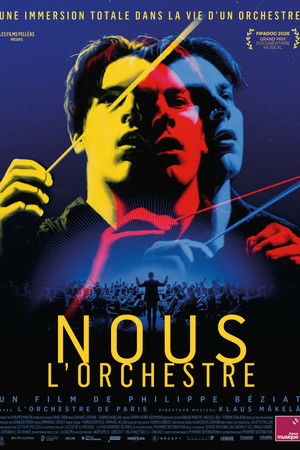
A world famous conductor suffers while leading a mediocre orchestra.
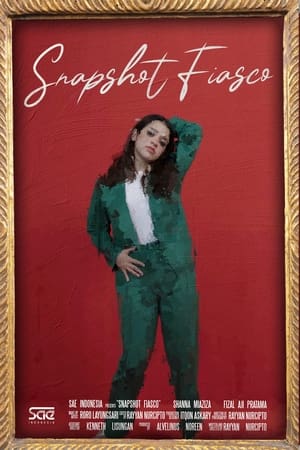
A model and a photographer, after hours of trying, strive for the perfect shot but face challenges as their high aesthetic standards get in the way.
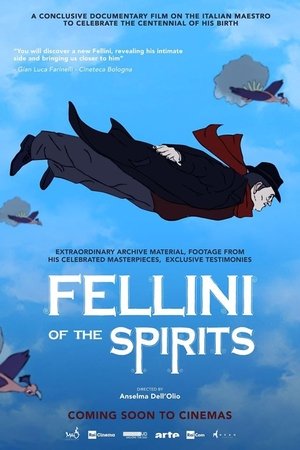
2020 marks 100 years since the birth of Federico Fellini, the most prominent Italian director and one of the symbols of the insuperable cinematic heyday of mid-20th century. Fellini had always been a mysterious director, not only in his cryptic symbolism but also in his idiosyncratic, excessive mixture of psychoanalysis, Catholicism and faith in the mysterious. In this documentary, his relationship with the paranormal, luck and fate, alongside the coexistence of organized discourse and transcendence to the imaginary, is examined via friends, collaborators and distinguished fans (Friedkin, Gilliam, Chazelle). A great testimony to why rationalists and ideologists have a hard time with his work, ‘Fellini and the Spirits’ is an appropriate yet unexpected tribute.
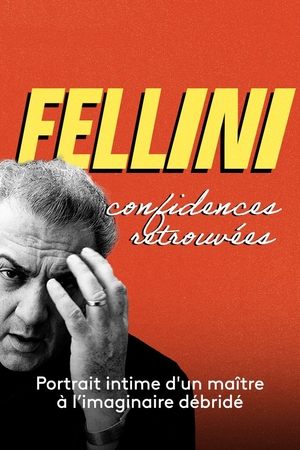
Federico Fellini died on October 31st, 1993. Thirty years later, he is still considered as one of the most irreverant moviemaker in the history of cinema. Through a long-previously-unseen interview, directed by Jean-Christophe Rosé in 1981, through extracts of his films and through behind-the-scenes, this documentary draws an intimate portrait of Fellini by himself.
A romantic comedy about teenage life on campus. It tells the story of the friendship that develops between Jojo (Johana) and Faramy, since they were kids all the way through college. Things begin to change when they're assigned to oversee the induction of a group of junior students as Faramy secretly falls for one of the students in the group, Ayu. As Faramy and Ayu's relationship gains strength, Jojo is left feeling left out and neglected. At the same time, she receives an offer to go on an exchange student program to Australia and also gets to know a guy called Johan, making Faramy jealous. Both Faramy and Jojo feel the strain as they try to distance themselves from each other. Will Faramy stop Jojo from going to Australia? And what's the conclusion to the battle of egos between them?
Sheila is the spoilt daughter of Dato Ismail. Ever since she was young she always got what she wanted and now, tired by her attitude, her father offers her a challenge; run his company for two months. Accepting the challenge, Sheila becomes the 'lady boss' of the company, but things are not all smooth-sailing for the obnoxious Sheila.
A Swiss mayor and a Chinese watchmaker living in the Jura decide to organize the semi-finals of Miss China in Switzerland.
The TGV? No, it is not the famous French high-speed train, but instead the rickety and colourful bus operated, driven, repaired and, if need be, pushed by the intrepid "Rambo". This time, the trip between Dakar, the capital of Senegal, and Conakry, the capital of Guinea, is outright dangerous: the road crosses the territory of the Bijagos, who have launched an unexpected and violent insurrection. Rambo finds several odd passengers (with a handful of sheep) who are ready, for various legitimate or untold reasons, to take every risk to reach Conakry. And the TGV sets off on an eventful journey...
A submerged self wakes up in a laboratory. Gradually we understand that it's the subjective experience of Ypsilon, a human brain being kept alive artificially.