Living with the pain of a poisoned environment and a society that doesn't understand the value of an individual.
An educational one-reeler for elementary aged children demonstrating the concept of American free-enterprise. The film utilizes wooden toys designed and animated by Goldman, all set to a music box-ish xylophone score by Jam Handy musical director Samuel Benavie and narration by notable commentator Lowell Thomas.
Educational film for young children about police and their presence in society to help them. Also aims to teach basic vocabulary to young audiences.
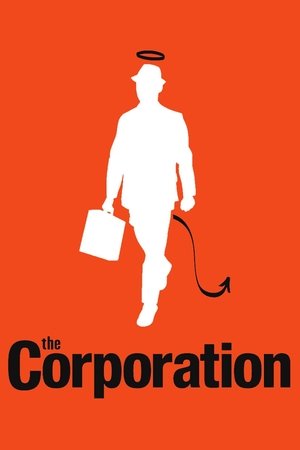
Since the late 18th century American legal decision that the business corporation organizational model is legally a person, it has become a dominant economic, political and social force around the globe. This film takes an in-depth psychological examination of the organization model through various case studies. What the study illustrates is that in the its behaviour, this type of "person" typically acts like a dangerously destructive psychopath without conscience. Furthermore, we see the profound threat this psychopath has for our world and our future, but also how the people with courage, intelligence and determination can do to stop it.
Diving deep into the true causes of the Great Recession, the financial crisis of the 2010s, renowned economists, investors and business leaders explain what America is facing if we don't learn from our past mistakes. Is the economy really improving or are we just blowing up another Bubble?
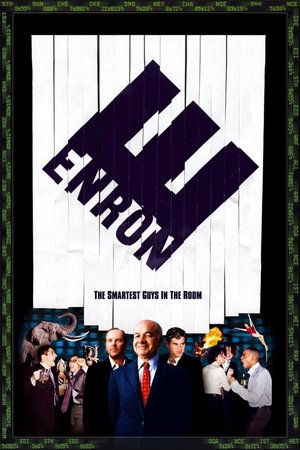
A documentary about the Enron corporation, its faulty and corrupt business practices, and how they led to its fall.
This documentary analyses the perverse monetary policies initiated before the euro inception. It focuses on the case of Spain and the terrible housing bobble that developed there.
A documentary about the closure of General Motors' plant at Flint, Michigan, which resulted in the loss of 30,000 jobs. Details the attempts of filmmaker Michael Moore to get an interview with GM CEO Roger Smith.
A film essay contrasting the modern metropolis with its "golden age" from 1830-1930, with the participation of some of New York's leading political and cultural figures. Made at a time when the city was experiencing unprecedented real estate development on the one hand and unforeseen displacement of population and deterioration on the other. Empire City is the story of two New Yorks. The film explores the precarious coexistence of the service-based midtown Manhattan corporate headquarters with the peripheral New York of undereducated minorities living in increasing alienation.
Buenos Aires is a complex, chaotic city. It has European style and a Latin American heart. It has oscillated between dictatorship and democracy for over a century, and its citizens have faced brutal oppression and economic disaster. Throughout all this, successive generations of activists and artists have taken to the streets of this city to express themselves through art. This has given the walls a powerful and symbolic role: they have become the city’s voice. This tradition of expression in public space, of art and activism interweaving, has made the streets of Buenos Aires into a riot of colour and communication, giving the world a lesson in how to make resistance beautiful.
The reality of life before, during, and after the signing of the North American Free Trade Agreement (NAFTA), and the profound effects the economic agreements between big business and government can have on human lives. Filmed over a three year period in Canada, the United States, and Mexico, this documentary poses a sobering question: In this global war of cut-rate economies, are people on the losing side?
With the country's debt growing out of control, Americans by and large are unaware of the looming financial crisis. This documentary examines several of the ways America can get its economy back on the right track. In addition to looking at the federal deficit and trade deficit, the film also closely explores the challenges of funding national entitlement programs such as Social Security, Medicare and Medicaid.
In suburban Buenos Aires, thirty unemployed ceramics workers walk into their idle factory, roll out sleeping mats and refuse to leave. All they want is to re-start the silent machines. But this simple act - the take - has the power to turn the globalization debate on its head. Armed only with slingshots and an abiding faith in shop-floor democracy, the workers face off against the bosses, bankers and a whole system that sees their beloved factories as nothing more than scrap metal for sale.
This documentary from 1987 looks at the serious malaise that plagued the US manufacturing sector at the time. No longer competitive in the world market, and forced to buy more than it could sell, the US nevertheless continued to bask in the glow of past glory rather than face its immediate predicament. Meanwhile, Japan and other Pacific Rim countries were gaining economic ground, perhaps permanently. This film was part one of the series, Reckoning: The Political Economy of Canada.
This feature documentary is an inquiry into Canada's economic troubles of the 1970 and '80s. The film summarizes the facts at hand, including some pre-NAFTA speculation about economic dependency on the United States. At roughly thirty percent, the Canada of a few decades ago was more foreign-owned than any other country in the world. Still, however, a great and stubborn national pride in our cultural and social idiosyncrasies persists, resulting in the confidence to look elsewhere besides the United States for economic alliances and models. This episode is the fifth and last part of the series Reckoning: The Political Economy of Canada.
Let’s Make Money is an Austrian documentary by Erwin Wagenhofer released in the year 2008. It is about aspects of the development of the world wide financial system.
A documentary on the history and present-day reality of big-business tax avoidance, which has seen multinationals depriving governments of trillions of dollars in tax revenues by harboring profits in offshore havens.
A documentary that traces the origins of the political power structure that rules our nation and the world today. The modern political power structure has its roots in the hidden manipulation and accumulation of gold and other forms of money.
No man is an island, but Charley represents his nation in this economical cartoon tale of Britain’s economics.
This feature documentary reveals how Bank of Montreal chairman William Mulholland dealt with his debt-laden customers Dome Petroleum and Mexico during the global debt crisis of '82. Interviews with bankers and financial experts demystify the causes of debt crisis, confirm the fragility of the international banking system and outline the problems to be solved if the system is to survive.