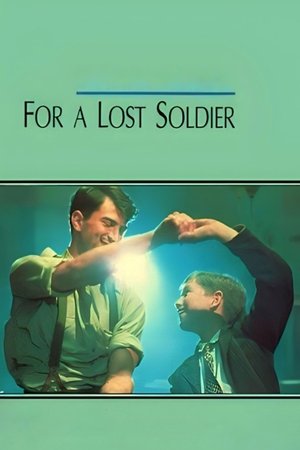
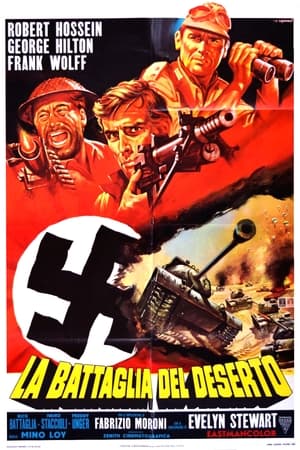
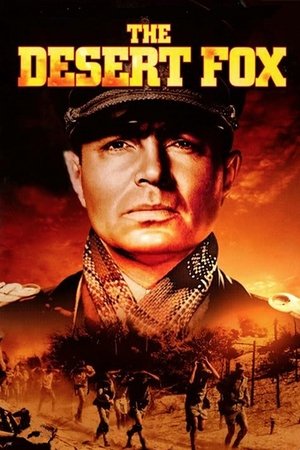
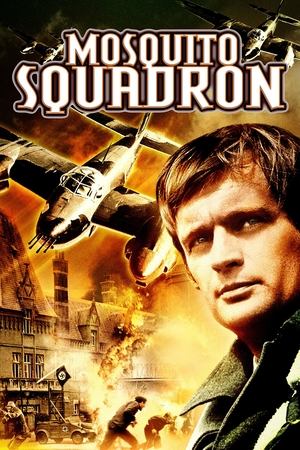
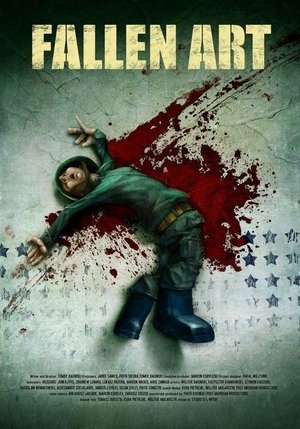
In Slovakia, they often and gladly honored those soldiers who refused to serve the fascist regime and stood against it. Lieutenant Kukorelli also rejected the tempting career of a pilot, instead helping the resistance fighters and later participating in the Slovak National Uprising.
The dramatic story captures the hard and dangerous life of the partisan group "Čapajev" led by Ľudovít Kukorelli during World War II. It retrospectively presents the course of the Slovak National Uprising in eastern Slovakia.
In WWII, a squad of U.S. African-American soldiers are sent on a rescue mission behind enemy lines to locate their lost commanding officer and a downed fighter pilot.
It was one of the great crimes of the Second World War: from 1941 to 1944, a total of 872 days, the siege and starvation of Leningrad by the German Wehrmacht on Hitler's orders lasted. Over a million people fell victim to the blockade, most of them dying of hunger. Countless of these starving people wrote diaries with the last of their strength, and cameramen filmed in the paralyzed city. Evidence from the hell of the siege, many of the film recordings, but above all the written memories on which this documentary on the occasion of the 80th anniversary of the liberation is based, remained under lock and key after the war. The voices of those who had suffered through this terrible time should not be heard by anyone, because they did not fit the pathos of the Leningrad heroic song that was officially sung. Most of the recordings come from women. The writers feared neither the enemy nor the Communist Party or Stalin, who often proved incompetent in providing for the population.
The adventures of three friends running an air charter business in Africa during WW II and their race to prevent a Nazi Baron from escaping to Germany with vital radar equipment.
Cold pearly winters and the brutality of war running simultaneously.
The greatest secret of the Second World War has remained a mystery for the last 80 years: a Jewish Communist, Sandor Rado, led a spy network that proved essential to the victory of Allied Forces. Rado received details of strictly confidential strategies from the highest echelons of the Nazi State through Rudolf Roessler, a dedicated anti-Nazi he'd only known as code name "Lucy." Aided by key German industry leaders, Roessler transmitted timely information from high-ranking collaborators within the German army headquarters. Despite their achievement, Rado, Roessler and their sources remained unacknowledged heroes until today. Thanks to the recent declassification of secret archives, we are now able to step behind the scenes of this incredible story.
The film tells about the childhood of Yuri Gagarin, about that time of life, which, in his own words, played an important role in shaping his character: war, the occupation of their villages by the Germans, famine, the theft of the elder brother and sister to Germany, the expulsion of the Nazis from Smolensk, moving family in the city of Gzhatsk.
A Hungarian youth comes of age at Buchenwald during World War II. György Köves is 14, the son of a merchant who's sent to a forced labor camp. After his father's departure, György gets a job at a brickyard; his bus is stopped and its Jewish occupants sent to camps. There, György find camaraderie, suffering, cruelty, illness, and death. He hears advice on preserving one's dignity and self-esteem. He discovers hatred. If he does survive and returns to Budapest, what will he find? What is natural; what is it to be a Jew? Sepia, black and white, and color alternate to shade the mood.
Short cartoon made for US military soldiers during World War Two.
Based on an excerpt from the novel by L.N.Tolstoy "War and Peace." The war of 1812. The defeated Napoleonic army is retreating. Three Russian soldiers settled in a snowy forest near a fire: a young (Zaletayev), an elderly and a middle-aged one. Zaletayev fantasizes — as if he had captured Napoleon. The soldiers laugh good-naturedly at him. After dinner, they fall asleep... Two Frenchmen go to the clearing — an officer and a soldier. Russian soldiers wake up and, seeing that the officer is barely standing on his feet from cold and hunger, take him to the colonel. The French soldier sits down to the fire. The Russians give him porridge and vodka. The soldier, encouraged, sings a french song. Zaletayev echoes him. A tired Frenchman falls asleep on Zaletayev’s shoulder. The soldiers carefully shelter him. “Also people,” an elderly soldier says with a sigh.
In the Ukrainian steppe, toward the end of World War II, the German and Romanian troops are retreating in the face of the unstoppable Red Army. A Romanian military unit has set up its headquarters in a deserted school. A visit of high-ranking Wehrmacht officers is suddenly announced. Hope is awakened: will they receive new orders? But disappointment comes quickly.
This powerful and thought provoking film chronicles the compelling events in the Pacific Theater of WWII, from the bombing of Pearl Harbor in 1941 to the American occupation of Japan in 1945. It depicts the strength and courage of America's youth, while examining how these men and women dealt with being thrust into this brutal war. The film includes interviews with war veterans, both American and Japanese, from all branches of the military. It features testimony from medics, nurses, dog handlers, as well as Japanese-Americans who were imprisoned at internment camps in the United States. The film also includes a first hand account of the tragic impact of the atomic bomb on Japanese citizens. Among the veterans who appear is Zenji Abe, a Japanese veteran who flew the mission to bomb Pearl Harbor, and retired General Paul Tibbets who flew the mission to bomb Hiroshima.
The plot of the film is based on real events of the Great Patriotic War. When the Nazis occupied Crimea, the actors of the drama theater of the city of Simferopol entered the underground group Sokol. The activities of the underground members were diverse: they put up leaflets with information from Soviet Information Bureau, compiled maps showing the strategic objects of the enemy, and supplied the partisans with medicines. On April 10, 1944, 3 days before the liberation of Simferopol, the underground members died from enemy bullets — they were shot on the outskirts of the city.
Le Temps des assassins
As the world faces its Second World War, John Halder, a good, intelligent German professor, finds himself pulled into a movement with unthinkable consequences.
Marine private John Rossi is looking forward to a new assignment in New York City on the night he ventures into a Hell's Kitchen bar, and meets a handsome but lonely boy named Damon Conrad. Damon assumes the Marine just wants sex, but when he proposes they go out on a "real date," Damon begins to think perhaps he has finally found the man of his dreams. The next night, John reveals that earlier that day he learned his division would be heading to the Middle East. Later that night, when the boys are caught-up in a moment of passion, John must choose between his devotion to the Marines and his desire for love and companionship.
Two-fisted newsreel photographer Johnny Williams is stationed in Burma and China in the early stage of WW II. Captured by the Japanese, he escapes from a concentration camp with the aid of beautiful, enigmatic 'China Girl' Miss Young. The two arduously make their way back to friendly lines so that Johnny can deliver the vital military information he's managed to glean from his captors.
A few years after the outbreak of a virus that endangers the human race. War, pillaging, and arsonry occurred, nearly wiping out humanity. But Dirman continues to fight for survival, though the memories of the past will always continue to haunt him.
The crew of the merchant ship Glencairn hope to survive a transatlantic crossing during World War II. Adapted from four Eugene O'Neill one-act plays.