Peter Dvorský
One of the first US born conductors to receive worldwide fame, Leonard Bernstein is an exceptional composer and certainly not only due to The West Side Story. Instead of concentrating exclusively on his most famous work, Thomas von Steinaecker sets out to paint a complete picture of Bernstein. Thus, the documentary focusses on the American’s less known later works and on three compositions in particular: his Mass, the musical 1600 Pennsylvania Avenue and the great final opera A Quiet Place. The film paints a vivid picture of the multitalented Bernstein, struggling with his role as composer and conductor, tackling the tension between successes and flops, between the politics of his time and his own liberal humanitarian claim. It looks back on Bernstein’s major achievements, such as his acclaimed conducting of Mahler and his involvement in the Young People’s Concerts, and it shows Bernstein’s work with young aspiring musicians as well as his political commitment.
The film is a parody of Disney's Fantasia, though possibly more of a challenge to Fantasia than parody status would imply. In the context of this film, "Allegro non Troppo" means Not So Fast!, an interjection meaning "slow down" or "think before you act" and refers to the film's pessimistic view of Western progress (as opposed to the optimism of Disney's original).
Filmed in Austria for the hundredth anniversary of Beethoven's death, this 1927 silent film tells the story of the German genius' eventful emotional life. Presented in a restored version and with rearranged music, a biopic to be savored with ears wide open.
After marrying her long lost love, a pianist finds the relationship threatened by a wealthy composer who is besotted with her.
Every year, the Berliner Philharmoniker hold a kind of classical-music fête with a bright, cheerful concert to end the season. In 2009 about 22,000 people had come together at the Berlin Waldbühne to enjoy the traditional summer picnic concert. The theme of the evening was “Russian rhythms”, and star conductor Sir Simon Rattle, the Berliner Philharmoniker and Yefim Bronfman, one of the most famous pianists in the world today, presented a superb selection of Russian music. Repertoire Tchaikovsky: The Nutcracker, op. 71, Overture, The Christmas Tree, March, Pas de deux (Intrada) Rachmaninoff: Piano Concerto No.3 in D minor, op. 30 Stravinsky: Le Sacre du printemps Lincke: Berliner Luft
Repertoire Modest Mussorgsky: Night on Bald Mountain; Antonín Dvořák: Song to the Moon from “Rusalka”, Op. 114; Aram Chatschaturjan: Adagio from “Spartacus”; Richard Strauss: Final Scene from “Capriccio”, Op. 85; Richard Wagner: Overture to “Rienzi, der Letzte der Tribunen”; E. W. Korngold: Mariettas Lied from “Die tote Stadt”; Richard Strauss: Zueignung, Op. 10 No. 1; Sir Edward Elgar: Salut d’amour; Giacomo Puccini: Donde lieta uscì from “La bohème”; Tu che di gel sei cinta from “Turandot”; Ruggero Leoncavallo: Musette svaria sulla bocca viva from “La bohème”; Mimì Pinson, la biondinetta from “La bohème”; Piotr Tchaikovsky: “Romeo and Juliet” (Fantasy Overture)
Anton Bruckner’s 6th Symphony was written between 1879 and 1881: a very happy time in his life. Unlike most of Bruckner’s symphonies, the 6th was not revised. Of all his works, this one seems to come from a single source of inspiration. Bruckner himself called it his “boldest” symphony – probably due to its extreme degree of motivic, rhythmic and harmonic originality. This live recording of the seldom-performed 6th Symphony is the next instalment of the acclaimed Bruckner cycle by the Staatskapelle Berlin and Daniel Barenboim. Anton Bruckner Symphony No. 6 in A major (original version) Daniel Barenboim, Conductor Staatskapelle Berlin Recorded live at the Philharmonie Berlin, 22 June 2010
“Clarity was one thing that made this performance a marvel. Another was the flexibility of Barenboim’s speeds…. The flexibility of Barenboim’s tempi meant that Bruckner’s charm – an often overlooked aspect of his genius – shone through, especially in the genial Trio.” (The Telegraph) Bruckner’s 8th is the last symphony completed by the Austrian composer. Many of his contemporaries regarded the symphony as “the pinnacle of 19th century music”. Even today, this monumental work fascinates listeners with its virtuoso orchestral technique, its immensity of sound, and its inexhaustible richness of detail. Symphony No. 8 in C minor (second version 1887-90, Robert Haas Edition) Daniel Barenboim, Conductor Staatskapelle Berlin Recorded live at the Philharmonie Berlin, 26 June 2010
The pianist Kyra Steckeweh and the filmmaker Tim van Beveren search for traces where Countess Dora Pejačević (1885-1923) lived and worked. Their documentary is a journey through time to a half brilliant, half broken Europe.
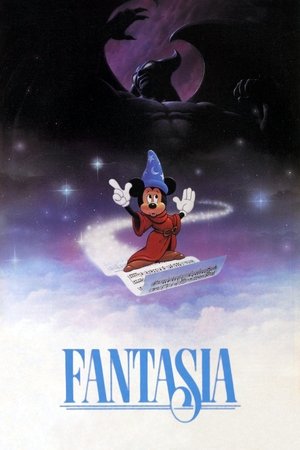
Walt Disney's timeless masterpiece is an extravaganza of sight and sound! See the music come to life, hear the pictures burst into song and experience the excitement that is Fantasia over and over again.
Live performance of Johann Sebastian Bach's Magnificat, BWV 243 from Herbert von Karajan's New Year's Eve concert in 1984.
The Parrs' baby Jack-Jack is thought to be normal, not having any super-powers like his parents or siblings. But when an outsider is hired to watch him, Jack-Jack shows his true potential.
For their annual season end concert, the Berliner Philharmoniker take the audience on a dreamy, magically journey through the river Rhine with Schumann’s beloved 3rd Symphony Rhenish. Pieces from Wagner’s Der Ring des Nibelungen under the baton of dynamic conductor Gustavo Dudamel complete this evening.
The young Clara creeps downstairs on Christmas Eve to play with her favourite present – a Nutcracker. But the mysterious magician Drosselmeyer is waiting to sweep her off on a magical adventure. After defeating the Mouse King, the Nutcracker and Clara travel through the Land of Snow to the Kingdom of Sweets, where the Sugar Plum Fairy treats them to a wonderful display of dances. Back home, Clara thinks she must have been dreaming – but doesn’t she recognize Drosselmeyer’s nephew?
Packed with intricate melodies, harmonies, and instrumentation, Johannes Vogel conducts the Synchron Stage Orchestra to perform Antonin Dvořák's Symphony No. 9 in E Minor Op.95 (also known as ‘New World Symphony’) in this joyful live concert stream. Captured in Vienna’s state-of-the-art Synchron Stage recording facility, experience the thrills and swells of a 60-piece ensemble – 40 string, 9 woodwind, 9 brass, and 2 percussion – comprised of talented musicians from renowned Viennese orchestras. While serving as the director of the National Conservatory of Music of America, Antonín Dvořák composed New World Symphony (a title inspired by his travels in the United States) and debuted the masterpiece in New York City on 16 December 1893. The symphony has since become one of the most famous works in classical music, filled with hope and happiness as well as uplifting instrumentals that makes it a pleasure to listen to come rain or shine.
Packed with intricate melodies, harmonies, and instrumentation, Johannes Vogel conducts the Synchron Stage Orchestra to perform Brahms’ Symphony No. 4 in E Minor Op.98 in this enthralling live concert stream. Captured in Vienna’s state-of-the-art Synchron Stage recording facility, experience the thrills and swells of a 60-piece ensemble – 40 string, 9 woodwind, 9 brass, and 2 percussion – comprised of talented musicians from renowned Viennese orchestras. With origins that date back to 1884 in Mürzzuschlag and the Austro-Hungarian Empire, Symphony No. 4 was introduced to the public on 25 October 1885 in Meiningen, Germany. In this modern-day performance, Brahms' fourth and final symphony continues to pulse with positive energy and swirls with trance-like melodies that’ll please classical fans far and wide.
Originally aired as part of Beethoven’s 250th anniversary celebration, Johannes Vogel conducts the Synchron Stage Orchestra to perform Gustav Mahler's Orchestration of Symphony No. 9 in D Minor Op. 125 in this dramatic live concert stream. Recorded at the historical Synchron Stage in Vienna, experience the thrills and swells of the Synchron Stage Orchestra - 48 string, 17 woodwind, 14 brass, 4 percussion - comprised of Austria’s finest instrumentalists, alongside a choir of 39 sopranos, altos, tenors, and basses. Composed between 1822 and 1824 in Vienna, Symphony No. 9 in D Minor was Beethoven’s final completed symphony. The use of solo singers and a chorus in the final movement was revolutionary, and the emotional journey from the doubt and struggle to the glorious vision of a world of love and tolerance is regarded as one of the greatest and most heartfelt pieces in classical music.
A documentary on the life and work of the composer Sofia Gubaidulina.
On Air presents Igor Stravinsky's The Firebird, performed by the world-renowned Royal Philharmonic Orchestra, conducted by Peter Breiner, and recorded at BBC Television Centre. Expertly brought to life by some of the world's most sought-after classical musicians, The Firebird comprises 74 musicians: 51 string, 11 brass, 8 woodwind and 4 percussion. Available now to watch on demand in cinematic quality.