Churchill, a name typically associated with braveness and altruism. Recently found evidence from Soviet and British sources however brings up questions about Churchill's doings in the conferences of Tehran, Yalta and Potsdam. Why did he agree to give Stalin large parts of Poland? The story of two world leaders in times of war - it is also the story of Poland.
A short, three minute documentary exploring audio recordings from the year 1894 to 1922, layered over home-footage from the year 1920 to 1985, as an indulgent social-commentary on our collective human experience as well as a testament to the everlasting nature of art.
An account of the last two centuries of the Anthropocene, the Age of Man. How human beings have progressed so much in such a short time through war and the selfish interests of a few, belligerent politicians and captains of industry, damaging the welfare of the majority of mankind, impoverishing the weakest, greedily devouring the limited resources of the Earth.
An examination of the intimate life of America's most consequential president, Abraham Lincoln. As told by preeminent Lincoln scholars and never before seen photographs and letters, Lincoln's romantic relationships with men is detailed. The lens is widened into the history of human sexual fluidity and focuses on the profound differences between sexual mores of the 19th century and those we hold today.
Beginning with Guernica and the Chinese cities of Chongqing and Shanghai in 1937 and ending with the bombing of Hiroshima and Nagasaki in August 1945, World War Two saw a new art of warfare in the form of extensive, worldwide bombing campaigns.
The Glorious Story of Castles Carriers of myths and legends, castles strongly mark our imaginations, appearing most often as the pivot of a dark and barbaric period. Reality is different. They are full of mystery and grandeur, emblematic abstractions of the Middle Ages, they testify to medieval civilization.
Buried beneath the sand for seven million years, a skull is unearthed in Chad that may provide evidence of the oldest known human ancestor.
A French documentary or, one might say more accurately, a mockumentary, by director William Karel which originally aired on Arte in 2002 with the title Opération Lune. The basic premise for the film is the theory that the television footage from the Apollo 11 Moon landing was faked and actually recorded in a studio by the CIA with help from director Stanley Kubrick.
The documentary tells the exciting story of the beginnings of surgery through to its specialization - a fascinating journey through time from the Stone Age with the first skull openings through antiquity and the early modern era to the first heart operation. The film was shot at the most important locations in the history of surgery - including Italy, France, Germany, Austria, Great Britain, Hungary and the USA. The film contains fascinating and partly unpublished archive material.
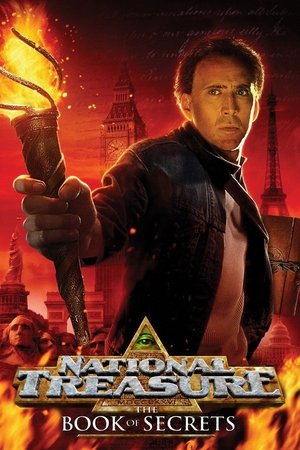
Benjamin Franklin Gates and Abigail Chase re-team with Riley Poole and, now armed with a stack of long-lost pages from John Wilkes Booth's diary, Ben must follow a clue left there to prove his ancestor's innocence in the assassination of Abraham Lincoln.
Mystifications
In 1970 a storm uncovers an ancient whaling village called Ozette which had been buried some 500 years ago by a massive mudslide. The resulting excavation brings new knowledge of the past important to both the Makah Indians, living on the Olympic Peninsula in Washington and for the historical record of Native Americans in the Pacific Northwest.
In the heart of Paris, an entire palace has disappeared. It was the very first residence of the kings of France. Long before Versailles, long before the Louvre, the Palais de la Cité stood on the most prestigious island in Paris, the historic cradle of France, facing Notre-Dame. So majestic in the Middle Ages, this palace has become a ghost of history. Over the centuries, this architectural masterpiece has almost completely disappeared. A trio of experts will resurrect it in 3D. Using science and unprecedented excavations, they will track down the pieces of the puzzle to reconstruct it at its peak in the 14th century, and bring back to life those who inhabited it. From the Romans to the Vikings, from Saint Louis to the cursed kings, all have left clues of this 'Versailles of the Middle Ages'.
Exclusively created with period engravings, this animated feature explores the Franco-Prussian War of 1870 and the ensuing Paris Commune revolution in 1871.
Easter Island has long been the subject of curiosity and speculation. A triangle of volcanic rock in the South Pacific, Easter Island is over 2000 miles away from the nearest population center, making it one of the most isolated spots on Earth. It is best known for the giant stone statues, known as the Moai, that dot the coastline.
A documentary about the life of former U.S. Secret Service agent, Clint Hill, who served under five United States presidents from Eisenhower to Ford and is known for his act of bravery on November 22, 1963 — shielding Jacqueline Kennedy and the stricken president with his body as the car raced from Dealey Plaza to Parkland Memorial Hospital.
A story of the LGBT struggle from the 1960s to the present, after the Stonewall riot sparked the militant action in New York that was to spread around the world. From San Francisco to Paris via Amsterdam, between the first Gay Pride, the election of Harvey Milk, the French "decriminalization", the AIDS epidemic and the first homosexual marriages, these few decades of struggle are embodied through numerous testimonies of actors and actresses of this revolution rainbow.
Guy Debord's analysis of a consumer society.
Sir John Franklin set off from England in 1845 with two ships and 129 men to be the first to navigate the Northwest Passage, a new trade route over the top of the world, when Franklin’s ships vanished without a trace. Now, a team of explorers attempts to solve the mystery by retracing Franklin’s route in search of his long-lost tomb.
Séfar (in Arabic: سيفار) is an ancient city in the heart of the Tassili n'Ajjer mountain range in Algeria, more than 2,400 km south of Algiers and very close to the Libyan border. Séfar is the largest troglodyte city in the world, with several thousand fossilized houses. Very few travelers go there given its geographical remoteness and especially because of the difficulties of access to the site. The site is full of several paintings, some of which date back more than 12,000 years, mostly depicting animals and scenes of hunting or daily life which testify that this hostile place has not always been an inhabited desert. Local superstition suggests that the site is inhabited by djins, no doubt in connection with the strange paintings found on the site.