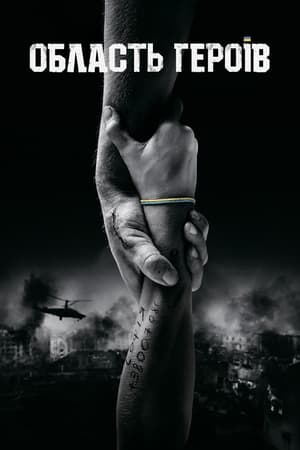
Film reconstruction of five real stories about the heroic deeds of the residents of Kyiv region during the Russian occupation. A story about those who heroically and selflessly saved tens of thousands of Ukrainian lives.
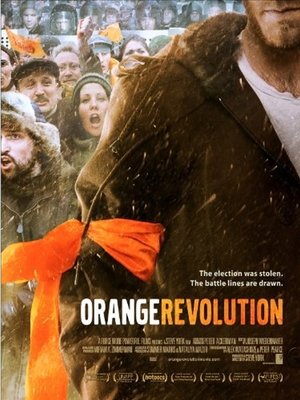
Filmmaker Steve York explores the controversial 2004 Ukrainian presidential election, during which candidate Viktor Yushchenko suffered a near-fatal poisoning and his unpopular opponent, Viktor Yanukovych, was declared the winner. In the aftermath, more than a million people -- including the ailing Yushchenko -- took to the streets of Kiev, protesting the results that contradicted exit polls showing Yushchenko with an impressive lead.
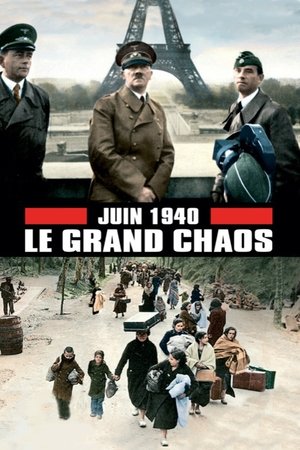
From May 10, 1940, France is living one of the worst tragedies of it history. In a few weeks, the country folds, and then collapsed in facing the attack of the Nazi Germany. On June 1940, each day is a tragedy. For the first time, thanks to historic revelations, and to numerous never seen before images and documents and reenacted situations of the time, this film recounts the incredible stories of those men and women trapped in the torment of this great chaos.
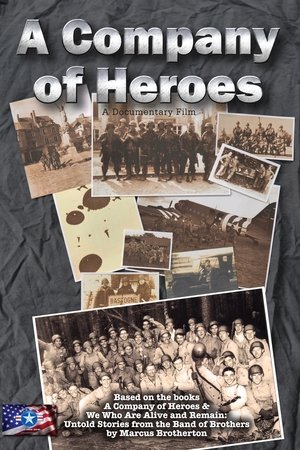
Easy Company, the 2nd Battalion of the 506th Parachute Infantry Regiment of the 101st Airborne Division, fought their way through Europe, liberated concentration camps, and drank a victory toast in April 1945 at Hitler's hideout. Veterans from Easy Company, along with the families of three deceased others, recount their horrors and victories, bonds they made and the friends they lost.
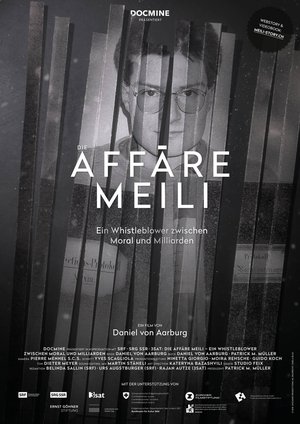
Die Affäre Meili
This film documents four delegated performances/castings, featuring participants who are both directly and indirectly actors of war: veterans, civilian victims, disabled individuals, or those traumatised by conflict. Applicants that have been seduced to participate in four castings of imaginary movie altogether agreeing to be part not only of an experimental film, but also of a subversive cinematic social experiment. They signed up for battle in the movie, and got an unexpectedly brutal lesson about conflict. They certainly, but so do we who watch it.
In preparation for a feature-length film about windmills, an assistant director travels through the Vaud region to search for locations with windmills. The research leads to a serious engagement with the meaning and purpose of windmills, which has something Don Quixote-like about it in the age of nuclear power stations. The transitions between document and fiction flow constantly and result in a charming and intellectual mixture of seriousness and fun, determination and coincidence, weightlessness and the weight of meaning.
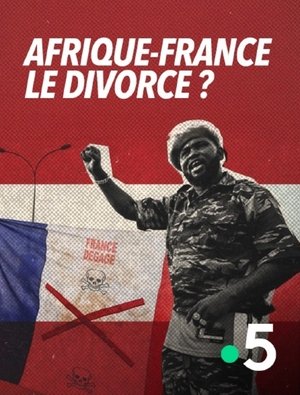
At a time when French flags are being burned and French embassies targeted, this documentary delves into the growing disaffection between French-speaking Africa and the former colonial power. Through the voices of African leaders, pan-African activists, and committed young people, the film questions the persistence of a relationship marked by the aftermath of colonization, the opaque agreements of "Françafrique," and a military presence deemed paternalistic.
Pour l'honneur de Gaza, des déplacés sous les tentes
Documentary filmed over a period of four months, from 25 December 1975 to 5 March 1976, in the area of the former Spanish Sahara claimed by the people who lived there, the Saharawis, a people now mobilised and in arms (the Polisario Front) against Morocco and Mauritania, two states that have signed an agreement to share the territory.
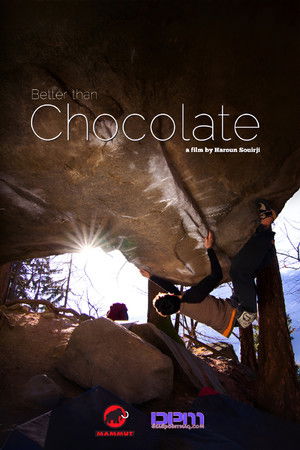
If you like Swiss chocolate and enjoy climbing, you will love this film. Showcasing footage from some of Switzerland most prominent bouldering areas, this film captures the beauty and mystique that has made Switzerland a top bouldering destination. Featuring the area’s classic problems and many first ascents and repeats of the area’s hardest problems. Climbers Paul Robinson, Chris Webb Parsons, and others fill this movie with non-stop action packed footage. Better than Chocolate comes with bonus footage including additional boulder problems, outtakes, and more!
Dangling from a high window, a young non-binary person is on the cusp of life and death. Flashes of film, literature, art (paintings) and cultural history pass them by, as if to tell a message. A postmodern treatise on connection to culture and the past.
This is a once in a generation event that needs to be examined without the usual spin that is delivered by the controlled media. While the video will be interpreted one way or the other, it is one that supports the voice of reason and of peace rather than jingoistic war drums and the cacophony of white noise.
Talking about the story of the Gaza genocide with other images and other words is possible. The discovery of some slides in a high school in Catania is the starting point for analyzing the origins of Israel's military occupation of Gaza by resorting to the etymology of the words used to describe what expressions like "terrorist" or "military occupation" mean, while the drawings of Amos, an Israeli child who portrays his imaginary friend Anya under the worried gaze of the babysitter May Golan, point out that most horror stories have deep roots in everyday life. Invention and black humor try to overcome the (denied) reality of an apartheid and a normalized genocide, exposed and simultaneously removed.
The war in Ukraine continues to leave indelible scars, but beyond military strategies and political speeches, there are stories that are rarely told: those of people who survive day by day amid the conflict. In an effort to document the human reality of war, Rubén Díez (Lethal Crysis), one of the most influential Spanish-speaking travel and exploration content creators, and Ignacio Marín, a renowned photojournalist specializing in war zones, traveled to the heart of the conflict in December 2024 to capture the experiences of those who resist in the shadows. For two weeks, they visited trenches, evacuation points, rehabilitation centers, and front lines, meeting soldiers, doctors, civilians, and refugees who shared their daily lives in a world where normalcy has been destroyed. Through intimate encounters and raw testimonies, this feature-length documentary offers an honest, unfiltered look at the human capacity to adapt, resist, and carry on—even in the darkest of settings.
This was made for National Geographic and shows how Russians made their own rafts out of scrounged parts and then ran unbelievable whitewater. Starring the famous Bublik!
Crayons and Paper follows Dr. Jerry Ehrlich, a New Jersey pediatrician who worked with Doctors Without Borders in war zones including Sri Lanka, Haiti, the Caucasus, and Darfur. Alongside medical care, he gave children crayons and paper, encouraging them to draw their experiences. The resulting images—bombings, shootings, and burning villages—offer a raw, heartbreaking glimpse into the impact of war on children. These drawings serve as powerful testimonies, capturing trauma that words cannot. This short film tells Dr. Jerry’s story and honors the children whose art bears witness to the horrors of conflict.
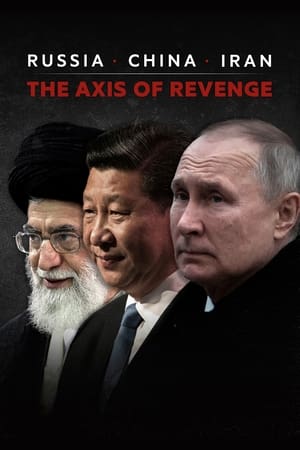
Russia, China and Iran: three former empires are determined to take their revenge and reassert their power after centuries of humiliation. Since the start of the war in Ukraine, they have never been so aligned on the international stage. Their common goal: to put an end to Western hegemony, restore their zone of influence and propose a new model of society. To achieve this, they are waging a hybrid war against the democracies: military, technological, economic, informational and ideological. Are they on the verge of joining forces to create a new world order?
This short film employs an anonymous hotline to elevate the voices beneath Vermont's F-35 flight path, the first urban residents to live with one of the military's most controversial weapons systems overhead. Tranquil scenes of unassuming neighborhoods near Burlington International Airport are juxtaposed with voicemails of the unheard, those drowned out by the ear-shattering “sound of freedom.” Exploring the relationship between picturesque residential areas and the deafening fighter jets overhead, Jet Line is a poetic portrait of a community plagued by war machines, documenting untenable conditions in a small city once voted one of the best places to live in America.
A look at the Billy Meier case