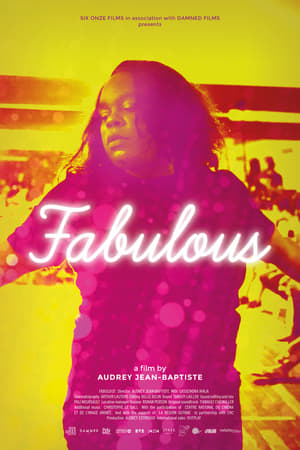
The documentary follows the life of former Femen member Amina Sboui and the community of LGBTQ+ friends she houses in her Tunisian home. Offering unparalleled insight into life following the Arab Spring, social persecution, and political struggle, from a queer perspective. Dive into the stories of Amina's strong and enchanting group of LGBTQ+ loves and comrades: Sandra, Ramy, Ayoub, and Atef, as they bond and build a queer community against a backdrop of global trauma and struggle.
“Bulgaria in Trance” aims to make an impartial portrait of the trans community in Bulgaria by telling the personal stories of the trans women who took part in the exhibition “The Other Bulgarians”.
In this home movie collection of gay men, memory serves as an act of hope, power, and above all, resilience.
LIMITED PARTNERSHIP is the love story between Filipino-American Richard Adams and Australian Tony Sullivan, who, in 1975, became one of the first same-sex couples in the world to be legally married. After applying for a green card for Tony based on their marriage, the couple received a denial letter from the Immigration and Naturalization Service stating, 'You have failed to establish that a bona fide marital relationship can exist between two faggots.' Outraged at this letter, and to prevent Tony's impending deportation, the couple sued the U.S. government, filing the first federal lawsuit seeking equal treatment for a same-sex marriage in U.S. history. This tenacious story of love, marriage and immigration equality is as precedent setting as it is little known... until now.
Centrales nucléaire : démantèlement impossible
An inside look into the effort to preserve Philadelphia's ballroom scene, a black LGBTQ safe-space that has endured for 30 years.
Le lin, ce trésor français
Whereas Minki’s older brother benefits from the social stability provided by marrying his girlfriend, Mingi and his partner run into legal hurdles regarding marriage and visas, prompting them to endless search for alternatives. Simultaneously, the documentary explores a gay man’s worries about coming out and marriage through the experiences of straight family members who are coming to terms with what it means to have a queer family member.
As a Bauhaus photographer, Lucia Moholy (1894-1989) was a pioneer of New Objectivity. Her husband László Moholy-Nagy was appointed to the Bauhaus in 1923. They worked there together and László became famous as the inventor of the photogram, a photo without film. Lucia's contribution to this only became known later. When the Czech-born Jew was forced to leave Germany in 1933 after the Nazis seized power, she was unable to take her most important possession, her glass negatives, with her. She struggled to keep her head above water in London and worked for the British secret service on the microfilming of valuable documents. With her vision of microfilm as freely accessible information for all, she is now regarded as a pioneer of the Internet. After the war, Lucia set out in search of her glass negatives.
Using cutting-edge scanning technology and state-of-the-art CGI, a team of experts creates the first high-resolution 3D digital twin of the Titanic wreck. Through a groundbreaking immersive investigation, they uncover the ship’s final moments, shedding light on the acts of heroism and cowardice aboard—and revealing the true story behind the sinking of the “unsinkable” ship.
Private Diary documents photographer Pedro Usabiaga working with a variety of amateur models. The audience sees how the relationships between the photographer and the subjects changes during their time together, as well as how the individual photographs begin to take shape. Pedro Usabiaga is a well-established Basque photographer whose chief concerns are figurative photography and whose passion in photographing the Spanish male. In this hour long conversation with the artist we are given entry into that process of selecting models (none of the models he uses for this book to be titled 'Private Diary' are professional, but instead are randomly chosen as Usabiaga observes athletes in action) and then allowed to follow Usabiaga and his crew as they photograph these men in natural settings and natural light.
The oldest known "out" African-American lesbian remembers ten colorful decades in this hour-long documentary, which won the Audience Award for Best Documentary at the San Francisco International Gay and Lesbian Film Festival in 1999. Born July 23, 1899, in Springfield, IL, Ruth Ellis spent most of her life in Detroit. A pioneering independent black businesswoman, she operated her own print shop until the age of 65. In the home she shared with Cecilene "Babe" Franklin, her partner of more than 30 years, she played host to innumerable gatherings of the city's African-American gays and lesbians in an age when segregation excluded them from white homosexual society. A participant in the civil rights movement and a witness of the riots that tore Detroit apart in the 1960s, Ellis later became an icon for, and active participant in, the city's multicultural lesbian and feminist community.
Là, où le temps s’est arrêté
A dance group rehearses for their latest performance Inabitáveis about black homosexuality. While the choreographer conducts research and gives guided tours, he meets Pedro, a young trans girl looking for her own means of expression. She desperately wants to be taught by him.
Aidil, a teenager from Maratua Island, as he prepares to inherit his father’s grouper fish farming business. Amidst natural challenges and family expectations, Aidil grows from a curious boy into his father’s true partner. This is a coming-of-age story about legacy, resilience, and the unspoken bond between father and son.
The true story of the students of Brigham Young University's queer underground, as they lit the school's iconic "Y" in rainbow colors. But, A Long Way From Heaven does a lot more than tell the story of the Rainbow Y. It outlines the history of queer treatment at BYU - the good (where it exists), the bad, and the very, very ugly. The film combines new, original footage with a huge variety of historical images, videos, newspaper articles, and other mixed media from every conceivable source to tell the story of BYU's queer students, and the bravery and risks they constantly take to make their voices heard.
An on-the-scene documentary following the events of September 11, 2001 from an insider's view, through the lens of two French filmmakers who simply set out to make a movie about a rookie NYC fireman and ended up filming the tragic event that changed our lives forever.
Following the debate over California's Proposition 8, this short film is an exploration of how modern American families are constructed, not only those within the LGBTQ community.
A 16mm anthology of experimental super 8 films by Derek Jarman, Michael Kostiff, Cerith Wyn Evans and John Maybury, with framing footage by Tim Burke of Brion Gysin using a dream machine. Jarman's contribution is a version of his 1977 Art and the Pose (aka Arty the Pose), refilmed at 3fps, with a musical soundtrack. Jarman planned The Dream Machine as a commemoration of William Burroughs and Gysin's 1982 visit to the UK, and received initial funding from the Arts Council in 1983, then rethought the project as a portmanteau film featuring Gysin alone. The production remained in limbo until 1986, when James Mackay obtained completion funding from the British Film Institute. (Since this film was released on VHS accompanied by Jarman's Broken English: Three Songs by Marianne Faithfull, T.G.: Psychic Rally in Heaven and Pirate Tape under the umbrella title The Dream Machine, synopses of this film have often muddled up its details with those of the earlier films. )
About Stefan Stricker, who calls himself Juwelia and has been running a gallery on Sanderstraße in Berlin Neukölln for many years. Every weekend he invites guests to shamelessly recount from his life and to sing poetic songs written with his friend from Hollywood Jose Promis. Juwelia has been poor and sexy all her life, has always struggled for recognition, but only partially.