In August 1962, director Leslie Woodhead made a two-minute film in Liverpool's Cavern Club with a raw and unrecorded group of rockers called the Beatles. He arranged their first live TV appearances on a local show in Manchester and watched as the Fab Four phenomenon swept the world. Twenty-five years later while making films in Russia, Woodhead became aware of how, even though they were never able to play in the Soviet Union, the Beatles' legend had soaked into the lives of a generation of kids. This film meets the Soviet Beatles generation and hears their stories about how the Fab Four changed their lives, including Putin's deputy premier Sergei Ivanov, who explains how the Beatles helped him learn English and showed him another life. (Storyville)
Warsaw's Central Railway Station. 'Someone has fallen asleep, someone's waiting for somebody else. Maybe they'll come, maybe they won't. The film is about people looking for something.
October 24, 1944, the world’s greatest battle at sea begins in the Philippines. Japan’s navy gambles on a decisive victory against the United States to turn the tide of World War II. Instead, Musashi, its top-secret super battleship, ends up at the bottom of the ocean.
Florian Hartung and Dirk Pohlmann have reconstructed a previously unknown dimension of the collaboration between Nazis and the CIA in the Cold War. Drawing upon recently released documents, the film exposes for the first time a perfidious, worldwide net that reaches deep into the power structures of the Federal Republic of Germany. Lending their authority to the fact-finders’ mission are high-ranking statesmen, journalists and historians.
Back in 1976, microprocessors had a maximum of 8.5K transistors for 64bits of memory. The Queen of England sent her first email, and Steve Wozniak designed the Apple I. And a post-Star Trek but pre-TJ Hooker William Shatner made this film for AT&T about the future of microprocessors.
Documents the lives of infamous fakers Elmyr de Hory and Clifford Irving. De Hory, who later committed suicide to avoid more prison time, made his name by selling forged works of art by painters like Picasso and Matisse. Irving was infamous for writing a fake autobiography of Howard Hughes. Welles moves between documentary and fiction as he examines the fundamental elements of fraud and the people who commit fraud at the expense of others.
Black holes stand at the limit of what we can know. To explore that edge of knowledge, the Event Horizon Telescope links observatories across the world to simulate an earth-sized instrument. With this tool the team pursues the first-ever picture of a black hole, resulting in an image seen by billions of people in April 2019. Meanwhile, Hawking and his team attack the black hole paradox at the heart of theoretical physics—Do predictive laws still function, even in these massive distortions of space and time? Weaving them together is a third strand, philosophical and exploratory using expressive animation. “Edge” is about practicing science at the highest level, a film where observation, theory, and philosophy combine to grasp these most mysterious objects.
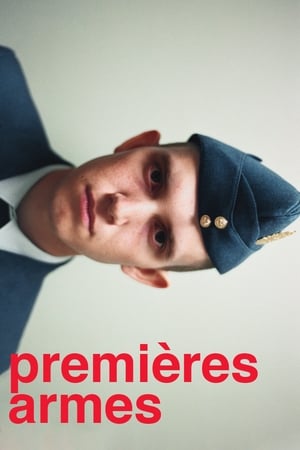
As they undergo 12 weeks of intensive training, a group of young civilians is gradually moulded into soldiers. The Basic Training, a prerequisite for joining the Canadian Armed Forces, becomes the gateway to exploring the inner workings of a world governed by its own rules and values.
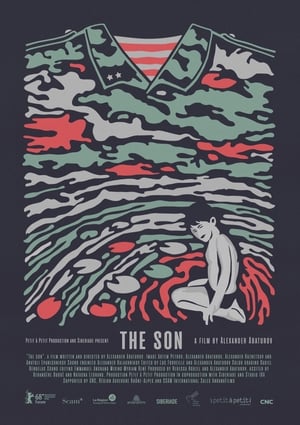
In 2013, Dima Ilukhin, the cousin of the film’s director and a soldier in the Russian army, died on duty in the Republic of Dagestan in the North Caucasus. He was 21 years old. This incident marks the starting point for Abaturov’s reflection on the military. He films the training of new recruits in Siberia, as they bid farewell to their mothers and girlfriends, learn the mechanics of a Kalashnikov, or how to throw a hand grenade and administer first aid. While his parents try to cope with their loss, Dima’s former fellow recruits have to return to battle.
Pier Paolo Pasolini sets out to interview Italians about sex, apparently their least favorite thing to talk about in public: he asks children if they know where babies come from; asks old and young women if they support gender equality; asks both sexes if a woman's virginity still matters, what do they think of homosexuality, if divorce should be legal, or if they support the recent abolition of brothels. He interviews blue-collar workers, intellectuals, college students, rural farmers, the bourgeoisie, and every other kind of people, painting a vivid portrait of a rapidly-industrializing Italy, hanging between modernity and tradition — toward both of which Pasolini shows equal distrust.
During the Thirty Years' War, Christine, an orphan, falls in love with the colonel Count Merian. In order to always be with him, she puts on men's clothes, becomes a troop boy and later even a cornet - only the sutler knows her secret. Little by little, Christine realizes that the man she loves has been brutalized by the war and is no longer capable of true feelings. When she gives herself to him instead of a peasant maid, she is horrified by his brutality. She shoots him in a duel. She is sentenced to death as a cornet, but acquitted as a woman.
"Salute to Reagan" is a celebration of those many great moments when Reagan awakened within us a forgotten patriotism, a renewed optimism and, often, a good laugh. Relive all Reagan's most memorable quotes, from his inaugural words, "We are too great a nation to limit ourselves to small dreams." To the commanding "Mr. Gorbachev, tear down this wall!" Witness the conviction with which he speaks on the role of government, the necessity of military strength, and the "evil" of communism. See Reagan comfort a nation during the aftermath of the Challenger disaster and tenderly commemorate the veterans of D-Day. Plus, laugh along as Reagan wins over fans and foes alike with his trademark warmth and humor. Finally, enjoy the moving filmed Reagan tribute shown at the 1996 Republican National Convention-seven years after he left office-followed by Nancy Reagan's accompanying heartfelt speech on behalf of her husband.
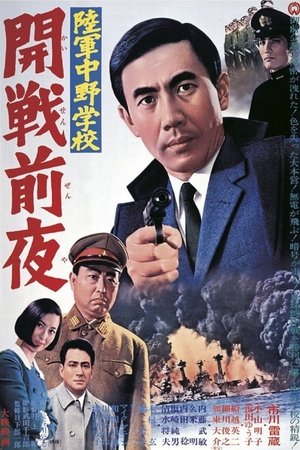
The last film in the series brings the tale to the doorstep of Pacific War, with the planning of the bombing of Pearl Harbor dominant in Nakano Spy School.
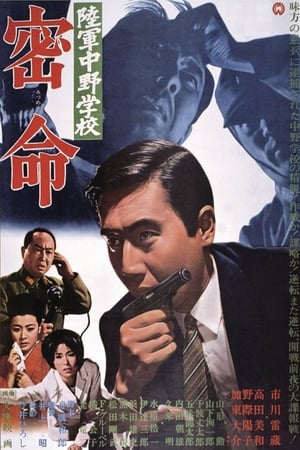
In the fourth film of series, Secret Assignment, Raizo again plays the Jiro Shiina. This time he's out to discover who is spying for the British in the Foreign Ministry, under the code name “Cat's Eye”.
In war-torn Jakarta 1946, a haunted violinist ordered to bomb a colonial theatre sees his plan unravel when a charismatic rebel falls for his wife—jeopardising Indonesia’s freedom and their lives.
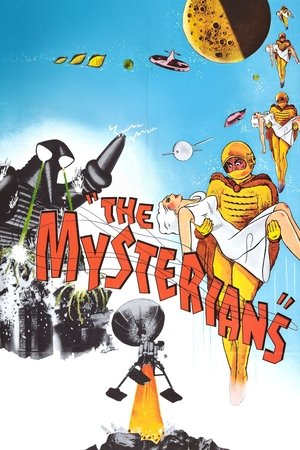
In Japan, scientifically advanced invaders from the war-destroyed planet Mysteroid cause an entire village to vanish, then send a giant robot out to storm the city by night, after which they request a small patch of land on Earth and the right to marry earthling women, claiming to be pacifists. Mankind must decide whether to capitulate or to resist.
Hundreds of teenagers join the Slovak Recruits paramilitary group to get ready for the final clash of civilizations and to fight whoever invades their country.
East Germany, 1986. When her sister flees to West Berlin, the life of a young East German woman is turned upside down as she must justify her involvement in the escape to the authorities and decide between her family and her own safety.
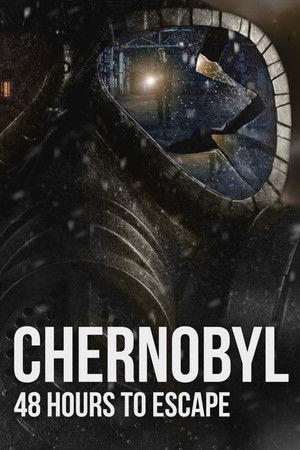
Witnesses, survivors and front-line heroes recall the first days of the Chernobyl disaster of April 1986. Featuring rare archive footage of the world's worst ever nuclear accident.
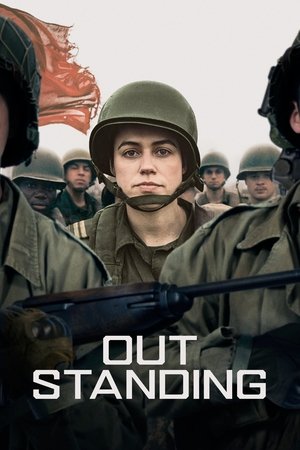
Officer Sandra Perron resigns from the Canadian military after a controversial photo surfaces. Adapting to civilian life amidst an investigation, she denies abuse allegations despite evidence suggesting mistreatment within her unit.