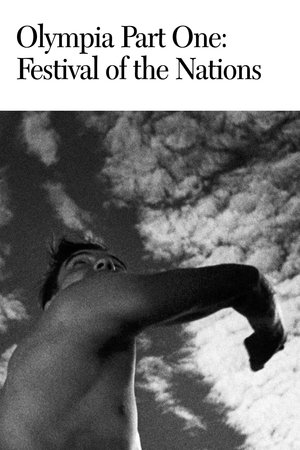
Starting with a long and lyrical overture, evoking the origins of the Olympic Games in ancient Greece, Riefenstahl covers twenty-one athletic events in the first half of this two-part love letter to the human body and spirit, culminating with the marathon, where Jesse Owens became the first track and field athlete to win four gold medals in a single Olympics.
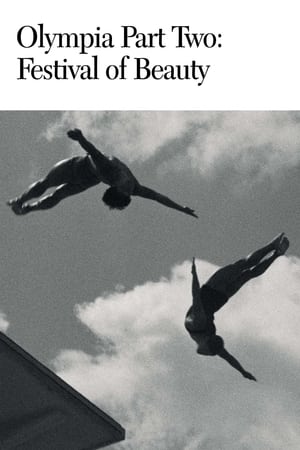
Part two of Leni Riefenstahl's monumental examination of the 1938 Olympic Games, the cameras leave the main stadium and venture into the many halls and fields deployed for such sports as fencing, polo, cycling, and the modern pentathlon, which was won by American Glenn Morris.
A woman narrates the thoughts of a world traveler, meditations on time and memory expressed in words and images from places as far-flung as Japan, Guinea-Bissau, Iceland, and San Francisco.
Compulsive Twitterer, Elon Musk bought himself his favorite social network in 2022, and brutally shaped it according to his desires. This punchy investigation relates the stormy relations between the platform and the billionaire, and their impact on the public debate.
1h30 d'orgasme
Maverick soulmates Ged and Dave are on a mission through the winding lanes and hidden tracks of North Devon, to record the lives and experiences of people living without mains electricity.
A poetic exploration of three subterranean telescopes in remote regions of Canada, Japan, and Antarctica that reveal a new way of perceiving the universe from within. Underground, we are dreaming into the earth.
This color documentary tells the story of the "Mamais." In 1960, a group of workers at the Bitterfeld chemical plant set themselves the task of becoming the first "socialist brigade" in the German Democratic Republic (GDR) to act in accordance with the slogan "Work, learn, and live socialist."
A landscape is only a landscape until we know what lies beneath. Pozo Ibarra, in the Central Mountains of León, is a mining complex full of significant architectural attributes, and also the imposing and ruinous remnant of a painful past that passed the ideas of freedom, literally, through the stone, turned into a great mass grave. Now, when the sun goes down, the souls that inhabit it rise up, refusing to forget.
Using testimonies by pioneers and witnesses of the times, delve into the feverish visual culture the media generated – with far-fetched examples of canine television games, seduction manuals, aerobics class while holding a baby, among others.
La France de l'épuration, entre vengeance et justice
In Canada and Alaska, the consequences of global warming are being keenly felt by brown bears - but in different ways by different populations. Their survival depends mainly on the quantity of wild salmon available in the region, as it is the fruit of their catch that enables the bears to accumulate fat reserves for the winter. While salmon populations off Canada's Pacific coast continue to decline year after year, in the immense Bristol Bay in western Alaska, as well as on Kodiak Island, they are increasing considerably. The water temperature in the North Pacific is now ideal for salmon development. From Canada to Alaska, the documentary follows different bear populations over a two-year period.
A photoshoot on the roofs and in the streets of Paris, under the astonished eyes of the inhabitants.
For several days, a team of police officers (backed by Judge Anne Gruwez, the revelation from their previous So Help Me God) sift through the evidence in a murder case that’s tougher than it appears. Jean Libon and Yves Hinant lead a police investigation unlike anything you’ve ever seen. With every banal turn of events, camaraderie and professionalism go hand in hand as humour meets tragedy and a handful of fries, a Tupperware container and St. Rita heighten the suspense. Hilariously scathing, yet filled with tenderness.
An intimate documentary chronicling the rise of the band Counting Crows and the unrelenting pressure that followed their breakout success. Centered on frontman Adam Duritz, the film explores the emotional aftermath of the band’s landmark studio album debut “August and Everything After” and the pressures and creative process of making their follow-up album “Recovering the Satellites.”
Just before Easter 2001, a semi-trailer loaded with 40,000 bottles of beer crashed into the Tweed River on the out skirts of the northern New South Wales town of Murwillumbah (known as "Murbah" to the locals). With salvage crews ordered to clear the crash zone for the busy Easter traffic, the locals undertook their own salvage operation, making it their best Easter ever. Murbah Swamp Beer is a documentary about an event that could only happen in Australia. It captures the spirit of a small, country town as its citizens discover that beer definitely tastes better when it's free.
Caribou
Talal Derki returns to his homeland where he gains the trust of a radical Islamist family, sharing their daily life for over two years. His camera focuses on Osama and his younger brother Ayman, providing an extremely rare insight into what it means to grow up in an Islamic Caliphate.
A documentary about the making of the first series of "Red Dwarf" (1988).
Six friends document their trip from Cork to Portmagee, County Kerry for the May the 4th Sci-fi film festival where one of their short films is screening.