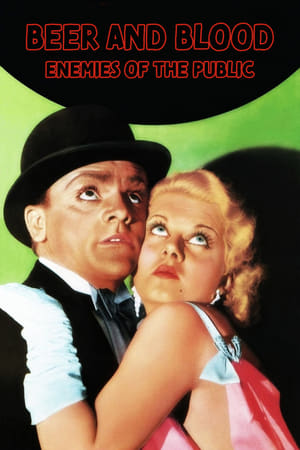
An examination of "The Public Enemy" (1931) by film historians and critics.
Near Charleroi, Colin lives alone with his mother in a dilapidated house that collapses a little more each day. Faced with this misery, he writes with his friends in his room, which has been converted into a kind of improvised "youth center." Rap. As a safety valve and a necessity. The only way they have found to talk about this poverty in the heart of Europe, which is no longer even visible. Not even on our TV screens. As long as the house stands, they will not go outside. As long as they write together, they will not fall.
Prevention and suppression of sexual slavery is high on the dutch political agenda. All the rules and procedures however, make it hard for John and his colleagues to get human trafficers behind bars. A passionate inspector in an aberrant world.
For several centuries, Portugal was the land of great discoveries. The explorers and great navigators had for point of departure its ports, mirrors of the maritime power of the country. At the edge of the Tagus, the mouth of the Douro, or facing the ocean, gold, spices and cultures were exchanged.
Croatian identity has been marked throughout its history by the influence of different historical periods and empires that have occupied the country. True cultural crossroads, Croatia was the scene of Roman, Byzantine, Venetian, Hungarian and French invasions of which it still bears the scars.
The Caved Life
During the Continuation War, there were dozens of POW camps in Finland. About the third of 70,000 prisoners died during the first year of war. Most of the archives of the camps were destroyed and the majority of the war crimes were never revealed.
Kebi, Serge, Musa, and Hector come from different parts of the world, but they have one thing in common: they have all been tortured in their home countries. Contrary to their expectations, they survived the torture and they now all live in Finland. Life goes on, but with certain limitations. The torture has had a severe impact on them.
A young filmmaker meets and follows Raya, a 94-year-old Soviet war heroine who fought in the Siege of Leningrad. As Head of the World War II Disabled Veterans Club in her city, she introduces him to a vanishing generation in Israel. Her own fighting spirit and willpower are still fierce. As Raya faces the loss of her last comrades and her health deteriorates, the two become involved in a spiritual process that awakens the young woman within her; Through her eyes and dreams, they create their own reality in which time and age lose all meaning. Their growing closeness transforms a film about war and loss into a mystical story of love and friendship.
A documentary about modern-day comics.
BIG PUN LIVE chronicles the life and times of the multi-talented rapper/actor Christopher "Big Pun" Rios. His short but substantial career is studied through live performance clips, behind-the-scenes footage, and interviews with friends and family.
An intimate documentary that reveals the frightening roller-coaster journey of two moms for whom childbirth triggers postpartum psychosis, one of the most severe forms of mental illness. It is a condition most expectant mothers and their families have never heard of, but around one in every five hundred births can lead to the sudden onset of a psychotic episode.
Documentary about the Mothers of the Plaza de Mayo, 40 years after their founding. Notes on the different stages of their struggle, and a tribute to the Mothers who are no longer with us and to those who, regardless of the government in power, never lowered their flags.
A haunting and poetic vision of war and its effects on everyday life, created without images of war. The film's structure is drawn from road signs found as fragments of a trip, with the quotidian images - of landscapes, city life, children playing, a wedding - collected like a diary in a combination of richly saturated colour and high-contrast black-and-white footage. In contrast to the emotive quality of the imagery and music, the voice-over/text provides a dispassionate and chilling guide on what to expect and how to behave in times of war.
A desert which posesses the origin of life on Earth. An unending fight to protect it. Could education be the key to it's salvation?
A brand new feature-length documentary exploring the social contexts behind Canadian horror cinema from filmmakers and authors Ernest Mathijs and Xavier Mendik.
Narrator Rudy Behlmer guides a look through Universal's place in film history as a source of alien visitation, extraterrestrial life, and other Science Fiction staples. The piece further looks at the political and social implications, parallels, and escapism in the movie. The piece spends much of its screen time on how 'It Came From Outer Space' echoed and influenced the genre, its legacy, performances, adherence to Ray Bradbury's source material, 3D photography and presentation, score and effects, and more. This is a quality piece that informs and entertains alike, one that fascinatingly examines the film, and others like it, as both entertainment and echoes of real life.
This retrospective documentary offers a first-rate account of the making of 'Marathon Man'. Hoffman, Scheider, Keller and Goldman all share their memories, many of which are remarkably detailed. Even the change in the ending is addressed, and twenty-five years later, Goldman seems to have resigned himself to the rewrite.
Producer Robert Evans dominates with his trademark promotional style, but Schlesinger gets a short time on camera (one of his few available interviews about the film), and Hoffman has even more. A highlight is the celebration of Olivier's final shooting day, complete with speeches and a toast.
A group of citizens unite to help the victims of Hurricane Katrina after the government is too slow to respond.